The Living Mandala of Lokeshvara’s Compassion
The Kathmandu Valley understands Avalokiteshvara not as a single, distant presence but as a network of interrelated manifestations, each expressing compassion in a distinct yet complementary way. In Newar Mahayana Buddhism, these manifestations are often understood as spiritually connected siblings, forming a sacred mandala that sustains the valley’s ethical, ecological, and social balance.
The following sacred sites are regarded as the principal Lokeshvara seats of the valley because they are supported by uninterrupted ritual lineages, major festivals, scriptural references, and living community devotion. Together, they represent the complete compassionate activity of Avalokiteshvara—responding to suffering through nourishment, clarity, protection, discipline, and creative wisdom.
Godawari Naudhara: The Sacred Origin of the Five Self-Arisen Avalokiteshvara Brothers
At the tranquil foothills of Phulchowki Hill in Lalitpur, Godawari Naudhara—meaning Nine Sacred Stone Spouts—is one of the most sacred Avalokiteshvara pilgrimage sites in the Kathmandu Valley. Revered in both Newar Vajrayana and Tibetan Buddhist traditions, Naudhara is celebrated as the miraculous birthplace of the Five Self-Arisen Sandalwood Avalokiteshvara Brothers (Phagpa Rangjung Chenga), making it an essential destination on the Avalokiteshvara Sacred Sites Tour.
The Legend of the Self-Arisen Sandalwood Avalokiteshvara
According to Himalayan Buddhist tradition, during the 7th century King Songtsen Gampo sent the royal monk Akaramatiśīla to Nepal in search of a divine image of Avalokiteshvara (Chenrezig/Karunamaya). Guided by visionary signs, he arrived at the sacred forest of Godawari Naudhara, where he discovered a magnificent sandalwood tree radiating extraordinary spiritual power. When the tree was respectfully felled, it did not become ordinary timber—instead, five self-arisen (Rangjung) images of Avalokiteshvara miraculously emerged from its trunk, each embodying a different manifestation of the Bodhisattva’s infinite compassion. At that very moment, a crystal-clear spring burst forth from the roots of the tree, giving rise to the sacred waters that continue to flow through the Nine Stone Spouts (Naudhara) today. A shrine known historically as Lokeshvara Vihara was later established to commemorate this miraculous event.
Today, pilgrims visit Godawari Naudhara to pay homage to the birthplace of the Self-Arisen Avalokiteshvara Brothers, offer butter lamps, incense, flowers, and khatas, and receive blessings from the ever-flowing sacred springs. The site symbolizes the uninterrupted flow of Mahākaruṇā (Great Compassion) and remains a living sanctuary where the Newar tradition of Lokeshvara and the Tibetan devotion to Chenrezig beautifully converge.
Padmapaani Lokeshwora (Lokeshwora of Patan & Bungmati)
Padmapaani Lokeshwora, widely known as Rato Machindranath, is one of the most beloved and spiritually powerful manifestations of Avalokiteshvara in the Kathmandu Valley. In the Newar Buddhist tradition, he is also revered as Patmapani Lokeshvara—the Lotus-Bearing Lord—symbolizing compassion actively engaged in the world. His red color represents dynamic compassion, life force, warmth, and the power to sustain both spiritual and worldly life.
Unlike distant or purely symbolic Bodhisattva forms, Padmapaani Lokeshwora is experienced as a living protector of the land and its people. For centuries, local communities have turned to him during times of drought, famine, illness, and social imbalance. His compassion is believed to manifest in very tangible ways—especially through rainfall, agricultural fertility, and communal harmony.
One of the most distinctive aspects of Padmapaani Lokeshwora’s worship is the annual cycle of his presence. The sacred statue resides for six months in Bungamati, an ancient Newar Buddhist town considered his original home, and for six months in Ta Baha (Patan), one of the oldest monastic courtyards in Lalitpur. This movement is not symbolic alone—it reflects the belief that compassion must circulate, visit all communities, and remain accessible to everyone.
The heart of his living tradition is the Rato Machindranath Jatra, one of the longest and most spiritually charged chariot festivals in Nepal. During this festival, the massive wooden chariot carrying the deity is slowly pulled through Patan by thousands of devotees. The act of pulling the chariot is itself a form of devotion, merit-making (puṇya), and collective prayer. Many believe that sincere participation ensures timely monsoon rains, good harvests, and protection from misfortune.
For ordinary people, this festival is not about doctrine or philosophy—it is about trust in compassion. Farmers, artisans, elders, and children all participate, expressing a deeply rooted faith that the Bodhisattva listens and responds.
Spiritually, visiting Padmapaani Lokeshwora offers a profound experience of engaged compassion. Devotees often pray here for relief from suffering, family well-being, balance between material and spiritual life, and the strength to cultivate karuṇā in daily actions. For practitioners, the site naturally supports reflection on the Bodhisattva path—where wisdom and compassion are lived, not just contemplated.
Padmapaani Lokeshwora reminds pilgrims that Avalokiteshvara is not only found in meditation halls or scriptures, but walks among people, rides through city streets, and responds to the collective heart of the community.
Aryavalokiteshwor of Janabahal (Jamali Lokeshwora)
Aryavalokiteshvara, popularly known as Seto Machindranath, represents the gentle, pacifying, and nurturing aspect of Avalokiteshvara’s compassion. While Padmapaani Lokeshwora expresses compassion in its active, forceful, and life-sustaining form, Aryavalokiteshwor of Janabahal embodies quiet mercy, healing, and inner harmony. In the Newar Buddhist tradition, he is also revered as Karunamaya Lokeshvara and Jama Deva, names that emphasize his role as the ever-compassionate protector of human life.
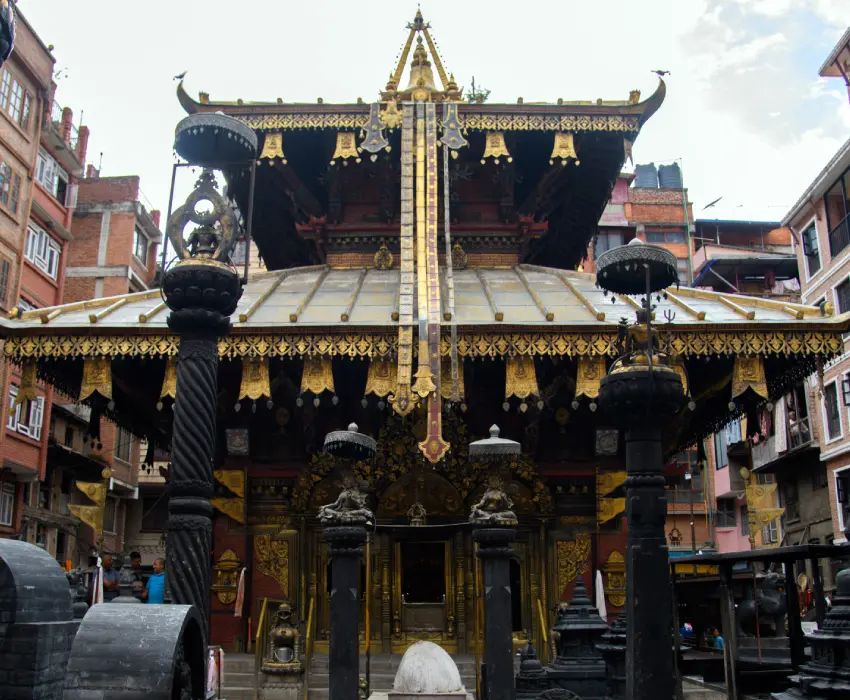
Aryavalokiteshwor is enshrined at Jana Baha (also known as Kanak Chaitya Mahavihara) in the heart of Indra Chowk, Kathmandu. This sacred courtyard monastery has been a center of Lokeshvara devotion for centuries, surrounded by daily markets, narrow lanes, and vibrant community life. His presence here reflects an important belief: compassion must remain at the center of ordinary human activity, not separated from it.
Among local devotees, Aryavalokiteshwor is especially approached for peace, emotional healing, family well-being, and balance in life. Many believe that sincere offerings and prayers made here help remove inner obstacles, calm mental disturbances, and restore harmony in both personal and social relationships.
One of the most significant living traditions connected to Aryavalokiteshvara is the Seto Machindranath Jatra, an annual chariot festival celebrated primarily by the Newar communities of Kathmandu. During this festival, the deity is placed on a chariot and ceremonially drawn through the old city. This act is understood as a communal prayer for timely monsoon rains, prosperity, and protection from misfortune. For generations, people have believed that respectful devotion to Aryavalokiteshwor ensures favorable weather conditions and general well-being for the valley.
Aryavalokiteshwor is revered not only by Buddhists but also by many non-monastic communities who approach him as a compassionate guardian. This reflects the inclusive nature of Avalokiteshvara’s vow—to respond to suffering wherever it appears, without discrimination.
Spiritually, visiting Aryavalokiteshvara offers a deeply calming experience. The atmosphere of Jana Baha encourages quiet contemplation, mindfulness, and heartfelt prayer. Pilgrims often sit silently before the shrine, reflecting on compassion as patience, forgiveness, and gentle presence in daily life.
Aryavalokiteshwor teaches that compassion does not always arrive dramatically. Sometimes, it appears as soft rain, a settled mind, a healed heart, and the quiet restoration of balance. His presence in the heart of Kathmandu continues to remind visitors that Avalokiteshvara’s compassion is constant, intimate, and always listening.
Anandadi Lokeshvara
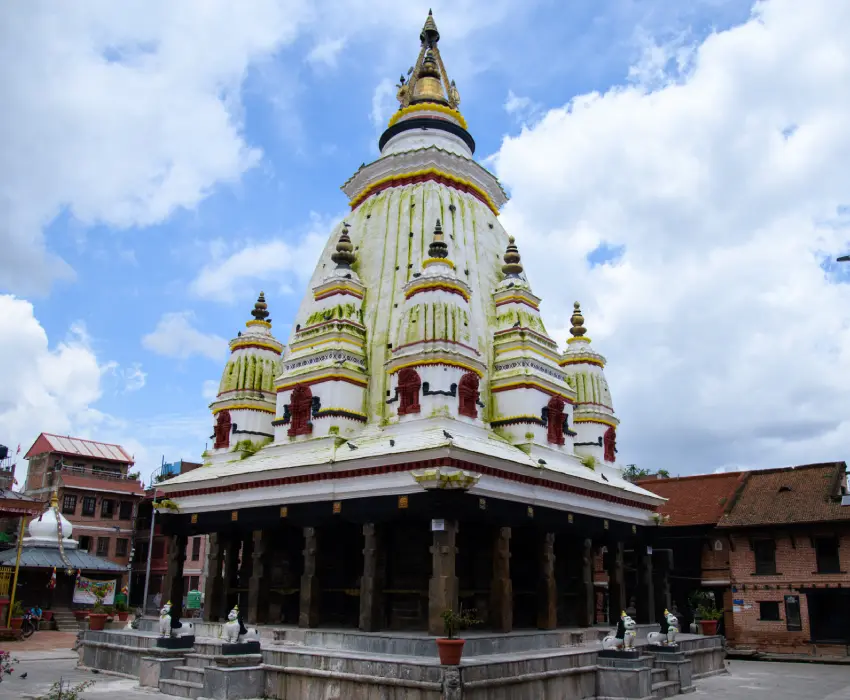
Anandadi Lokeshvara is one of the most ancient and contemplative manifestations of Avalokiteshvara in the Kathmandu Valley. He is enshrined at Adinath Temple in Chovar, a sacred hill overlooking the southern edge of the valley. For centuries, this site has been associated with renunciation, disciplined practice, and deep compassion expressed through self-restraint.
In local tradition, Anandadi Lokeshvara is sometimes affectionately remembered alongside the Machindranath lineages, reflecting an earlier and more ascetic expression of Lokeshvara devotion. His presence at Chovar connects Avalokiteshvara not with public festivals alone, but with long-term spiritual practice, solitude, and inner purification.
According to Newar oral history, Anandadi Lokeshvara once had his own chariot procession, accompanied by ritual music, chanting, and communal participation, much like the Machindranath festivals of today. This tradition is said to have declined after the original sacred statue was taken to Tibet in ancient times. Local belief holds that the statue may have reached the Kyirong region, although this remains a subject for further historical research rather than established fact.
During the Malla period, a remarkable event is remembered: a replica statue of Anandadi Lokeshvara is said to have reappeared at Chovar, near the place from where the original was taken. With this return, devotional activity resumed, though the chariot tradition was no longer revived. Instead, the site gradually became known for its quiet, inward-facing spiritual power, rather than public spectacle.
Adinath Temple is also deeply connected to the lineage of Bhikshuni Srimati (also known as Gelongma Mahapalmo), a highly revered female practitioner associated with the Nyungne practice, one of the most austere and transformative Chenrezig practices in Mahayana Buddhism. It is believed that she lived and practiced here for a long period, engaging in repeated Nyungne retreats involving fasting, silence, extensive prostrations, and intensive prayer.
Even today, during the Vesak month, devoted practitioners come to Adinath Temple to observe Nyungne. Participants traditionally remain fasting for five consecutive days and nights, dedicating the physical hardship as an offering to Avalokiteshvara for the purification of negative karma and the awakening of compassion.
For ordinary visitors, the spiritual atmosphere of Anandadi Lokeshvara is immediately felt. The hilltop location, open sky, and silence invite introspection and simplicity. Many pilgrims come here not to ask for worldly favors, but to cultivate discipline, patience, and clarity of intention.
Devotees believe that paying respect at Adinath Temple strengthens one’s capacity to endure hardship with compassion, supports sincere meditation practice, and deepens commitment to the Bodhisattva path. Anandadi Lokeshvara gently teaches that compassion is not only expressed through action, but also through self-discipline, restraint, and inner transformation.
Shrishti-kanta Lokeshvara
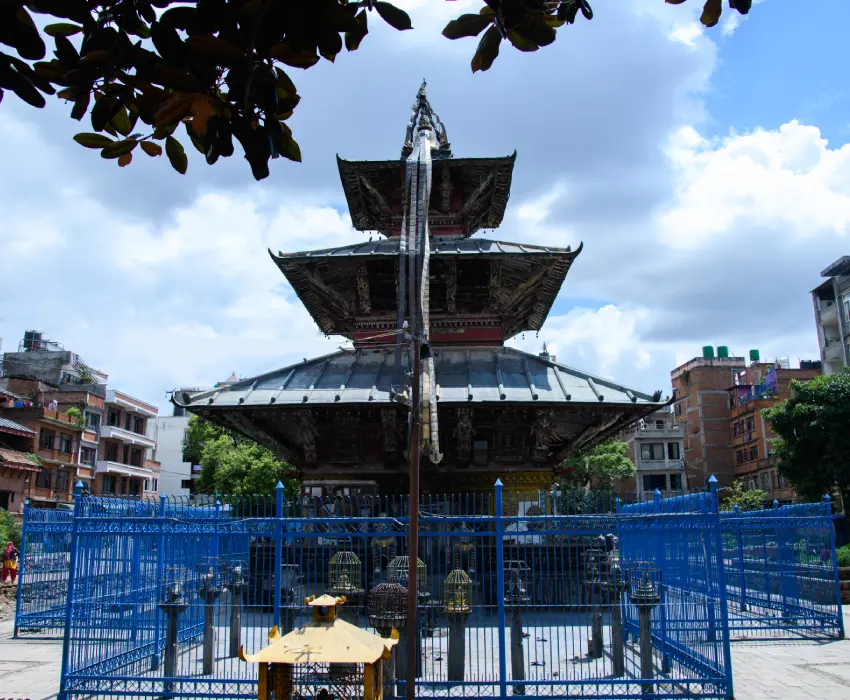
Shrishti-kanta Lokeshvara is one of the most profound and philosophically rich manifestations of Avalokiteshvara found in the Kathmandu Valley. Enshrined in the ancient town of Nala, near Bhaktapur, he is locally revered as Nala Karunamaya, a deeply compassionate and protective presence within the Newar Buddhist tradition. This form of Lokeshvara expresses compassion not only as an emotional quality, but as the very principle through which the world is sustained and guided.
In Mahayana understanding, Avalokiteshvara does not create the universe in a literal sense. Instead, Shrishti-kanta Lokeshvara represents the truth that all guiding forces, protective energies, and salvific means arise from compassion itself. For devotees, this teaching is not abstract philosophy—it is lived faith, passed down through generations in the Kathmandu Valley.
Shrishti-kanta Lokeshvara is visually and symbolically unique. He is traditionally depicted in a red form, standing gracefully on a lotus, with a posture that conveys both strength and gentleness. His right hand extends in a gesture of generosity, while his left hand holds a white lotus, symbolizing purity emerging from the world. What makes this form especially significant is the way various worldly deities are shown emerging from his body, illustrating that all powers guiding sentient beings ultimately originate from compassion.
Local Buddhist texts and oral traditions explain that this symbolism teaches an important message: people approach spiritual truth in different ways, and Avalokiteshvara responds by appearing in forms that meet beings according to their needs. Compassion adapts, manifests, and communicates in ways that each individual can understand.
According to local legend, the sacred presence of Shrishti-kanta Lokeshvara at Nala was not fashioned by human hands but discovered miraculously. It is said that a farmer, while plowing his field, struck a stone that began to bleed. Upon uncovering it, villagers realized it was the sacred form of Lokeshvara. When attempts were made to move it elsewhere, the form became impossibly heavy, indicating the Bodhisattva’s wish to remain at that very spot. A shrine was then established, and devotion has continued there ever since.
Among local communities, Shrishti-kanta Lokeshvara is regarded as particularly tender-hearted and approachable. Families often bring children here to pray for health, protection, and emotional well-being. There is a strong belief that this Lokeshvara listens especially closely to the prayers of parents and responds with gentle compassion.
Spiritually, visiting Shrishti-kanta Lokeshvara offers a rare opportunity to reflect on compassion as the organizing force of existence itself. The quiet town of Nala, removed from the noise of the city, supports contemplation and humility. Devotees often leave offerings not to request specific outcomes, but to express gratitude and reaffirm trust in compassionate guidance.
Shrishti-kanta Lokeshvara reminds pilgrims that Avalokiteshvara’s vow operates on many levels—personal, communal, and cosmic—and that all paths toward awakening ultimately unfold within the embrace of compassion.
Jatadhari Lokeshwora
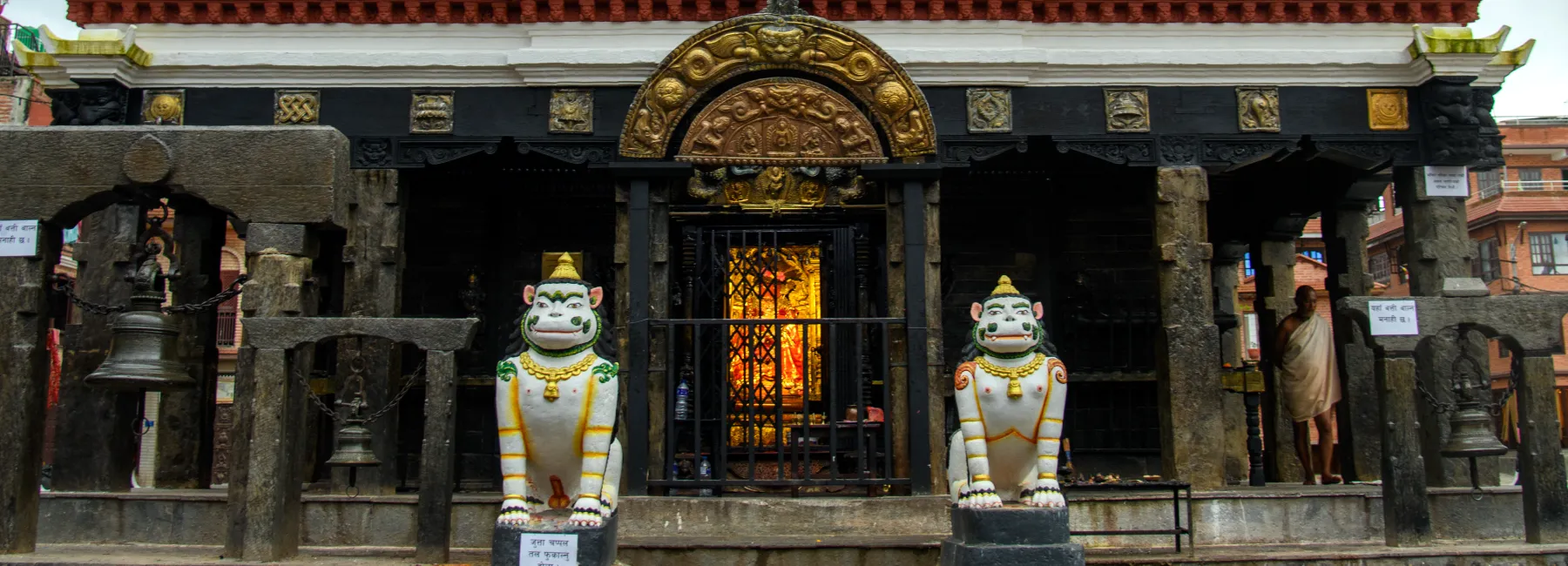
Jatadhari Lokeshwora, affectionately known as Minnath, represents one of the most ancient and deeply rooted forms of Avalokiteshvara in the Kathmandu Valley. His shrine is located in Patan, where devotion to him is believed to predate even the arrival of Padmapaani Lokeshwora. In the Newar Buddhist understanding, Jatadhari Lokeshwora is revered as the “Lord of Life”, a compassionate guardian who sustains vitality, balance, and continuity within the human and natural world.
The name Jatadhari refers to his matted hair, symbolizing ascetic discipline, spiritual power, and unbroken commitment to the Bodhisattva vow. Locally, he is also known as Chakuba Dya (Chak: Baha Dyo), a name connected to an ancient legend involving birds, which emphasizes his role as a protector of living beings and the natural environment. These names do not indicate separate deities, but rather different ways communities relate to the same compassionate presence of Avalokiteshvara.
Jatadhari Lokeshvara holds a particularly important relationship with Raktavalokiteshvara (Rato Machindranath). According to long-standing tradition, when Rato Machindranath was invited into the valley to end a devastating drought, Minnath was the one who welcomed him and led the way into Patan. This sacred event is ritually reenacted every year through the Minnath Chariot Festival, which precedes the larger Rato Machindranath Jatra. The sequence reflects a spiritual understanding that compassion must first establish life and stability before abundance and fertility can follow.
For ordinary devotees, Jatadhari Lokeshwora is approached with prayers for health, longevity, protection from illness, and the well-being of children and elders. His presence is believed to support life at its most fundamental level—breath, growth, resilience, and continuity. Many families in Patan maintain ancestral ties to his shrine, visiting regularly across generations.
Spiritually, Jatadhari Lokeshwora embodies steadfast compassion—the kind that does not appear dramatically, but quietly sustains life through time. His ascetic appearance reminds pilgrims that compassion requires discipline, patience, and unwavering presence, especially in the face of suffering.
Visiting Jatadhari Lokeshwora allows pilgrims to feel the deep historical continuity of Avalokiteshvara devotion in Nepal. The atmosphere is grounded, intimate, and rooted in everyday life. Here, compassion is not idealized—it is lived, protected, and transmitted from one generation to the next.
Jatadhari Lokeshwora completes the living mandala of Avalokiteshvara in the Kathmandu Valley, reminding visitors that the Bodhisattva’s vow manifests not only in great festivals and sacred legends, but also in the quiet preservation of life itself.