Experience and Feel, not just travel

Tibetan Buddhist Monastery (Gonpa) Tour in Kathmandu Valley

Visit Kathmandu Valley's sacred monasteries, where prayer, meditation, and timeless wisdom flourish.

  • Duration 6 Days
  • Trip Grade Easy
  • Start From Kathmandu
  • Ends at Kathmandu
  • Group Size 2+
  • Transportation Private Vehicle
  • Trip Meals Included
  • Accommodation Private Vehicle
  • Best Season All Around The Year

Overview

Introduction to Tibetan Buddhist Monastery Tour in Kathmandu Valley

The Kathmandu Valley stands as one of the most important centers of Tibetan Buddhism outside Tibet. Home to numerous Tibetan Buddhist monasteries—commonly known as Gombas—the valley offers a living spiritual landscape where ancient teachings, monastic discipline, ritual practice, and cultural preservation continue uninterrupted.
The Tibetan Buddhist Monastery (Gomba) Tour in Kathmandu Valley is designed for travelers who seek depth, understanding, and quiet reflection rather than surface-level sightseeing. This journey invites visitors to explore monasteries that function not only as places of worship but as educational institutions, cultural sanctuaries, and living embodiments of Himalayan Buddhist wisdom.

Through respectful visits to key monasteries, this tour reveals how Tibetan Buddhism has taken root in Nepal, adapted to exile, and flourished as a global spiritual tradition.

Tibetan monasteries in the Kathmandu Valley are far more than religious structures; they are the outcome of centuries-old Himalayan relationships and one of the most significant cultural migrations of the modern Buddhist world.

Ancient Roots of Tibetan Buddhism in Nepal

Nepal and Tibet have shared a deep Buddhist connection for over a thousand years. Newar Buddhist scholars, artisans, and translators played a vital role in transmitting Buddhist texts and iconography to Tibet. Sacred sites such as Swayambhunath Stupa and Boudhanath Stupa have long been pilgrimage destinations for Tibetan Buddhists, even before the establishment of permanent monasteries.

Tibetan traders, pilgrims, and monks regularly traveled through Kathmandu Valley, exchanging spiritual knowledge and ritual traditions. This long-standing interaction laid the foundation for the later emergence of Tibetan monasteries.

The Modern Resurgence: Establishment of Monasteries in Exile

The major expansion of Tibetan Buddhist monasteries in Kathmandu occurred between the 1950s and 1970s, following the 1959 Tibetan uprising. As high-ranking Lamas, monks, nuns, and lay refugees fled Tibet, Nepal—under the leadership of King Mahendra—provided a relatively welcoming environment.
In exile, Tibetan masters began rebuilding their spiritual institutions from the ground up. Many monasteries in Kathmandu Valley are re-establishments of historic monasteries destroyed or inaccessible in Tibet. For example, Shechen Monastery in Boudhanath was founded to preserve the teachings and lineage of the original Shechen Monastery in eastern Tibet.

These monasteries became anchors of continuity, ensuring that spiritual lineages, monastic education, and ritual traditions survived displacement.

Tibetan Buddhist monasteries in Kathmandu Valley serve as the backbone of Tibetan Buddhism in exile and play a crucial role in preserving both spiritual and cultural identity.
Preservation of Lineages and Teachings

The monasteries safeguard the continuity of the four major schools of Tibetan Buddhism:

  • Nyingma
  • Kagyu
  • Sakya
  • Gelug

Through disciplined training of monks and nuns, these institutions ensure the uninterrupted transmission of philosophical teachings, ritual practices, meditation lineages, and ethical codes passed down through generations.

  • Living Cultural Centers
    Beyond religious practice, monasteries act as living museums of Tibetan culture. They preserve:
  • Thangka painting traditions
  • Sacred music and ritual instruments
  • Tibetan architecture and woodcarving
  • Sacred dance (Cham) performances

These artistic expressions are not decorative but are deeply embedded in spiritual practice and symbolic teaching.

Community and Educational Roles
Many monasteries support Tibetan refugee communities by operating schools, libraries, and clinics. They teach:

  • Tibetan language and literature
  • Buddhist philosophy and ethics
  • Traditional Tibetan medicine (Sowa Rigpa)

In this way, monasteries serve both spiritual and social functions, nurturing identity and resilience within the Tibetan diaspora.

Monastic Education and Daily Teachings
Rigorous Monastic Training
Education in Tibetan Buddhist monasteries is intensive and can span decades. Monks undergo systematic study that combines memorization, debate, meditation, and ethical discipline.
Shedra (Monastic Colleges)
Advanced monasteries maintain Shedra, or monastic colleges, where monks study:

  • Buddhist philosophy
  • Logic and epistemology
  • Madhyamaka and Abhidharma
  • Vinaya (monastic discipline)

A full course of study may take 13 to 20 years, culminating in titles such as Khenpo or Geshe, marking mastery of Buddhist scholarship.

Public Teachings and Global Outreach
Monasteries such as Kopan Monastery became internationally known in the 1970s for offering teachings to Western students and lay practitioners. These programs played a key role in making Tibetan Buddhism accessible to a global audience while maintaining traditional integrity.

Daily life in a Tibetan monastery is shaped by ritual, meditation, and mindful routine.

Pooja (Ritual Ceremonies)
Monks perform daily poojas to cultivate compassion, remove obstacles, and dedicate merit for the well-being of all beings. These rituals include:

    • Chanting sacred texts
    • Use of bells, drums, horns, and cymbals
    • Offerings of butter lamps, incense, and tormas (ritual cakes)

These ceremonies are deeply symbolic and reflect the philosophical foundations of Tibetan Buddhism.

Meditation Practices
Meditation in Tibetan monasteries includes multiple approaches:
Analytical Meditation: Deep reflection on impermanence, compassion, and emptiness
Vajrayana Practices: Deity visualization, mantra recitation, and ritual meditation
Mind Training (Lojong): Cultivation of altruism and mental clarity

Retreat Traditions
Several monasteries in and around Kathmandu Valley, particularly in areas like Pharping, host dedicated retreat centers. Here, monks and serious practitioners may spend months or years in silent meditation, deepening realization away from worldly distractions.

The Tibetan Buddhist monasteries of the Kathmandu Valley represent a living continuum of Himalayan spiritual history, shaped by ancient Nepal–Tibet connections and revitalized through the re-establishment of monastic institutions in exile. Each monastery included in this tour holds deep spiritual meaning, not only as a place of worship but as a center of learning, ritual practice, meditation, and cultural preservation. Together, they illustrate how Tibetan Buddhism has survived displacement while remaining vibrantly alive in Nepal.

Thrangu Tashi Yangtse Monastery, Namo Buddha

Thrangu Tashi Yangtse Monastery is located at the sacred pilgrimage site of Namo Buddha, southeast of the Kathmandu Valley, and represents one of the most spiritually profound destinations in Tibetan Buddhism in Nepal. The monastery stands at a site associated with a former life of the Buddha, where he is believed to have offered his body to a starving tigress and her cubs, an act symbolizing the perfection of compassion (dāna pāramitā). This sacred narrative gives the monastery deep ethical and devotional significance, making it a powerful place for reflection on selflessness and altruism.

The monastery was established under the guidance of Kyabje Thrangu Rinpoche, one of the foremost masters of the Kagyu lineage, with the intention of creating a major center for monastic education, meditation, and pilgrimage. It serves as the principal monastic institution at Namo Buddha and functions as both a shedra and a meditation center, where monks engage in systematic philosophical study alongside contemplative practice. The Kagyu lineage followed here emphasizes Mahamudra teachings, ethical discipline, and the integration of study and meditation.

Architecturally, Thrangu Tashi Yangtse Monastery is expansive and harmoniously integrated into the surrounding hills, with large prayer halls, monks’ residences, stupas, and open courtyards adorned with prayer flags. Inside, the monastery houses sacred statues, thangka paintings, ritual instruments, and extensive scriptural collections. Daily monastic life is shaped by chanting, pooja ceremonies, philosophical debate, and meditation, while major rituals and prayer festivals draw pilgrims from across Nepal and beyond.
The monastery is deeply meaningful not only as an educational institution but also as a living pilgrimage site where Buddhist philosophy is inseparable from lived ethical practice. Visiting Thrangu Tashi Yangtse Monastery at Namo Buddha offers a rare opportunity to experience Tibetan Buddhism at the intersection of sacred story, disciplined monastic life, and panoramic natural beauty, bringing the spiritual journey through the Kathmandu Valley to its most contemplative and complete expression.

Thrangu Tashi Choling Monastery

Thrangu Tashi Choling Monastery is one of the most important Kagyu lineage monastic institutions in the Kathmandu Valley and serves as a cornerstone of Tibetan Buddhist scholarship in exile. Located near the sacred Boudhanath Stupa, the monastery was established under the guidance of Kyabje Thrangu Rinpoche to preserve and transmit advanced Buddhist education that had been severely disrupted after the destruction of monasteries in Tibet. Its founding reflects a deliberate effort to ensure continuity of philosophical study, ethical discipline, and meditative training within the Kagyu tradition.

The monastery functions primarily as a shedra, or monastic college, where monks undertake many years of structured study in Buddhist philosophy, logic, Madhyamaka, Abhidharma, and monastic discipline. This rigorous intellectual training is balanced with daily meditation and ritual practice, reinforcing the traditional Tibetan model of integrating study and realization. The environment is disciplined and contemplative, offering visitors a rare glimpse into the scholarly heart of Tibetan monastic life.

Architecturally, Thrangu Tashi Choling follows classical Tibetan monastic design, with prayer halls housing statues of the Buddha, lineage masters, and protective deities, as well as extensive collections of canonical texts and ritual objects. Daily life is marked by chanting, philosophical debate, pooja ceremonies, and periods of silent reflection. The monastery is especially meaningful for visitors who seek to understand Tibetan Buddhism as a deeply reasoned spiritual path grounded in study, ethics, and contemplative insight.

Shechen Monastery

Shechen Monastery stands as one of the most culturally and spiritually significant Tibetan Buddhist monasteries in Nepal and is a direct re-establishment of the historic Shechen Monastery of eastern Tibet. Situated near Boudhanath Stupa, it was rebuilt in exile under the guidance of Dilgo Khyentse Rinpoche, one of the greatest masters of the Nyingma tradition, with the intention of safeguarding rare teachings, ritual transmissions, and artistic lineages threatened with extinction.

Following the Nyingma school—the oldest tradition of Tibetan Buddhism—Shechen places strong emphasis on Dzogchen teachings, tantric ritual practice, and the preservation of sacred arts. The monastery is renowned for its elaborate ceremonies, long chanting sessions, and ritual dances, which are integral to its spiritual life. It also serves as a center for training monks in philosophy, meditation, and ritual performance, ensuring the continuity of ancient lineages.

The monastery’s architecture reflects classical Tibetan temple design, with richly decorated prayer halls adorned with thangka paintings, statues, and symbolic iconography representing enlightened qualities. Visiting Shechen Monastery offers an immersive encounter with living Tibetan culture and spirituality, making it deeply meaningful for those who wish to experience the depth, beauty, and ritual richness of the Nyingma tradition.

Thrangu Tara Abbey (Nunnery)

Thrangu Tara Abbey is a remarkable sanctuary for Buddhist nuns, where devotion, scholarship, and meditative practice intertwine. Founded in 1992 by the Ninth Khenchen Thrangu Rinpoche, the abbey is nestled in the serene foothills of Swayambhu, overlooking one of Kathmandu’s most sacred stupa complexes. Here, Buddhist women are empowered to immerse themselves fully in monastic life, cultivating wisdom, compassion, and spiritual discipline.

The abbey provides a complete educational path for over 270 nuns, combining traditional Buddhist teachings with secular instruction in Nepali, English, and mathematics. Young aspirants begin with foundational studies
before moving to advanced programs in philosophy, debate, ritual arts, sacred music, and Tibetan medicine. The nuns also engage in extensive meditation and ceremonial practice, including daily specially Green Tara and Mahakala prayers, monthly observances, and extended retreats such as the 45-day Yarne. These practices connect them directly with the living lineage of the Kagyu school and the wider Tibetan Buddhist tradition.

Architecturally, Thrangu Tara Abbey is a harmonious blend of tradition and functionality. Prayer halls, shrines, a library, dormitories, and communal spaces are designed to foster learning, meditation, and community life. Beyond its walls, the abbey actively serves the surrounding community through eco-initiatives, organic gardening, and a Tibetan medicine clinic run by nuns. Visitors witness a unique synthesis of spiritual rigor and compassionate service, making the abbey a meaningful highlight of the Tibetan Buddhist Monastery Tour in Kathmandu Valley — a place where ancient traditions live and breathe in contemporary practice.

Pullahari Monastery – Jagdol, Kathmandu

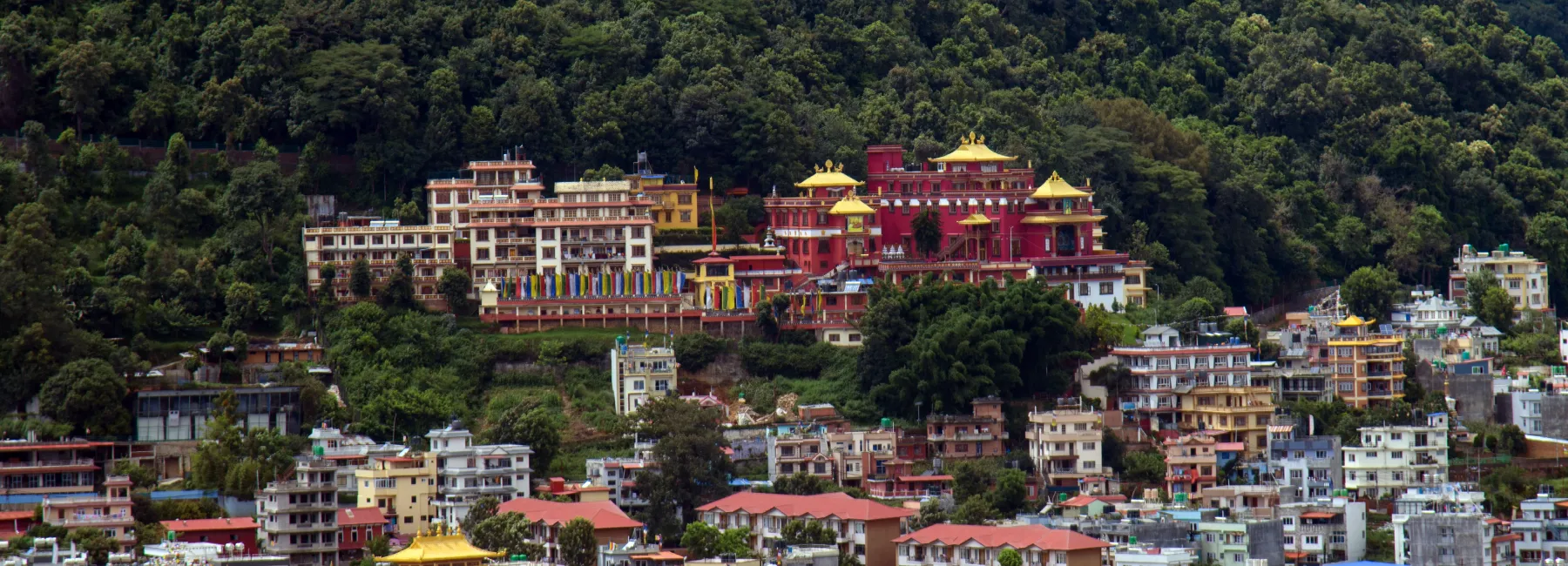
Pullahari Monastery, founded by the Third Jamgon Kongtrul Rinpoche in 1992, is a serene and inspiring Tibetan Buddhist center perched on the hills north of Boudhanath Stupa. Named in honor of Naropa’s historic monastery in India, Pullahari was created to provide a dedicated space for meditation, retreat, and rigorous monastic education, ensuring the continuation of Karma Kagyu contemplative practices in exile. The monastery is a living embodiment of the lineage’s emphasis on Mahamudra meditation, ethical discipline, and the integration of study with spiritual realization, attracting monks and practitioners from Nepal and abroad.
Set amidst tranquil gardens and terraces that offer panoramic views of the Kathmandu Valley and distant Himalayan peaks, Pullahari Monastery harmoniously blends traditional Tibetan architecture with functional spaces for study, meditation, and ritual. Its prayer halls and shrines are adorned with thangkas, statues, and sacred texts, while quiet corridors and courtyards provide space for reflection and retreat. Monastic life here follows a structured rhythm of chanting, puja ceremonies, philosophical study, debate, and daily meditation, while longer retreats allow monks to immerse themselves deeply in contemplative practice.

Beyond its spiritual function, Pullahari also supports community and cultural preservation. The monastery fosters education in Tibetan philosophy, language, and medicine, ensuring that younger generations of monks are well-grounded in both scholastic and ritual traditions. Visitors are invited to witness not only the devotion and discipline of monastic life but also the harmonious way the monastery engages with its natural surroundings, creating a sanctuary where nature, study, and spiritual practice converge.

Visiting Pullahari Monastery is a meaningful experience for pilgrims and spiritual seekers. It offers insight into the living traditions of Tibetan Buddhism, the disciplined life of monks, and the enduring legacy of the Karma Kagyu lineage. Here, contemplation meets devotion, learning supports practice, and the quiet beauty of the Himalayan landscape amplifies the sense of sacred presence, leaving a lasting impression on all who journey here.

Druk Amitabha Monastery

Druk Amitabha Monastery is a Drukpa Kagyu monastic center situated on a forested hill in the Nagarjun area of Kathmandu Valley. Established as a place for meditation and retreat, the monastery is closely associated with practices devoted to Amitabha Buddha, whose qualities of boundless compassion and wisdom form the spiritual focus of the community.

The elevated location of the monastery provides sweeping views of the valley and enhances a sense of openness and inner stillness. Its architecture includes prayer halls, open courtyards, and sacred images that support both communal rituals and individual meditation practice. Chanting, mantra recitation, and contemplative rituals form the core of daily monastic life.

Druk Amitabha Monastery is deeply meaningful for visitors drawn to meditation and devotional practice, offering a serene environment where compassion-oriented teachings can be experienced directly through silence, ritual, and mindful presence.

Kopan (Kapan) Gumba – Gelug Tibetan Monastery Above Kathmandu

Kopan Gumba is a serene Gelugpa monastery perched on a gentle hill north of the sacred Boudhanath Stupa, overlooking the Kathmandu Valley. Founded in 1969 by Lama Thubten Yeshe and Lama Zopa Rinpoche, it was created as a place where monks, nuns, and visiting practitioners from around the world could receive traditional Buddhist education, engage in meditation, and experience ritual practice within a supportive monastic community. From its humble beginnings with only a handful of monks, Kopan has grown into a thriving spiritual center, welcoming hundreds of resident monks and a large number of international students each year.

The monastery reflects classic Tibetan monastic architecture, with spacious prayer halls, serene meditation rooms, beautiful courtyards, and colorful prayer flags fluttering across its terraces. Its daily rhythm is structured around chanting, poojas, meditation, philosophical study, and debate, offering both monastics and visitors a holistic experience of Tibetan Buddhist practice. Special retreats and meditation courses, especially designed for Western students, have made Kopan an internationally recognized center for learning and spiritual development.

Kopan’s teachings emphasize the Gelugpa focus on Mahayana sutras, compassion, wisdom, and devotion to the guru’s guidance, following the lineage of Lama Tsongkhapa. Pilgrims visiting the monastery are not only offered an opportunity to witness rigorous monastic discipline, but also to experience Tibetan Buddhism as a living tradition — vibrant, accessible, and deeply transformative. The combination of disciplined practice, warm hospitality, and sweeping Himalayan views makes Kopan Gumba a spiritually meaningful stop on the Tibetan Buddhist Monastery Tour in the Kathmandu Valley.

This journey offers more than an exploration of sacred sites; it is an invitation to encounter Tibetan Buddhism as a living, breathing tradition that continues to shape human lives. In the Kathmandu Valley, monasteries are not relics of the past or architectural monuments frozen in time. They are dynamic spiritual institutions, formed through centuries of Himalayan exchange and renewed through the resilience of exile, where wisdom, compassion, and disciplined practice are lived daily.

Rather than presenting monasteries as static landmarks, this tour reveals them as active centers of learning, ethical cultivation, and ritual continuity. Monks and nuns study philosophy, engage in meditation, perform daily pooja, and preserve sacred texts and artistic traditions that embody the core values of Tibetan Buddhism. Visitors are not merely observers but witnesses to a tradition that continues to evolve while remaining rooted in its ancient foundations.

This journey is also a path of understanding—one that connects history, philosophy, culture, and lived spiritual practice within one of the most spiritually significant valleys of the Himalayan world. Through quiet courtyards, chanting halls, and contemplative landscapes, travelers gain insight into how Buddhist teachings are embodied through discipline, devotion, and compassionate action. In doing so, the tour offers not only knowledge, but reflection—inviting each visitor to engage with the deeper questions of meaning, impermanence, and responsibility that lie at the heart of the Buddhist path.

Monastery Etiquette and Dress Code
Modest clothing and respectful behavior are essential.

Photography Guidelines
Photography is often restricted inside prayer halls; permission must always be sought.

Silence, Respect, and Offerings
Maintaining silence and reverence enhances both personal experience and communal harmony.

Nirvana Journey approaches this tour with respect, sensitivity, and deep cultural understanding. Guides are trained not only in history and logistics, but in the ethical and spiritual considerations of visiting monastic spaces. The focus is on authentic experience, ethical tourism, and creating conditions for meaningful engagement rather than consumption.

The Tibetan Monastery (Gonpa) Tour in Kathmandu Valley is not an ending, but a beginning. It plants seeds — of curiosity, compassion, and contemplation — that continue to grow long after the journey concludes. By walking through these monasteries, travelers do not simply observe a tradition; they encounter a living path that quietly invites reflection on one’s own life and values.

Highlights

  • Sacred Pilgrimage to Namo Buddha:  Walk in the footsteps of the Bodhisattva at one of the most revered Buddhist sites, where the Buddha, in a previous life, offered his body to a starving tigress—symbolizing ultimate compassion and selflessness.
  • Participate in Monastic Pooja at Thrangu Tashi Yangtse Monastery:  Experience authentic Tibetan Buddhist rituals by joining early morning prayers with monks, accompanied by sacred chants, horns, and traditional instruments.
  • Kora Around Boudhanath Stupa:  Engage in the spiritual practice of circumambulation around one of the largest stupas in the world, spinning prayer wheels and immersing yourself in a deeply devotional atmosphere.
  • Meditative Retreat Atmosphere at Kopan Monastery:  Discover a peaceful hilltop sanctuary known for meditation, mindfulness teachings, and spiritual reflection overlooking the Kathmandu Valley.
  • Tranquility of Pullahari Monastery (Garden of Enlightenment): Connect with nature and Dharma in a serene forest monastery associated with great Tibetan masters, ideal for quiet contemplation.
  • Blessings at Druk Amitabha Monastery & Thrangu Tara Abbey:  Experience the sacred energy of nunneries dedicated to compassion, wisdom, and the practice of Tara, the female embodiment of enlightenment.
  • Sacred Caves of Pharping – Yanglesho & Asura:  Meditate in the powerful caves where Guru Padmasambhava attained realization, making it one of the most spiritually charged sites in Himalayan Buddhism.
  • Panoramic Spiritual Experience at Swayambhunath Stupa:  Visit the ancient hilltop stupa, radiating wisdom and compassion, while enjoying breathtaking views of the Kathmandu Valley.
  • Immersion in Living Tibetan Buddhist Tradition:  Witness daily monastic life, prayer rituals, sacred art, and teachings preserved through generations in authentic Himalayan monasteries.

Itinerary Expand All Collapse All

  • TransportationPrivate Vehicle
  • AccommodationDeluxe Hotel
  • Included MealsDinner Only

Upon your arrival at Tribhuvan International Airport in Kathmandu, you will be warmly welcomed by our representative and transferred to your hotel. After check-in, take time to relax and recover from your journey.
Kathmandu, the cultural and spiritual heart of Nepal, offers a unique blend of ancient traditions and living Buddhist heritage. Depending on your arrival time, you may take a gentle walk around the nearby area, observe local life, or simply enjoy the peaceful ambiance of the valley. In the evening, you can prepare yourself mentally for the upcoming spiritual journey through sacred Himalayan Buddhist sites. Overnight stay at the hotel in Kathmandu.

  • TransportationPrivate Vehicle
  • AccommodationDeluxe Hotel
  • Included MealsFull Board Meal

After breakfast, you will embark on a scenic drive (approximately 1.5–2 hours) from Kathmandu through terraced fields, traditional villages, and rolling hills to reach Namo Buddha—one of the most sacred pilgrimage sites in Buddhism. This holy place is deeply connected to the legendary story of the Buddha’s previous life, where he compassionately offered his body to a starving tigress and her cubs.

Upon arrival, check in to your hotel and take some time to refresh. You will then visit the magnificent Thrangu Tashi Yangtse Monastery, a prominent monastery belonging to the Karma Kagyu lineage. The monastery is known for its serene environment, intricate murals, prayer halls, and the presence of monks engaged in study and meditation. The peaceful surroundings, combined with the rhythmic chanting of prayers, create a deeply spiritual atmosphere.

Following the monastery visit, you will explore the sacred Namo Buddha Stupa, where pilgrims circumambulate while spinning prayer wheels and offering prayers. You will also take a short walk or hike to the revered Tiger’s Cave, a meditation site associated with the legendary sacrifice of the Bodhisattva. The area offers breathtaking views of the Himalayan foothills and a profound sense of tranquility. After completing the visits, return to your hotel for rest and overnight stay in Namo Buddha.

  • TransportationPrivate Vehicle
  • AccommodationDeluxe Hotel
  • Included MealsFull Board Meal

Wake up early in the morning to participate in the daily pooja (prayer ceremony) at Thrangu Tashi Yangtse Monastery. This is a unique opportunity to experience authentic monastic life, where monks gather in the prayer hall to chant sacred texts accompanied by traditional instruments. The atmosphere during the pooja is deeply moving and spiritually enriching, offering a moment for reflection, meditation, and inner peace.
After the ceremony, enjoy your breakfast at the hotel while taking in the peaceful surroundings of Namo Buddha. You will then begin your drive back to Kathmandu. The journey once again offers scenic views of rural Nepal and the valley landscape.
Upon arrival in Kathmandu, check in to your hotel. The remainder of the day is free for you to relax after the journey or explore nearby areas at your own pace—whether it’s a quiet walk, visiting local shops, or simply enjoying the comfort of your hotel. Overnight stay in Kathmandu.

  • TransportationPrivate Vehicle
  • AccommodationDeluxe Hotel
  • Included MealsFull Board Meal

After breakfast, you will begin your day with a drive to the sacred Boudhanath area, one of the most important centers of Tibetan Buddhism outside Tibet. Your exploration starts with visits to Thrangu Tashi Choling Monastery and Shechen Monastery—both renowned for their rich artistic heritage, vibrant prayer halls, and active monastic communities preserving Tibetan Buddhist teachings.

You will then visit the magnificent Boudhanath Stupa, a UNESCO World Heritage Site and one of the largest stupas in the world. Here, you can join pilgrims and monks in the practice of kora (circumambulation), spinning prayer wheels and absorbing the deeply spiritual atmosphere that surrounds this sacred monument.

After lunch, continue your journey to Kopan Monastery, located on a peaceful hilltop overlooking the Kathmandu Valley. Known for its meditation courses and teachings, Kopan offers a tranquil environment ideal for reflection and spiritual learning.

Later, you will visit Pullahari Monastery (Garden of Enlightenment), a serene retreat associated with Jamgon Kongtrul Rinpoche. Surrounded by forest and silence, this monastery provides a perfect setting for contemplation and connection with the Dharma. After completing the visits, return to your hotel for overnight stay in Kathmandu.

  • TransportationPrivate Vehicle
  • AccommodationDeluxe Hotel
  • Included MealsFull Board Meal

After breakfast, begin your spiritual journey with a drive towards the hills of Nagarjun to visit Druk Amitabha Monastery, a beautiful nunnery set amidst a peaceful environment with panoramic views of the valley. The monastery is known for its disciplined practice, serene ambiance, and devotion to Buddhist teachings.

After visiting the monasteries in Nagarjun, you will proceed to Swayambhunath Stupa, one of the oldest and most sacred Buddhist sites in Nepal. Perched atop a hill, this iconic stupa offers panoramic views of the Kathmandu Valley and a unique spiritual atmosphere blending both Buddhist and Hindu traditions. You will then visit Thrangu Tara Abbey, a sacred nunnery dedicated to the practice of Tara, the female embodiment of compassion and swift enlightenment. The calm surroundings and presence of dedicated practitioners create a deeply inspiring spiritual atmosphere.

Afterward, continue your drive to Pharping, one of the most sacred Buddhist pilgrimage sites in Nepal, often referred to as the “second Bodh Gaya.” This area holds immense significance due to its association with Guru Padmasambhava (Guru Rinpoche), who meditated and attained realization here. In Pharping, you will visit several important monasteries and sacred landmarks, including the towering Guru Rinpoche statue. You will also explore the holy Yanglesho Cave and Asura Cave, revered meditation sites where Guru Padmasambhava practiced profound tantric meditation. The energy of these caves offers a powerful experience for spiritual seekers. After completing the day’s visits, return to your hotel and rest.

  • TransportationPrivate Vehicle
  • Included MealsBreakfast

After breakfast, depending on your flight schedule, you will be transferred to Tribhuvan International Airport for your onward journey. As your journey comes to an end, you carry with you not only memories of sacred monasteries and serene landscapes but also a deeper connection to the teachings and spiritual essence of Himalayan Buddhism.

Talk to an Expert

Quick Inquiry

Nirvana Journey is the dedicated spiritual travel division of Asia Buddhist Tours & Treks, specializing in authentic Buddhist pilgrimages, sacred journeys, and transformative experiences across the Himalayan region asiabuddistours.com

Contact us