Experience and Feel, not just travel

UNESCO Buddhist Heritage Sites Tour in Nepal

Explore the sacred World Heritage sites where the Buddha's timeless legacy continues to inspire the world.

  • Duration 7 Days Days
  • Trip Grade Easy
  • Start From Kathmandu
  • Ends at Kathmandu
  • Group Size 2+
  • Transportation Private Vehicle
  • Trip Meals Included
  • Accommodation Private Vehicle
  • Best Season All Around The Year

Overview

A Journey Through Living World Heritage and the Buddhist Path

Nepal holds a singular place in the Buddhist world. It is the birthplace of Siddhartha Gautama—the historical Buddha—and the cradle from which his teachings spread across Asia. But Nepal’s significance extends far beyond this historical fact. For over two thousand years, Buddhist philosophy, ritual, art, and community life have thrived without interruption, making the country a living repository of spiritual wisdom. Ancient monasteries remain active, sacred texts are continuously studied, traditional festivals are observed with devotion, and local communities carry forward rituals that have been maintained for centuries.

The UNESCO Buddhist Heritage Sites Tour in Nepal offers far more than a sightseeing experience; it is an immersive journey into living spiritual heritage. Here, world heritage protection and active religious practice coexist seamlessly. Unlike many UNESCO-listed sites worldwide, which are often preserved as silent monuments, Nepal’s Buddhist heritage sites remain vibrant centers of devotion. At Swoyambhunath and Boudhanath, prayer wheels turn endlessly around stupas, monks chant sacred mantras in ancient languages, and pilgrims circumambulate the sacred monuments with mindful focus. At Lumbini, the birthplace of the Buddha, the sacred gardens, monasteries, and meditation zones continue to nurture contemplation and spiritual practice for visitors from across the globe.

This journey allows visitors to witness how Buddhism has evolved from a single human birth into a thriving civilization of wisdom, compassion, and ethical living. Each site—Swoyambhunath, Boudhanath, and Lumbini—reveals a unique aspect of this heritage: the awakening of wisdom, the embodiment of compassion, and the potential for human beings to realize enlightenment. Recognized as UNESCO World Heritage Sites, these monuments are preserved not only for their architectural and historical significance but also for their universal spiritual value, offering travelers a rare opportunity to connect with centuries of living tradition, devotion, and inner transformation.

Embarking on this pilgrimage is to walk a path where history, culture, and spirituality converge, guiding the mind, heart, and spirit toward insight, compassion, and awakening.

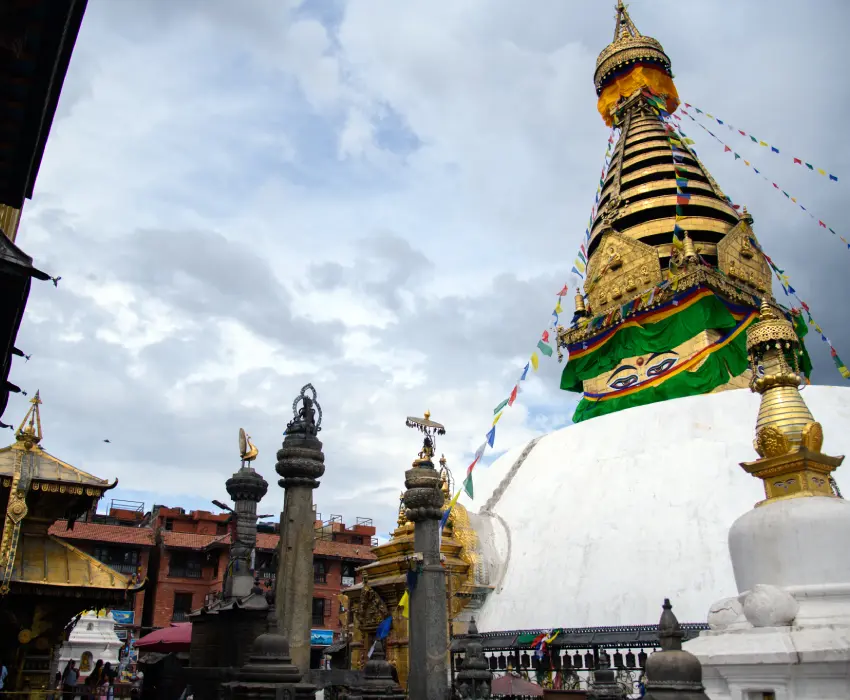
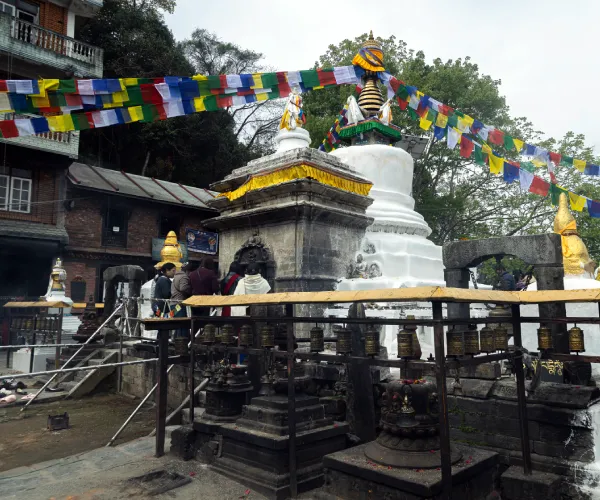
Rising above the Kathmandu Valley on a forested hill, Swoyambhunath Stupa is both visually commanding and spiritually foundational. Long before the valley became a dense urban landscape, this hill was revered as a place of awakening. Today, it stands at the heart of the Kathmandu Valley UNESCO World Heritage Site, embodying centuries of Buddhist art, architecture, and uninterrupted religious practice.

According to ancient Newar Buddhist texts, the valley was once a vast primordial lake. From its waters emerged a radiant lotus, symbolizing innate wisdom. When the Bodhisattva Mañjuśrī arrived and drained the lake, the lotus transformed into the self-arisen flame of enlightenment—Svayambhū, “the self-existent.” This story is not merely mythic; it expresses a core Buddhist teaching: wisdom does not need to be created, only revealed.

Architecturally, Swoyambhunath presents the classical stupa form that later spread across Asia. The great white dome rises like a still mind, crowned by the square harmikā bearing the all-seeing eyes of the Buddha, gazing compassionately in every direction. Above it, the golden spire ascends in thirteen stages, symbolizing the progressive realization of enlightenment. Every element of the structure functions as a visual teaching, allowing even a silent observer to absorb Buddhist philosophy through form.

The ascent to the stupa is itself a pilgrimage. Stone steps pass prayer wheels, shrines, and ancient monasteries where Vajrayāna rituals continue daily. From the summit, the Kathmandu Valley unfolds below—a reminder of the stupa’s role as both spiritual axis and cultural guardian. Here, wisdom (prajñā) is not abstract; it is encountered through movement, view, and mindful presence.

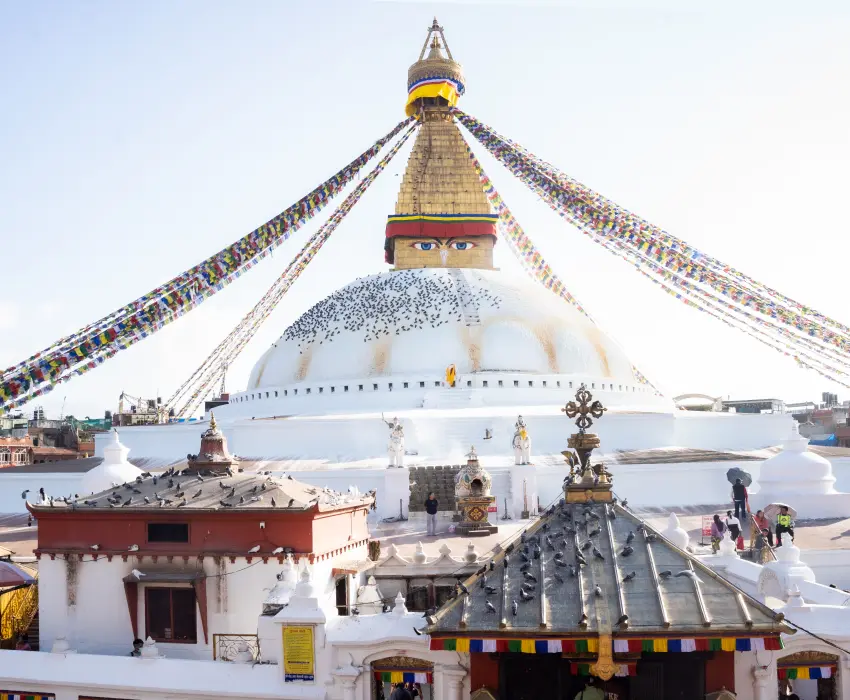
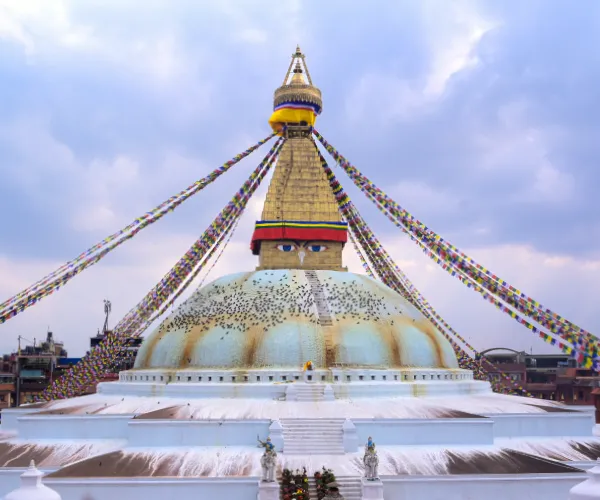
Where Swoyambhunath rises in contemplative elevation, Boudhanath Stupa expands outward in embrace. Located along historic trade routes linking Nepal and Tibet, Boudhanath has long served as a meeting point of cultures, lineages, and devotional traditions. Its inclusion within the Kathmandu Valley UNESCO World Heritage Site reflects not only its monumental scale but also its role as a living heart of Himalayan Buddhism.
The immense white dome of Boudhanath appears almost weightless despite its size, anchoring the surrounding settlement in a sacred geometry. The Buddha’s eyes gaze serenely over a continuous flow of pilgrims who circle the stupa from dawn until late evening. The circular path, lined with prayer wheels and butter-lamp offerings, creates a moving mandala where devotion becomes collective action.

Surrounding the stupa are monasteries representing Tibetan, Nepali, Bhutanese, and Himalayan Buddhist traditions. Their presence reflects centuries of cultural exchange, migration, and shared faith. Inside these monasteries, monks debate philosophy, perform rituals, and preserve lineages that extend far beyond national borders.

Spiritually, Boudhanath is deeply associated with Avalokiteśvara, the Bodhisattva of Compassion. The continuous recitation of Om Mani Padme Hum is not symbolic alone—it is an active cultivation of compassion for all beings. UNESCO recognition protects the site’s physical form, but its true heritage lies in this uninterrupted rhythm of prayer, community, and altruistic intention.

In contrast to the urban sacred centers of Kathmandu, Lumbini unfolds as a vast, contemplative landscape in the plains of southern Nepal. Recognized by UNESCO as a World Heritage Site, Lumbini is not a single monument but an entire sacred zone preserved for its unparalleled historical and spiritual significance. This is the place where Siddhartha Gautama was born in the 6th century BCE—a fact confirmed by archaeological evidence and the Ashokan Pillar erected over 2,200 years ago.

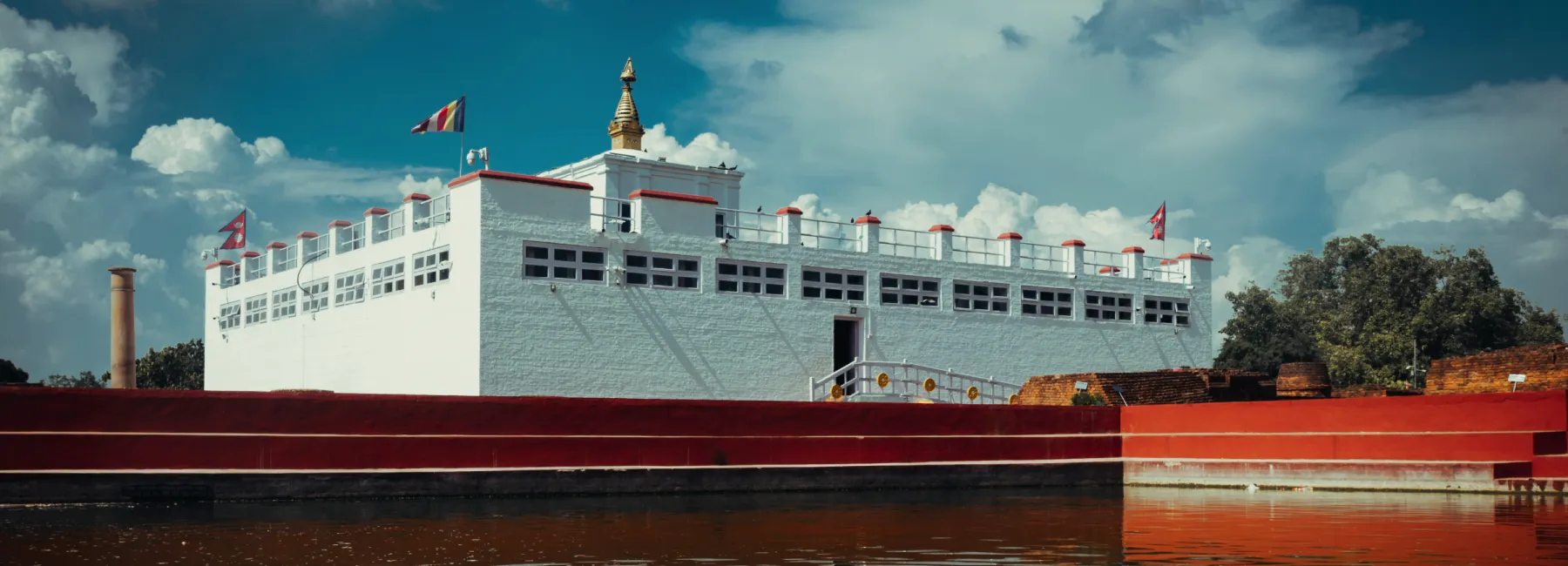
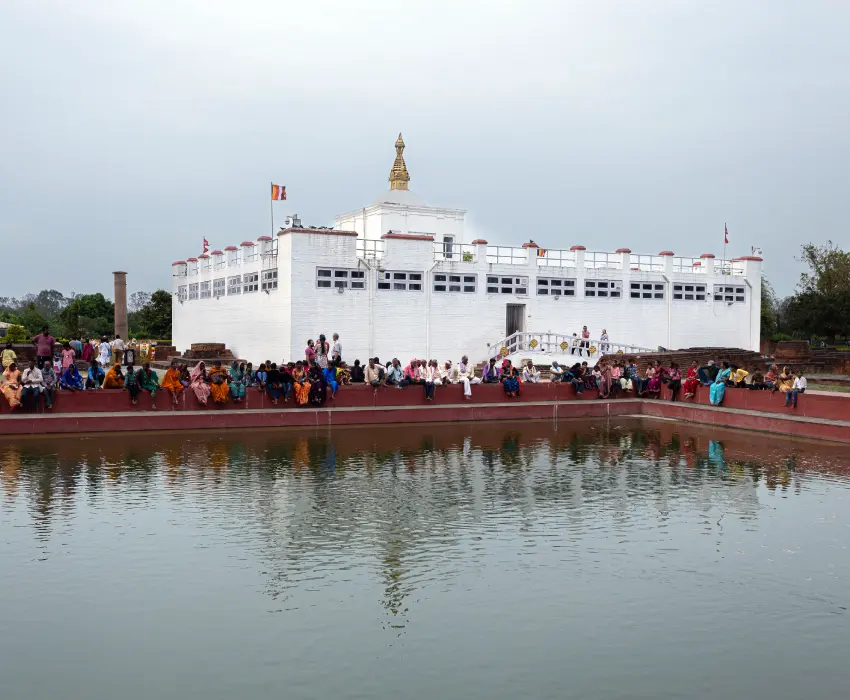
At the heart of Lumbini stands the Maya Devi Temple, marking the exact birthplace of the Buddha. Beneath it lie archaeological remains of earlier shrines, revealing centuries of continuous reverence. Nearby, the sacred pond where Queen Maya Devi is believed to have bathed still reflects the quiet dignity of the site.

Beyond this focal point, Lumbini expands into monastic zones carefully planned to encourage peace and reflection. Monasteries built by Buddhist nations from across the world line the grounds, each expressing its cultural identity while honoring the same source of awakening. Wide walkways, water canals, meditation gardens, and open skies create an atmosphere unlike any other UNESCO site—intentionally spacious, silent, and inward-turning.

Lumbini’s heritage value lies not only in its authenticity but in what it represents: the possibility of awakening within human life. Spiritually, it invites contemplation on intention, impermanence, and responsibility. Visitors do not come to witness grandeur; they come to encounter simplicity, origin, and potential.

Together, Swoyambhunath, Boudhanath, and Lumbini form a coherent Buddhist narrative preserved as world heritage:

  • Lumbini reveals the human beginning of enlightenment
  • Swoyambhunath expresses the awakening of wisdom
  • Boudhanath embodies compassion lived collectively

These sites demonstrate why Buddhism is not only a religion but a cultural force that shaped art, ethics, architecture, and community life across Asia—and why their preservation matters to all humanity.

Selecting the right guide and operator makes this pilgrimage deeply meaningful and effortless. Nirvana Journey ensures every step of the tour aligns with both spiritual engagement and comfort:

  • Expert Spiritual Guidance: Our guides have profound knowledge of Buddhist philosophy, history, and rituals, providing context, storytelling, and insights into each site’s significance.
  • Personalized Experience: Whether you are a seasoned practitioner or first-time visitor, the tour pace, meditative practices, and explanations are tailored to your needs.
  • Cultural Immersion: Beyond visiting sites, interact with local Buddhist communities, observe rituals, and witness centuries-old traditions alive today.
  • Holistic Environment: Accommodations, routes, and meals are thoughtfully selected to support mindfulness, reflection, and inner calm.
  • Seamless Logistics: Nirvana Journey ensures all transport, guidance, and scheduling are smooth, allowing pilgrims to focus fully on spiritual experience.

With Nirvana Journey, the UNESCO Buddhist Heritage Sites Tour becomes more than sightseeing—it is a living encounter with the teachings of the Buddha, a walk through centuries of devotion, and a transformative spiritual journey.

A journey through Nepal’s UNESCO Buddhist heritage sites is not about observing the past from a distance. It is about entering places where history breathes, where stone and silence still teach, and where the path of wisdom and compassion remains open to anyone willing to walk it.

Here, world heritage becomes inner heritage.

Highlights

  • Walk in the footsteps of Gautama Buddha at his birthplace, Lumbini, and feel the sacred energy of the site.
  • Meditate and offer prayers at the Maya Devi Temple and near Puskarni Pond. Experience global Buddhist traditions in the serene Monastic Zone, visiting monasteries of Theravada, Mahayana, and Vajrayana practices.
  • Connect with nature and mindfulness at the Lumbini Crane Sanctuary and reflect at the World Peace Pagoda.
  • Observe and participate in rituals, kora, and chanting at Boudhanath Stupa and Swayambhunath Stupa. Explore the sacred sites of Ramagrama Stupa, Tilaurakot, and other Shakya Kingdom sites connected with Buddha’s early life.
  • Reflect on compassion, selflessness, and the path of mindfulness while visiting Namo Buddha and other pilgrimage sites along the journey.
  • Complete a spiritual journey that nurtures inner peace, wisdom, and awakening.

Itinerary Expand All Collapse All

  • TransportationPrivate Vehicle
  • AccommodationDeluxe Hotel
  • Included MealsDinner Only

Upon arrival at Tribhuvan International Airport, you will be warmly welcomed and transferred to your hotel. Take some time to rest and adjust to the spiritual atmosphere of Kathmandu.

Depending on your arrival time, you may choose to take a gentle walk nearby or simply relax at the hotel, allowing yourself to absorb the calm energy of this ancient city. Overnight stay in Kathmandu.

  • TransportationPrivate Vehicle
  • AccommodationDeluxe Hotel
  • Included MealsFull Board Meal

After breakfast, begin your spiritual journey at the majestic Boudhanath Stupa, one of the largest stupas in the world and a center of Tibetan Buddhist devotion.

Arriving at Boudhanath, you will see pilgrims performing kora (walking clockwise around the stupa), spinning prayer wheels, chanting mantras like Om Mani Padme Hum, and offering butter lamps. Visitors can join these rituals, sit in quiet meditation, or observe monks engaged in their daily practices. The surrounding monasteries showcase diverse Buddhist traditions, making it a living hub of spiritual activity.

Next, proceed to Swayambhunath Stupa, the ancient “Self-Arisen Stupa” perched on a hilltop. After climbing the steps, enjoy panoramic views of the Kathmandu Valley while joining in prayers, spinning prayer wheels, and reflecting on the stupa’s symbolism of wisdom and enlightenment.

After completing both visits, return to your hotel. Evening is free for rest or personal reflection.

  • TransportationPrivate Vehicle
  • AccommodationDeluxe Hotel
  • Included MealsFull Board Meal

After breakfast, embark on a scenic drive to Lumbini, the birthplace of Gautama Buddha. Travel through lush hills, rivers, and traditional villages, enjoying the tranquil landscapes along the Terai plains.

Upon arrival, check into your hotel and relax. The rest of the day is free to enjoy the peaceful environment or take a quiet walk around the hotel area. Overnight stay in Lumbini.

  • TransportationPrivate Vehicle
  • AccommodationDeluxe Hotel
  • Included MealsFull Board Meal

Today, dedicate your time to exploring the sacred Lumbini Sacred Garden, a UNESCO World Heritage Site.

Visit the Maya Devi Temple, marking the exact birthplace of Buddha, and spend some time meditating near the Puskarni Pond. Explore the historic Ashoka Pillar and walk through the Monastic Zone, where monasteries from different Buddhist traditions offer spaces for meditation and reflection.

Later, visit the serene World Peace Pagoda and the Lumbini Crane Sanctuary, where graceful Sarus cranes enhance the peaceful spiritual ambiance. Reflect, meditate, and absorb the sacred energy throughout the day. Overnight stay in Lumbini.

  • TransportationPrivate Vehicle
  • AccommodationDeluxe Hotel
  • Included MealsFull Board Meal

Today, journey through the sacred sites connected to the early life of Buddha and the Shakya Kingdom.

Begin with Ramagrama Stupa, preserving ancient relics of Buddha. Visit Tilaurakot, believed to be the palace where Prince Siddhartha spent his childhood. Continue to Kudan, and further explore Sagarhawa, Niglihawa, and Gothihawa—all sites with deep historical and spiritual significance.

Return to Lumbini for overnight stay.

  • TransportationPrivate Vehicle
  • AccommodationDeluxe Hotel
  • Included MealsFull Board Meal

After breakfast, begin your scenic return journey to Kathmandu. Travel through the Terai plains, forests, rivers, and local villages, reflecting on the spiritual experiences of your pilgrimage.
Upon arrival, check into your hotel and enjoy the remainder of the day at leisure or for personal reflection. Overnight stay in Kathmandu.

  • TransportationPrivate Vehicle
  • Included MealsBreakfast Only

After breakfast and hotel check-out, you will be transferred to Tribhuvan International Airport (approx. 6–8 km / 20–30 minutes) for your onward flight.

Carry the blessings, insights, and inner peace gained from visiting Nepal’s UNESCO Buddhist heritage sites—from Kathmandu’s sacred stupas to the holy birthplace of Buddha in Lumbini. May this journey continue to inspire mindfulness, compassion, and spiritual awakening.

What's Included

    • Arrival & Departure: Complimentary private airport and bus station transfers to and from your hotel.
  • Accommodation:
    • Kathmandu & Cities: Deluxe hotel accommodation in Kathmandu (3 nights), and Lumbini (3 nights) on a Bed & Breakfast basis.
  • Meals: Full-board vegetarian meals (Breakfast, Lunch, and Dinner) throughout the duration of the pilgrimage.
  • Permits & Fees 
    • Sightseeing Entry fees in Lumbini
    • Sightseeing entry fees for Boudhanath and Swayambhunath.
    • All government taxes, office service charges
  • Transportation: All ground transfers via private, air-conditioned vehicle (or tourist bus where applicable) as per the sacred itinerary.
  • Expert Leadership: Highly experienced, English-speaking guide specializing in Himalayan Buddhism and Vajrayana history.
  • Safety & Support: Comprehensive first-aid medical kit and 24/7 office support during the tour.

What's Not Included

  • Travel Documentation: Nepal Entry Visa fees and International airfare.
  • Personal Gear & Expenses: Travel insurance (mandatory), laundry, telephone calls, and internet/Wi-Fi charges.
  • Beverages: Bottled water, soft drinks, juices, and alcoholic beverages.
  • Monastery Offerings: Individual donations (Dana) to monasteries, monks, or for private butter lamp offerings and poojas.
  • Tipping: Gratuities for your guide and driver (a traditional gesture of appreciation).
  • Contingencies: Any costs arising from unforeseen circumstances such as flight delays, landslides, political unrest, or health evacuations.

Talk to an Expert

Quick Inquiry

Nirvana Journey is the dedicated spiritual travel division of Asia Buddhist Tours & Treks, specializing in authentic Buddhist pilgrimages, sacred journeys, and transformative experiences across the Himalayan region asiabuddistours.com

Contact us