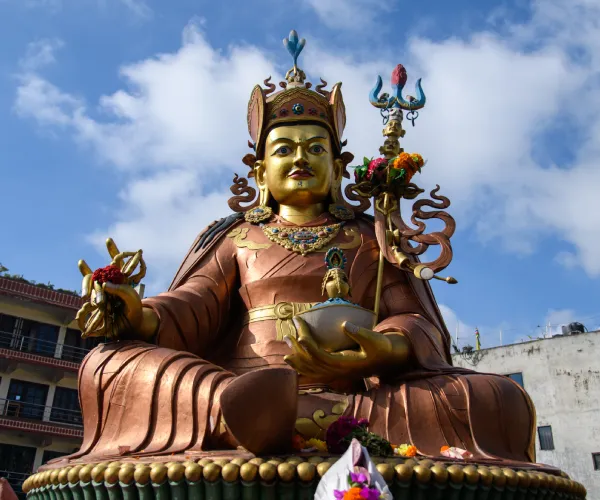
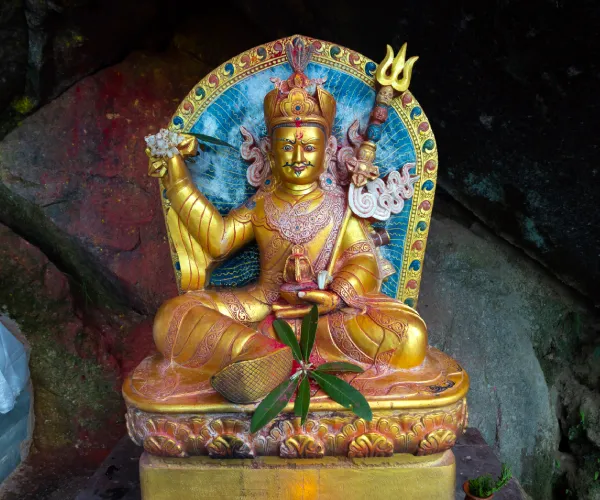
The Vajrayogini sacred sites in Nepal form a living network of power places, from Sankhu to Pharping, Nagarjun, Bijeshwari, Champa, Bajrabarahi, and Guhyeshwari. Together, they create a spiritual circuit where each site’s energy flows into the next, allowing pilgrims to progressively attune to Vajrayogini’s enlightened presence.
This path is more than travel—it is a Vajrayana practice journey, connecting external pilgrimage with inner transformation. Each step offers the chance to receive blessings, meditate, and cultivate insight, aligning with the wisdom, courage, and compassion of Vajrayogini herself.
Sankhu Vajrayogini Temple – Eldest Yogini and Core Vajrayana Power Place
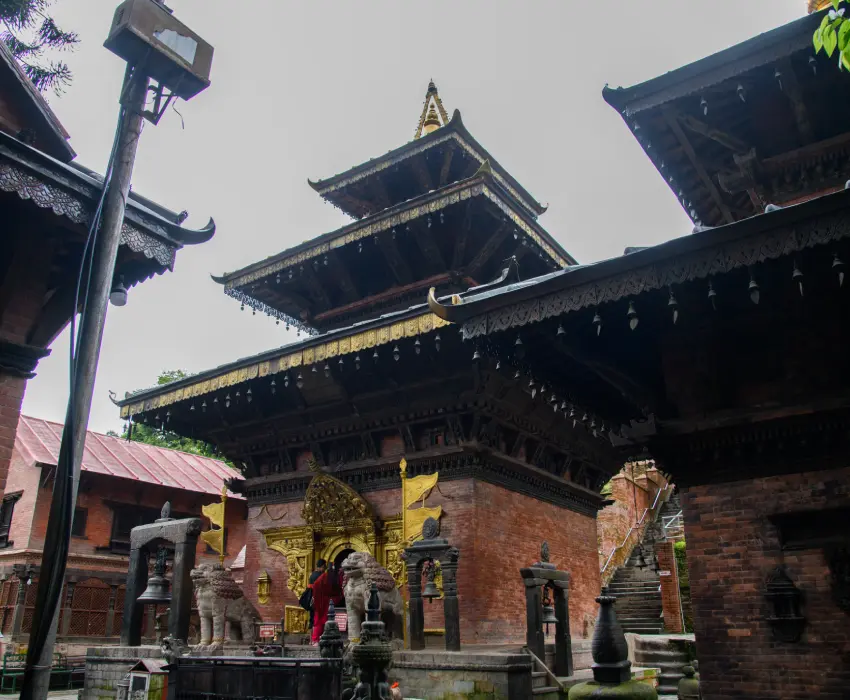
In the heart of the ancient town of Sankhu, shaped like a sacred conch shell at the edge of the Kathmandu Valley, rises the hilltop shrine of Bajrayogini, the eldest among the region’s primary Yoginis. Known in the Newar Buddhist tradition as Khadga Jogini, she embodies supreme tantric wisdom as the Sarva Buddha Dakini, residing in a golden three-tiered pagoda that anchors the spiritual life of the town below.
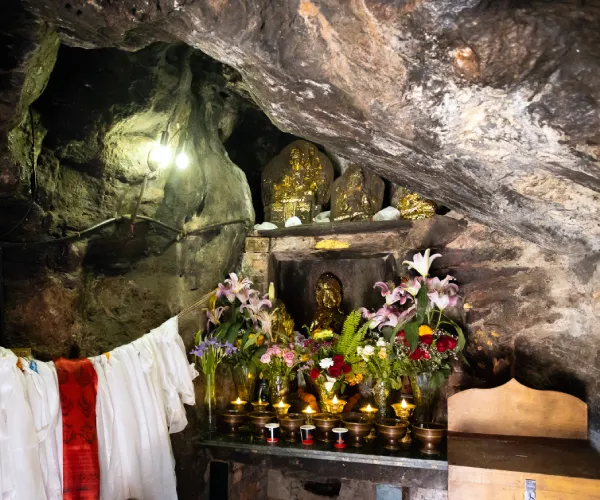
The ascent to her shrine, a grand stone staircase of over three hundred steps, symbolizes the journey from the mundane to the sacred, leading toward the Gun-Vihara, an ancient monastic site where the Nine Caves of the Mahasiddhas, including those of Nagarjuna, echo with centuries of meditative practice.
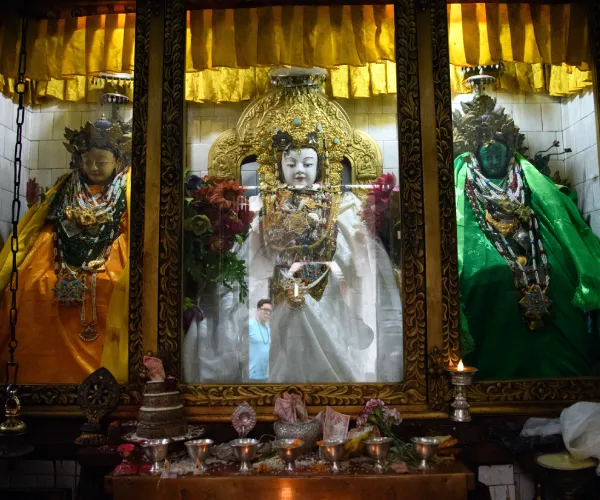
Inside the temple, Vajrayogini is flanked by her fierce messengers, Baghini and Singhini, tiger and lion-headed deities representing mastery over instinct and the courage of Dharma. The gilded Torana and intricately carved wooden eaves reflect the Newar craftsmanship of the Licchavi and Malla eras, turning the temple itself into a living Vajrayana mandala.
The upper chamber holds a profound triad: a standing Buddha, Lokeswar, and the Jogini. This arrangement mirrors the tantric path—enlightenment, compassionate activity, and wisdom cutting through ego—and recalls the legendary sacrifice of King Manichur, whose selfless act birthed the Shali Nadi river, leaving the goddess’s sword as a timeless symbol of detachment.
As Jethaamaju, the Eldest Mother, Sankhu Vajrayogini presides over the spiritual hierarchy of the valley. Her shrine contains an eternal flame, and during the annual Chaitra Jatra, her idol is paraded in a chariot while the sacred sword is ritually exchanged with the head of state, symbolizing protection and blessing for the land. Even today, self-arisen images, ancient water taps, and continuous Vajracharya rituals preserve the living lineage of practice, reflecting the enduring power of this Vajrayogini sacred site in Nepal.
Pharping Vajrayogini Temple (Phamting Vajrayogini) – Vividly Present Dakini Power Place
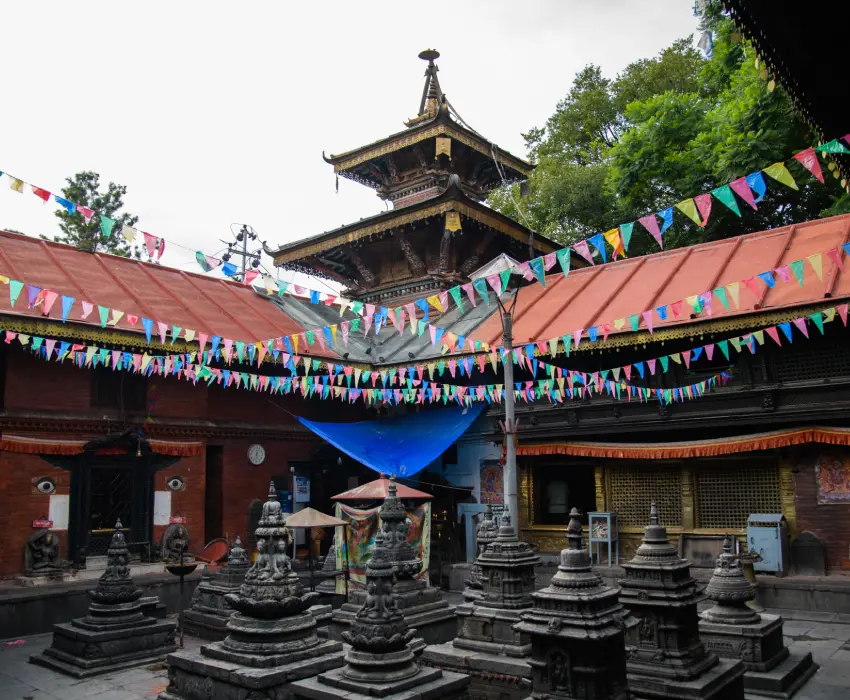
Within the sacred geography of the Kathmandu Valley, Pharping Vajrayogini Temple, locally known as Phamting Vajrayogini, stands as one of the most esoterically potent Vajrayogini sacred sites in Nepal. Situated on the southwestern rim of the valley in the historic village of Pharping (ancient Phanping), this shrine is revered as the third of the four principal Yoginis—honored not as the Eldest, but as the “Vividly Present” Dakini, where the boundary between ordinary perception and enlightened awareness is felt to be exceptionally thin.
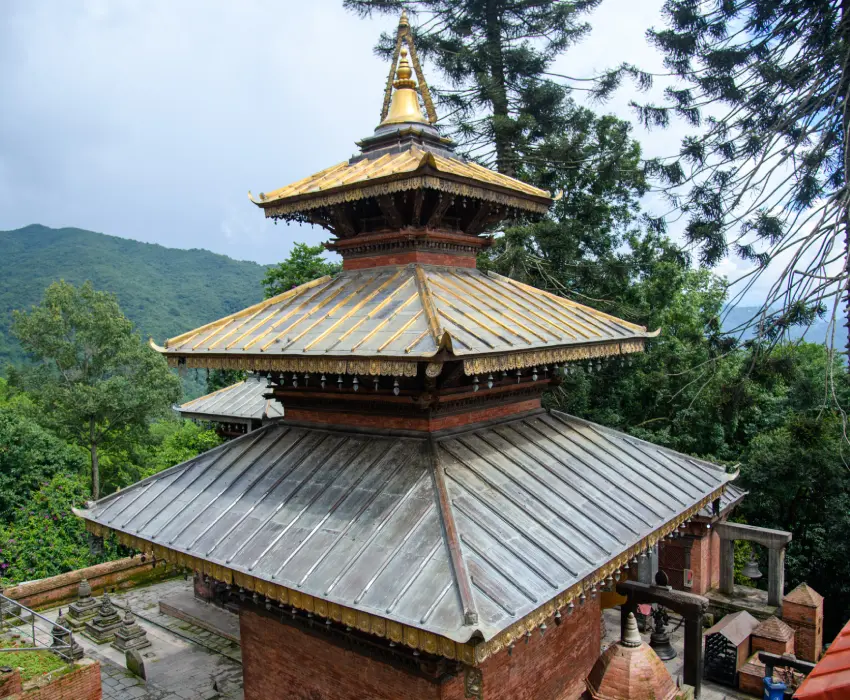
Architecturally, the temple is a refined expression of Newar Buddhist mastery. Its intimate, multi-tiered pagoda with a copper-plated roof rests against limestone cliffs and pine forests, harmonizing seamlessly with the caves and hillsides that define Pharping as a Vajrayana power place. The gilded Golden Torana above the entrance depicts Vajrayogini in her fierce tantric form, signaling that this is a Siddhapitha—a site of direct realization rather than symbolic devotion.
Inside the inner sanctum, the red-faced Vajrayogini appears in her dynamic posture of dancing on emptiness, flanked by Singhini and Baghini, the lion- and tiger-headed attendants who guard her secret energies. In Vajrayana understanding, they represent the transformation of fear and aggression into fearless wisdom. Ritual offerings—flowers, incense, and consecrated alcohol—reflect authentic tantric methods where the senses themselves are purified and liberated.
The spiritual authority of this site is deeply connected to the Mahasiddha Phamtingpa and his brother, 11th-century Newar tantric masters and disciples of Naropa. Through years of intensive practice here, they are said to have received a direct vision of Vajrayogini, establishing Pharping as a global pilgrimage center for Chakrasamvara and Vajrayogini tantra practitioners. This lineage connection is further amplified by Pharping’s proximity to Asura Cave, where Guru Padmasambhava attained supreme realization—earning Pharping its reputation as a “Second Bodh Gaya” within the Vajrayana world.
Spiritually, Pharping Vajrayogini serves as a bridge of tantric application. Where Sankhu represents primordial origin, Pharping embodies lived practice—daily rituals performed by Vajracharya priests, unchanged for centuries, sustain a continuous living lineage. The sound of bells, butter lamps, and mantra-filled air creates an atmosphere not of a public monument, but of a living gateway into the dakini realms, making this Vajrayogini sacred site in Nepal an essential stop on any authentic Vajrayana pilgrimage.
Nagarjun Vajrayogini Temple (Jamacho Vajrayogini) – The Secret Heart of Vajrayana Above the Kathmandu Valley
Rising above the northern edge of the Kathmandu Valley, hidden within the dense forests of Nagarjun Hill, the Nagarjun Vajrayogini Temple—also known as Jamacho Vajrayogini—occupies a uniquely elevated position in Nepal’s Vajrayana sacred landscape. Though sometimes counted among the valley’s secondary Yogini sites, this shrine is revered by practitioners as a “Secret Heart” power place, guarding the valley from above and embodying the Vajrayana principle that awakening requires an expanded, elevated view beyond ordinary perception. Closely associated with the element of air, Jamacho Vajrayogini symbolizes the clarity and spaciousness necessary for realizing ultimate truth.
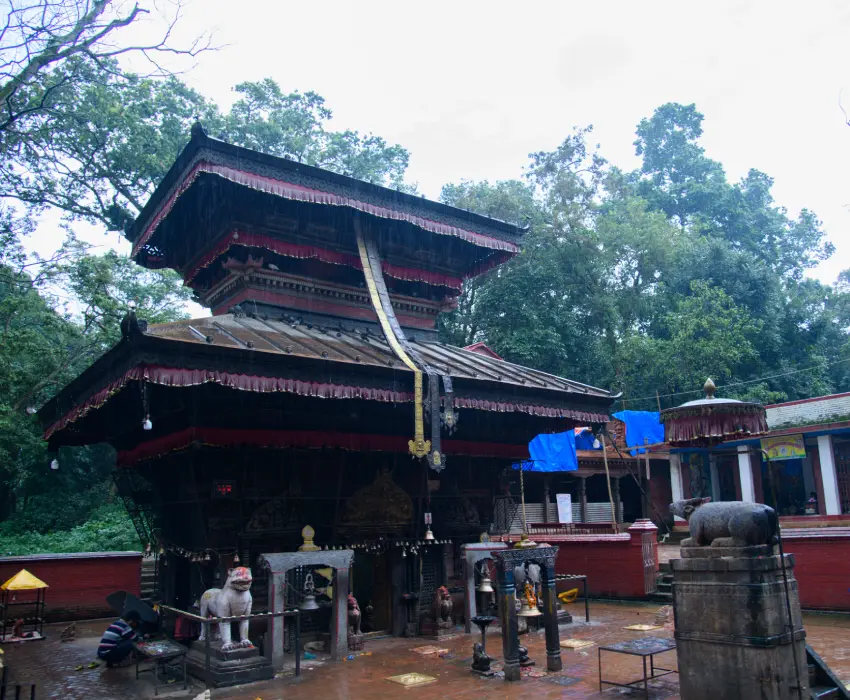
Architecturally, the temple reflects disciplined restraint rather than ornamentation. Built in the traditional Newar pagoda style, its thick stone base and heavy timber eaves are designed to endure the winds and weather of this high-altitude sanctuary. The carved wooden struts often depict forest-dwelling dakinis, subtly reminding pilgrims that Vajrayogini’s domain transcends cities and rituals, extending into the raw, untamed spaces of mind and nature. As in Sankhu and Pharping, the central red-faced Yogini is accompanied by Baghini and Singhini, the tiger- and lion-headed guardians who stand at the threshold—symbolizing mastery over instinct and emotion before entry into higher wisdom.
The spiritual authority of this site is inseparable from Nagarjuna, the great Mahasiddha and philosopher of emptiness for whom the hill is named. Vajrayana tradition holds that Nagarjuna meditated in the caves near this summit, where he perceived Vajrayogini as a direct manifestation of Śūnyatā (emptiness)—not as absence, but as luminous openness. In this way, the temple marks the meeting point of philosophical insight and tantric realization, where the Middle Way becomes lived experience. Upper shrine representations of Buddhas and Bodhisattvas affirm that the Yogini’s fierce energy is always directed toward the ultimate goal of Buddhahood.
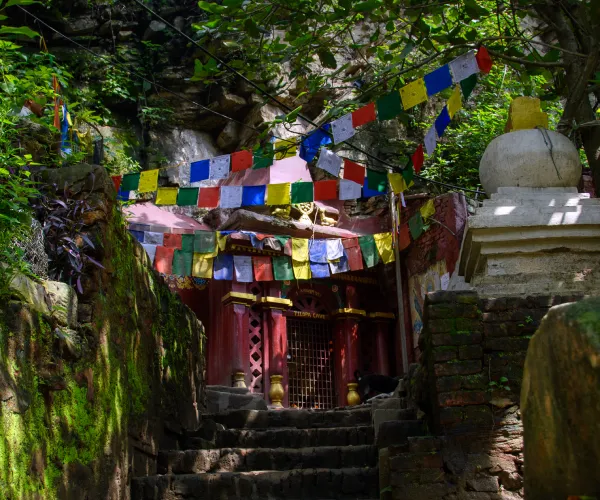
Ritual life at Jamacho Vajrayogini is notably quiet and introspective. Reaching the shrine requires a steep ascent through forested paths, turning the pilgrimage itself into a practice of purification and resolve. Ancient stone chaityas and meditation platforms surrounding the courtyard testify to centuries of retreat practice by Vajracharya and Shakya practitioners. From this vantage point—overlooking the entire valley—the practitioner encounters Vajrayogini as Khecarī, the Sky-Goer, the awakened energy that rises beyond ego-bound limitations and abides effortlessly in the open sky of wisdom.
Vidyeshvari (Bijeshwari) Vajrayogini Temple – The Sky-Encompassing Goddess of Knowledge
Completing the sacred circle of the four principal Yogini power places of the Kathmandu Valley is Bijeshwari Vajrayogini Temple, also known as Vidyeshvari—the “Goddess of Knowledge.” Situated along the banks of the holy Bishnumati River between Swayambhunath Stupa and central Kathmandu, she is revered as the Akash Yogini, the Sky-Encompasser. Where Sankhu embodies primordial origin, Pharping vivid presence, and Nagarjun elevated insight, Vidyeshvari represents the all-pervading expanse of awakened mind, moving freely like lightning across open sky.
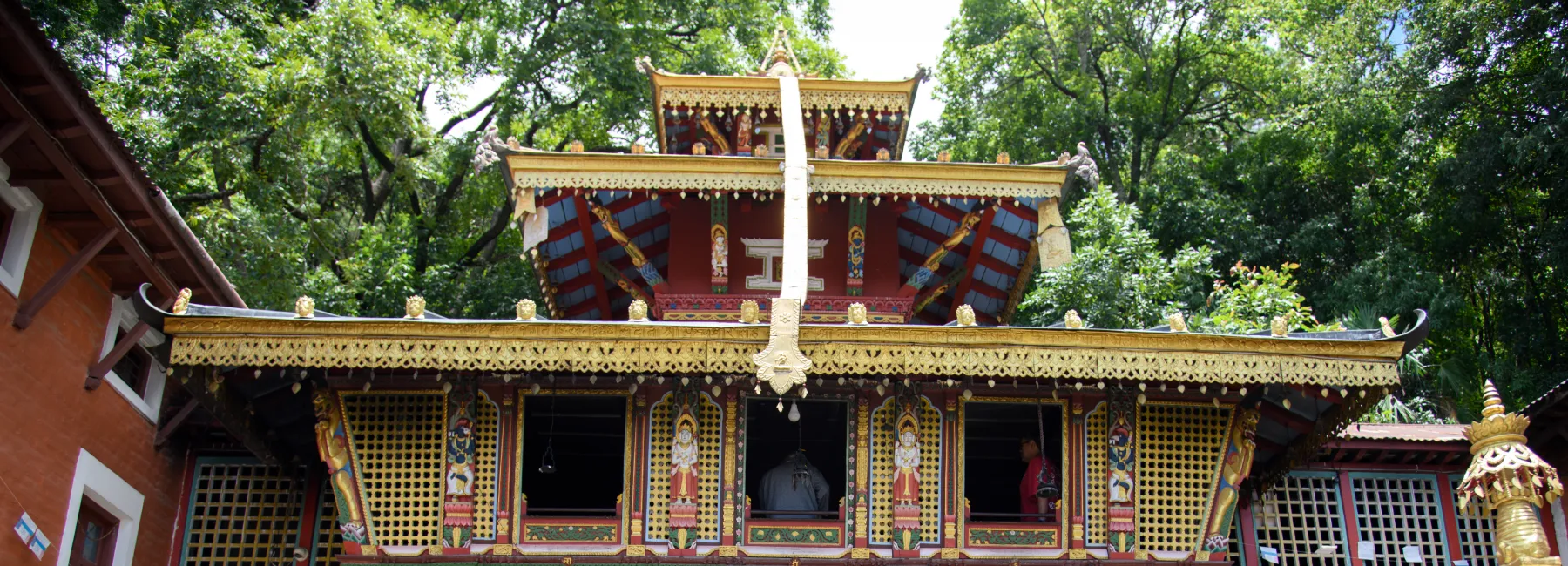
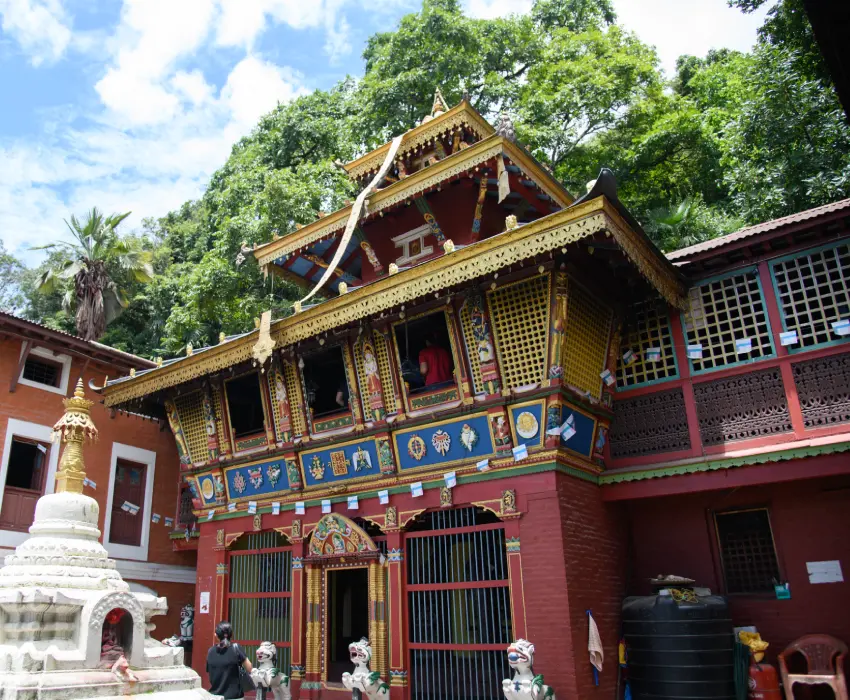
Architecturally, the temple is a refined example of the traditional Bahal (monastic courtyard) style. The two-tiered pagoda stands at the heart of an enclosed courtyard alive with ritual activity and priestly residence, creating an atmosphere of continuous Vajrayana practice. Delicate wooden carvings of “Flying Deities” adorn the struts, symbolizing mastery over the air element. The gilded Golden Torana above the sanctum door—considered a masterpiece of Newar metalwork—depicts the goddess in dynamic dance, radiating enlightened motion and awareness.
Within the inner sanctum, Vidyeshvari stands in strict tantric iconographic form, flanked by Baghini and Singhini, the tiger- and lion-headed attendants. Here they are understood as swift vehicles of enlightened action, descending from the sky to protect and empower practitioners. The upper chamber houses bronze images of the Buddha and Avalokiteshvara, affirming a core Vajrayana principle: the fierce dakini energy is the dynamic force that activates compassion and wisdom on the path to Buddhahood.
Historically, Vidyeshvari is closely linked to the Mahasiddha traditions of India and Nepal. Early tantric masters are believed to have paid homage here before ascending to Swayambhu. The temple is especially associated with the Chapa-gata (bow-holding) form of the goddess, symbolizing her ability to aim the arrow of awareness directly at ignorance. For the Vajracharya community, this shrine remains a vital center for the transmission of the Guhyasamaja and Chakrasamvara tantras. Its proximity to the river and nearby cremation grounds reinforces its character as a charnel ground power place, where impermanence becomes a gateway to rapid spiritual transformation.
Together with Sankhu, Pharping, and Nagarjun, Vidyeshvari completes the Vajrayogini mandala of the Kathmandu Valley, protecting the four directions and symbolizing the four stages of the spiritual path—origin, presence, elevation, and all-pervading realization.
Bajrabarahi Temple – The Earth-Rooted Wisdom Dakini of the Southern Valley
In the southern reaches of the Kathmandu Valley, near Patan and Chapagaon, stands Bajrabarahi Temple, a sacred Vajrayogini power place uniquely rooted in the earth element. Unlike the hilltop Yogini shrines associated with sky and elevation, Bajrabarahi dwells within the dense woodland of the Bajrabarahi Forest, a protected grove revered as a living mandala of biodiversity and tantric presence. Here, forest and shrine merge into a single spiritual ecosystem.
Architecturally, the temple is a two-tiered Newar pagoda set within a low-lying woodland clearing rather than atop a peak. The intricately carved wooden struts and doors are among the valley’s finest, frequently depicting the Ashta Matrikas (Eight Mother Goddesses), with Barahi as a central figure. Many surrounding shrines notably lack a traditional gajur (pinnacle), reflecting the local belief that the goddess prefers to remain open to the forest canopy, unconfined beneath the sky.
Inside the sanctum, the iconography shifts to the sow-faced Varahi (Vajravarahi)—a powerful tantric form representing the transformation of moha (ignorance) into penetrating wisdom. As in the other Yogini temples of the valley, she is flanked by Baghini and Singhini, guardians of her terrestrial force. In the upper chamber, images of the Buddha and Lokeswar affirm that her fierce, grounding energy ultimately serves the compassionate aim of Buddhahood.
Local tradition attributes the founding of this shrine to King Shanker Dev, who is said to have encountered the goddess within the forest itself. Unlike the “Sky-Goer” Yoginis, Bajrabarahi is the earth-digging Varahi, symbolizing the power to uproot the deepest layers of delusion. For the Vajracharya priests of Patan, this remains a vital ritual center, especially during the annual Jatra when the goddess is invoked to bless the land and surrounding agricultural fields.
The forest itself is regarded as the body of the deity—no branch or leaf is traditionally removed, as it is believed to be her living presence. Thus, Bajrabarahi Temple represents a rare and profound intersection of Vajrayana tantra and environmental reverence, where sacred architecture exists in complete harmony with the architecture of nature, and the earth itself becomes an expression of awakened wisdom.
Guhyeshwari Temple – Hidden Source of Empowerment
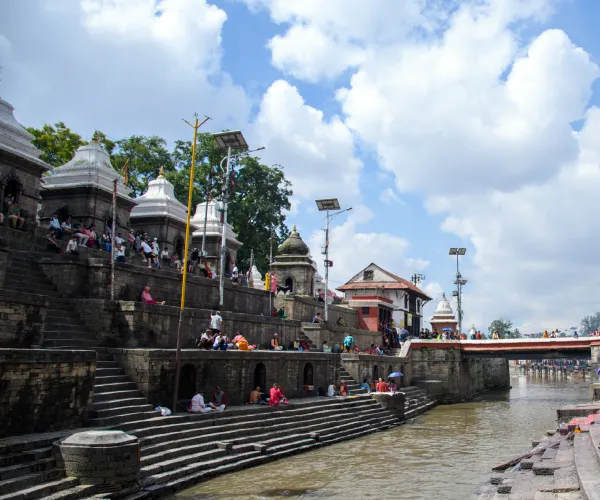
Situated on the banks of the sacred Bagmati River near the revered Pashupatinath Temple, the Guhyeshwari Temple is the most esoteric of the valley’s primary power places. In the Newar Buddhist tradition, she is worshipped as Guhya-samaya Vajrayogini, the “Secret Bond” goddess. While Sankhu embodies the eldest sister and outward radiance, Guhyeshwari represents the hidden, inner essence of tantric realization. Her name—Guhya (secret) and Ishwari (goddess)—reveals her identity as the concealed root of the valley’s spiritual current.
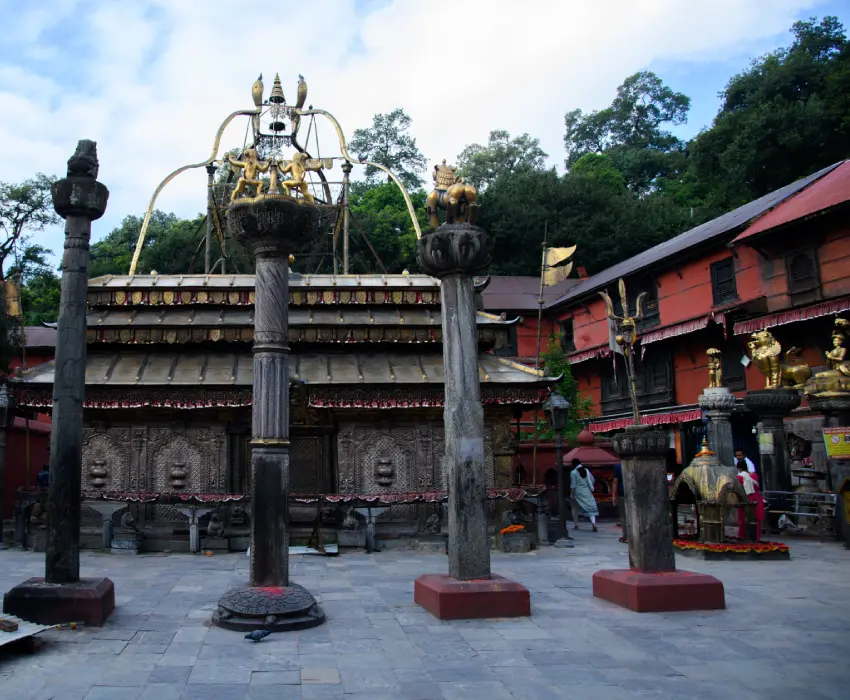
Architecturally, the shrine departs from the classic multi-tiered pagoda style. Designed as an open blooming lotus, four gilded pillars support a canopy symbolizing the four directions of the mandala. The open-air form reflects a key doctrine: the goddess is not confined to an image but pervades all space. At the center lies no conventional idol—instead, worship focuses on a silver-plated well or kalasha, a self-arisen sacred source descending into the earth, symbolizing the primordial waters from which the valley emerged.
Within the sanctum, Baghini and Singhini stand as fierce guardians of the hidden center, representing the alchemical transformation of the five poisons into the five wisdoms. In the upper chamber, bronze figures of the Standing Buddha and Standing Lokeswar affirm that her secret, often intense energy is inseparable from bodhisattva compassion and the aim of enlightenment.
Her origin is linked to the Swayambhu Purana, where she is described as the root of the cosmic lotus that once floated upon the prehistoric lake of the Kathmandu Valley. As the consort of Chakrasamvara, this temple serves as a principal site for the highest Vajrayana initiations (Dekha) performed by Vajracharya priests. Ritual offerings of the five nectars are conducted here in secrecy and precision.
Unlike hilltop Yogini shrines, Guhyeshwari rests in the valley fold beside the river—the valley’s living artery—symbolizing the subtle life-force flowing through all beings. She reminds practitioners that the deepest empowerment arises not from outward ascent, but from entering the hidden source within.
Godawari Kunda: The Nectar of Vajrayoginī at the Foot of Phulchowki
Nestled at the peaceful southern rim of the Kathmandu Valley, Godawari Kunda is a sacred spring and an important stop on the Vajrayoginī Sacred Sites Pilgrimage. Situated at the base of Phulchowki Hill—the highest hill surrounding the valley—this revered landscape holds profound significance in both Newar Vajrayana and Tibetan Buddhist traditions.
The Divine Nectar of Vajrayoginī
In Vajrayana tradition, Godawari Kunda is venerated as a manifestation of Vajrayoginī’s sacred nectar (Amṛta), symbolizing the inseparable union of wisdom and compassion. The crystal-clear spring is believed to arise from the subtle energetic body of the Red Dakini, and its waters are regarded as a powerful source of purification. Pilgrims ritually bathe or drink from the five sacred stone spouts (Dhunge Dhara) to cleanse negative karma, purify body and mind, and prepare the subtle channels for higher tantric practice.
A Sacred Landscape Blessed by Guru Rinpoche
The forests and meditation caves above Godawari are also intimately connected with Guru Padmasambhava. Tibetan Buddhist tradition holds that Guru Rinpoche practiced tantric meditation here in the 8th century, blessed the surrounding landscape, and concealed sacred Terma (hidden spiritual treasures) within its rocks, springs, and forested ravines for future generations.
Simhastha Mela: The Twelve-Year Sacred Gathering
Every twelve years, when Jupiter enters the constellation of Leo, Godawari hosts the celebrated Simhastha Mela. During this rare and highly auspicious festival, Vajracharya priests, Buddhist monks, nuns, and thousands of pilgrims gather to perform purification rituals, make offerings, and receive the blessings of Vajrayoginī’s sacred waters.
As part of the Vajrayoginī Sacred Sites Tour in Nepal, Godawari Kunda offers a unique experience of ritual purification, tantric heritage, and the living spiritual traditions of the Kathmandu Valley.
Vajrayana Meaning of Visiting Vajrayogini Sacred Sites
In Vajrayana Buddhism, visiting Vajrayogini sacred sites is not ordinary pilgrimage—it is entry into a living mandala. These power places are understood as embodiments of enlightened energy, where the wisdom aspect of the Dakini is especially accessible. The outer journey to the shrine mirrors the inner journey through subtle channels of the body and mind.
Vajrayogini represents the transformation of passion, ignorance, and ego into radiant wisdom. When practitioners circumambulate her temples, offer lamps, or receive blessings, they are symbolically enacting this transformation. The sacred geography of the Kathmandu Valley is itself viewed as a tantric body, with each Yogini shrine functioning as an energetic chakra. To visit them consciously is to activate inner realization.
Such pilgrimage generates punya (merit), but more importantly, it creates conditions for insight. The fierce iconography of Vajrayogini—her dynamic posture, blazing wisdom fire, and attendant guardians—reminds practitioners that awakening requires courage and direct engagement with one’s own obscurations.
Ultimately, the Vajrayana meaning of visiting these sacred sites lies in recognition: the goddess encountered externally is a mirror of one’s own innate wisdom mind. The shrine, the forest, the hilltop, and the river are supports for realizing that enlightenment is not elsewhere—it is awakened from within.