Visit the sacred site where the Bodhisattva's supreme act of compassion continues to inspire the world
A Journey Where Compassion Became Action
There are places that speak softly yet remain unforgettable. Places where history is not merely remembered but felt, where silence carries meaning, and where the human heart naturally turns inward. Namo Buddha is such a place.
The Namo Buddha Buddhist Pilgrimage Tour is a spiritually immersive journey into one of the most revered Bodhisattva sacred sites in Nepal. Located in the serene hills of the southeastern Kathmandu Valley, Namo Buddha is not only significant for Buddhists but deeply meaningful for anyone seeking depth, reflection, and connection beyond ordinary travel.
This pilgrimage does not require religious identity. It asks only for openness. The story enshrined here speaks a universal language—compassion in action, selflessness, courage, and the possibility of awakening through kindness. For spiritual seekers, cultural travelers, historians, meditators, and thoughtful explorers, Namo Buddha offers a rare opportunity to encounter a place where the highest human values were lived, not merely taught.
Unlike vast pilgrimage circuits that overwhelm with scale, Namo Buddha invites contemplation. It is close enough to Kathmandu to be accessible, yet distant enough to feel removed from the noise of the world. Here, mountains, forests, monasteries, and ancient stupas form a living mandala of meaning.
The Meaning of “Namo Buddha”
The name Namo Buddha originates from the ancient devotional phrase “Namo Buddhaya,” meaning “I take refuge in the Buddha.” In earlier centuries, when the region was dense forest and wild animals roamed freely, travelers recited this phrase to overcome fear and invoke protection. Over time, the phrase became inseparable from the land itself.
In Tibetan Buddhist tradition, the site is known as Takmo Lüjin, meaning “Giving the Body to the Tigress.” This name preserves the spiritual essence of the place: an act of generosity so complete that it transcended fear, attachment, and self-preservation.
Together, these names express the two pillars of the site’s identity—refuge in awakening and compassion expressed without limit.
Long before his final birth as Shakyamuni Buddha, the Enlightened One traversed the Bodhisattva path through countless lifetimes. Among these, the story associated with Namo Buddha is one of the most profound in Buddhist literature.
In a distant age lived King Great Charioteer, ruler of a flourishing kingdom sustained by merit and virtue. He had three sons: Great Sound, Great Deity, and the youngest, Great Being, also known as Prince Mahasattva. From early childhood, the youngest prince displayed spontaneous compassion and an unforced generosity that flowed naturally toward all beings.
After the sacrifice, the prince’s brothers returned to find only blood, bones, and fragments of clothing. When the news reached the royal camp, the queen fainted, and the king was overcome with sorrow. They rushed to the cave, where grief and reverence intertwined.
The prince was reborn in the celestial realm of Tushita as Great Courage. Seeing his parents consumed by grief, he appeared to them, explaining that his act was virtuous and meaningful beyond measure. He reminded them of impermanence, encouraged virtuous conduct, and assured them of future reunion.
Moved by understanding as well as sorrow, the king and queen gathered the relics of their son and placed them in a jeweled casket. Over this sacred repository, they built a stupa, transforming the site of sacrifice into a field of merit for all beings.
Thus, Namo Buddha was born—not merely as a location, but as a living embodiment of the Bodhisattva ideal.
During a royal journey through forested hills, the three princes encountered a cave sheltering a tigress who had just given birth. Starving and unable to hunt, she lay weakened beside her cubs. The elder princes raised their bows, but Prince Mahasattva stopped them, recognizing that killing one being to save another could never be a true solution.
Moved by profound compassion, he inquired how the tigress might be saved. Learning that only fresh flesh and blood would sustain her, the prince reflected deeply. Killing another being would violate his vow. Yet allowing the tigress and her cubs to die would be an act of indifference.
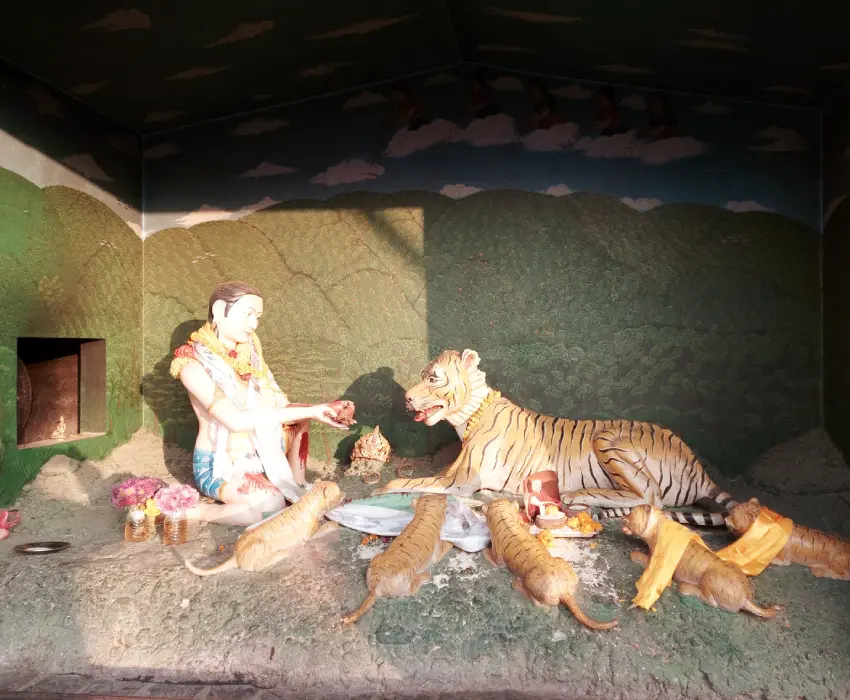
At that moment, Prince Mahasattva recognized a rare opportunity to practice Mahādāna, the perfection of supreme generosity. After sending his brothers away, he returned alone to the cave. Seeing that the tigress was too weak even to bare her fangs, he cut his body to draw blood. Strength returned to her. Rising, she devoured him, saving herself and her cubs.
This was not despair, but clear awareness united with boundless compassion—a conscious offering grounded in wisdom and Bodhisattva resolve.
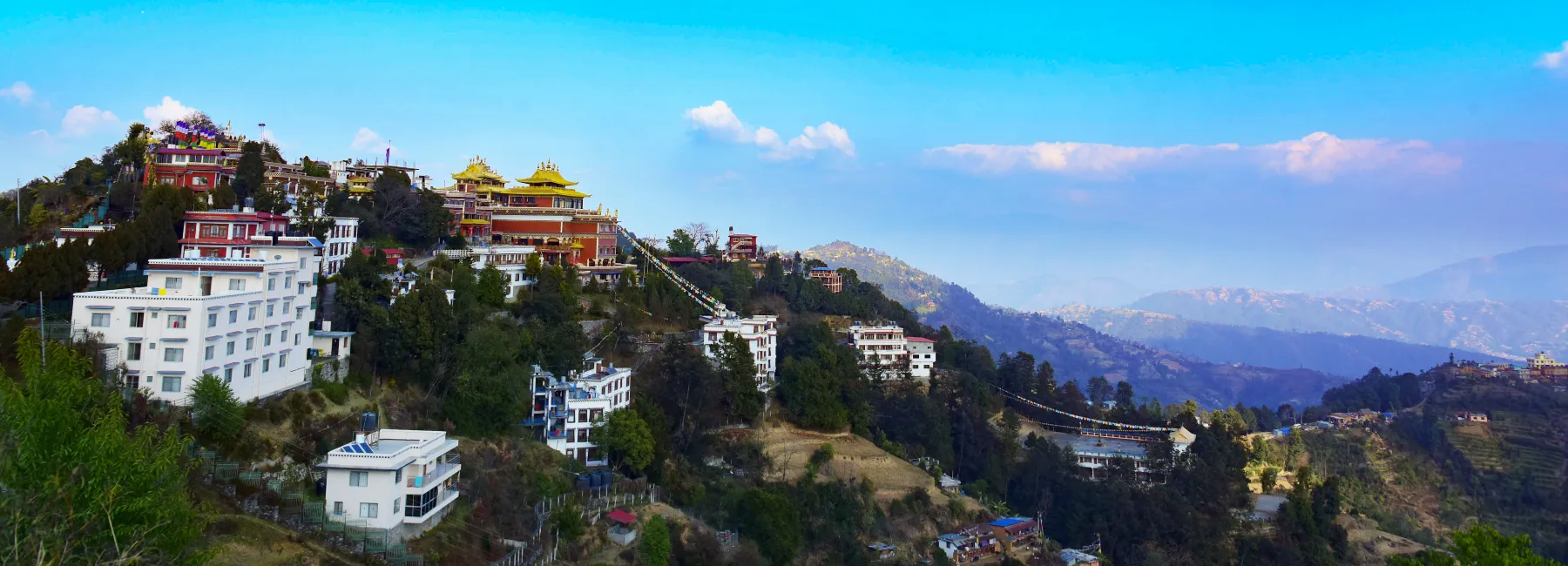
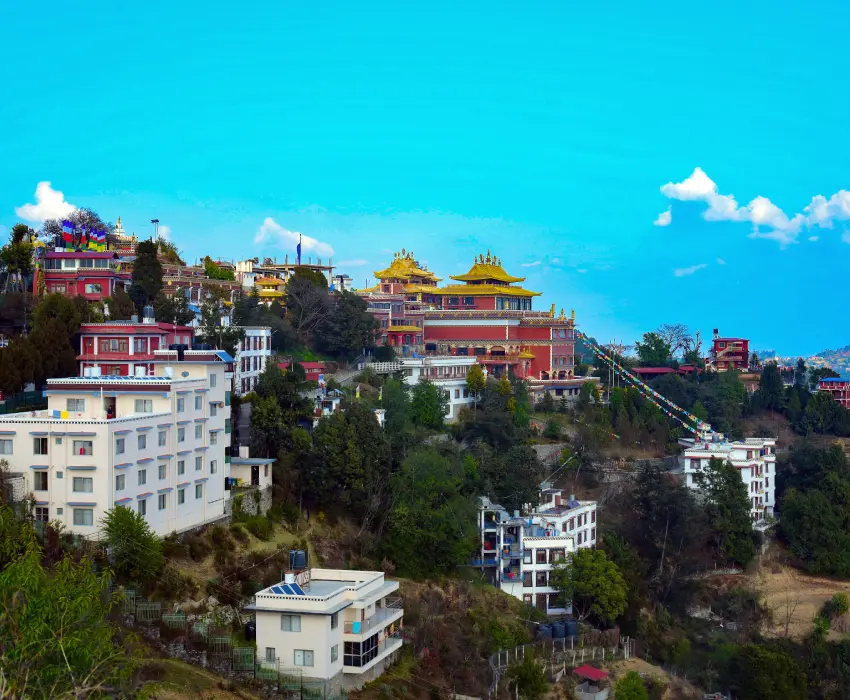
Located approximately 40 kilometers from Boudhanath Stupa, Namo Buddha rests on elevated land overlooking a wide valley. Traditional descriptions portray the landscape as an eight-petaled lotus, while the sky above is likened to a nine-spoked wheel, symbolizing the turning of the Dharma.
The environment naturally supports meditation and renunciation. Gentle winds, open horizons, and quiet forests create a setting where reflection arises effortlessly. Ancient masters praised this region as a place where samadhi develops spontaneously and where merely arriving inspires faith.
Over centuries, villages formed, paths widened, and the once-remote site became accessible. Yet the spiritual essence remained intact. Even today, pilgrims circumambulate the stupa, offer butter lamps, repaint its dome in white, and recite mantras that echo those spoken generations ago.
The Namo Buddha Buddhist Pilgrimage Tour is ideal for travelers seeking meaning rather than spectacle. It is well suited for:
This pilgrimage offers profound spiritual depth without exclusivity, ancient sanctity without rigidity, and accessibility without commercialization.
The sacred sites of the Namo Buddha Buddhist Pilgrimage Tour are not isolated monuments; they form a unified spiritual landscape shaped by compassion, sacrifice, memory, and living practice. Each location represents a stage in the Bodhisattva path—intention, action, loss, preservation, and transmission—allowing pilgrims to experience Buddhist teachings not as philosophy, but as lived reality embedded in the land.
Walking through Namo Buddha is itself a contemplative act. The ascent, the pauses, the silence between sites, and the panoramic openness of the hills naturally guide the mind inward. What follows is not merely a list of places, but a journey through meaning.
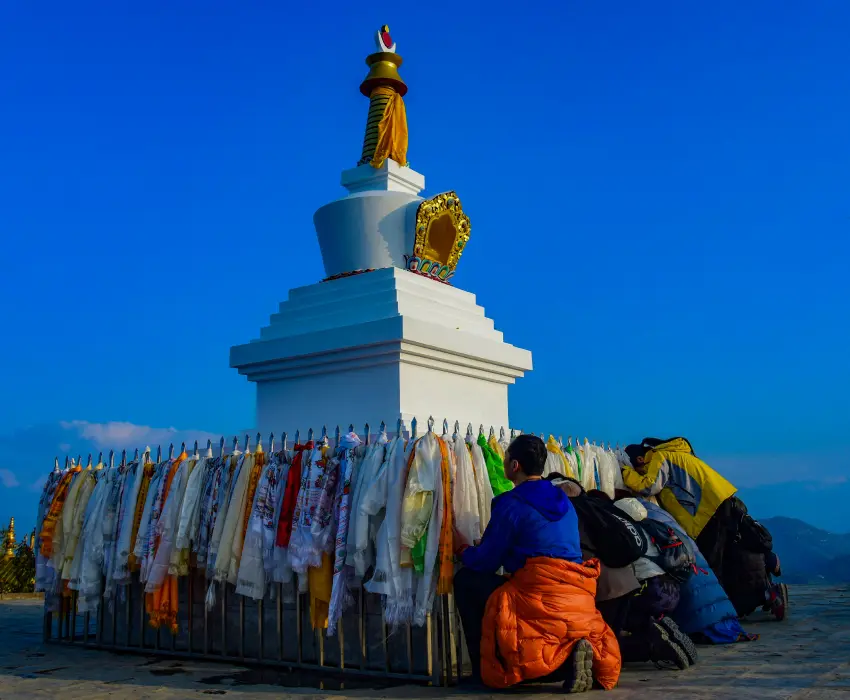
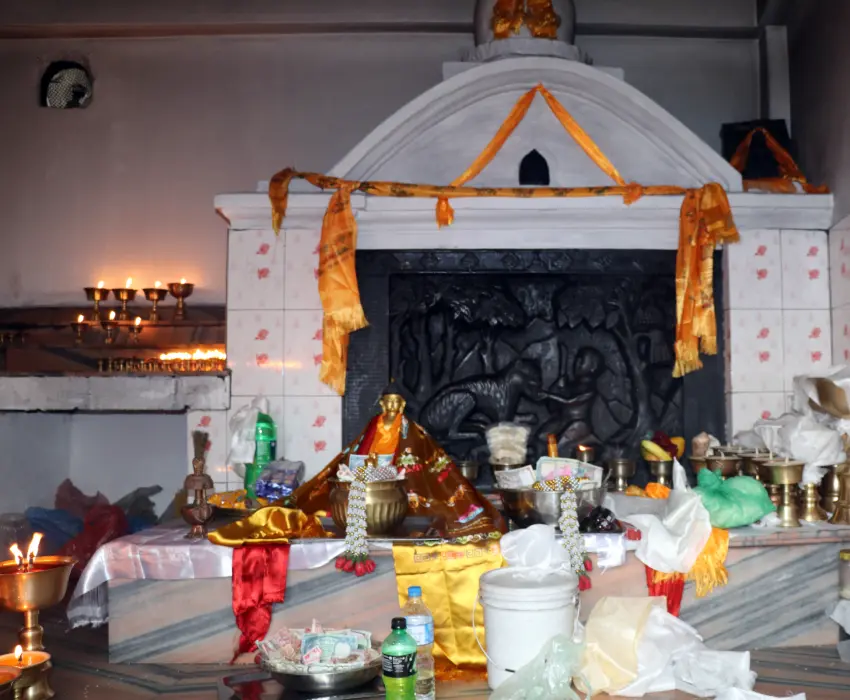
At the spiritual center of the pilgrimage stands the Namo Buddha Stupa, also known as Takmo Lüjin Stupa, meaning “Giving the Body to the Tigress.” This sacred monument marks the exact location where the relics of Prince Mahasattva—the Bodhisattva in a former life of Shakyamuni Buddha—were enshrined by his grieving parents.
The stupa rises gracefully atop Gandha Malla Hill, overlooking the expansive valley below. It is revered as one of the Three Great Stupas of the Kathmandu Valley, alongside Boudhanath and Swayambhunath, and is considered a powerful field of merit where virtuous intentions are naturally strengthened.
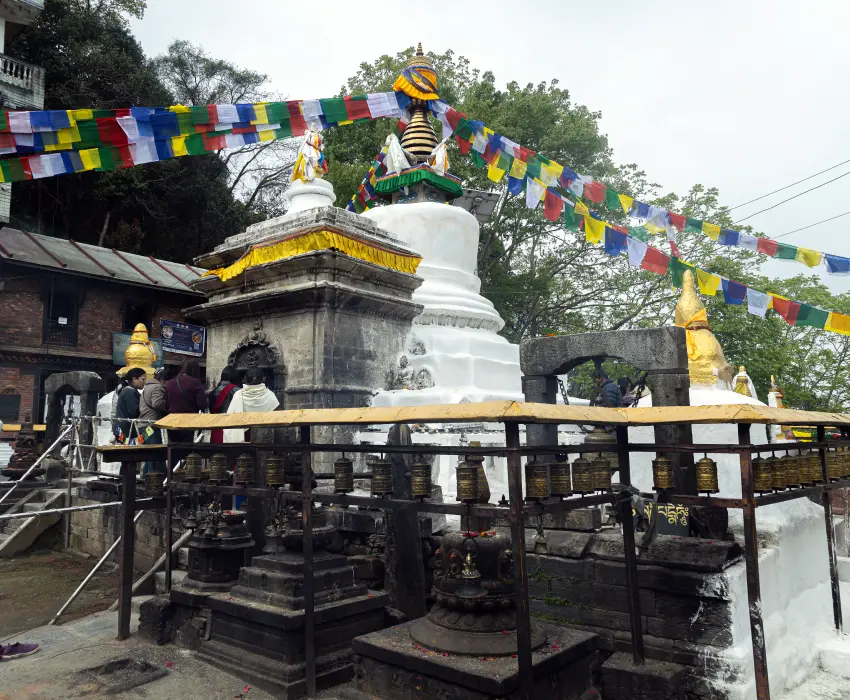
Pilgrims traditionally circumambulate the stupa clockwise, engaging body, speech, and mind through walking meditation, mantra recitation, and prayer. Butter lamps flicker along the base, symbolizing the dispelling of ignorance, while offerings of incense and whitewash represent purification and renewal. The atmosphere is serene yet charged, inviting reflection on impermanence, generosity, and awakening.
Unlike urban stupas, the openness of the landscape allows the sky itself to become part of the sacred experience, reinforcing the boundless nature of compassion that this site represents.
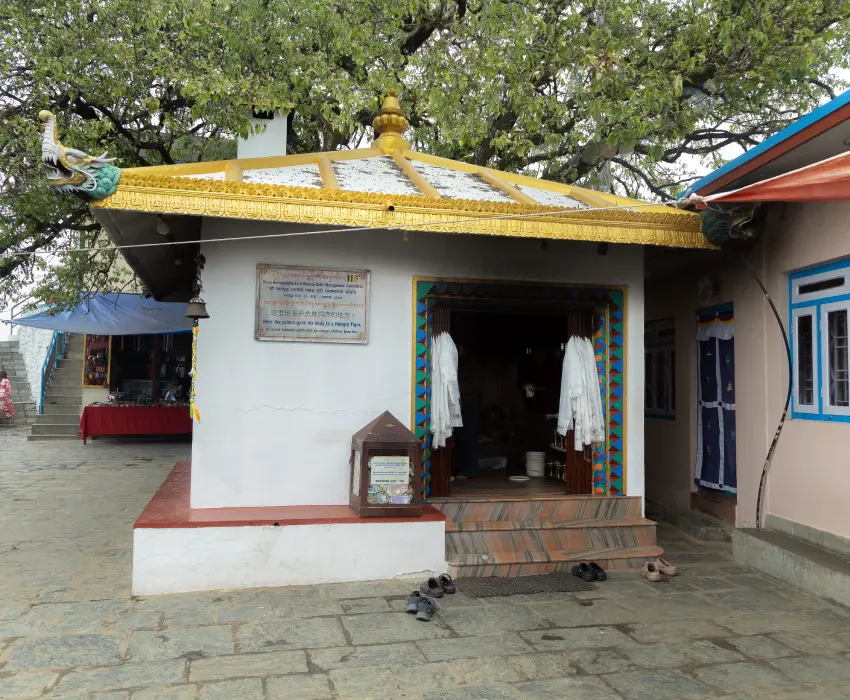
A short but meaningful ascent from the stupa leads to the Tigress Cave, the most emotionally powerful site of the pilgrimage. This natural cave is revered as the place where Prince Mahasattva encountered the starving tigress and her cubs and made the conscious decision to offer his own body for their survival.
Inside the cave, the atmosphere is quiet, dim, and intimate. A small shrine depicting the tigress and her cubs is illuminated by butter lamps, casting soft shadows on the stone walls. The enclosed space encourages stillness, drawing visitors into direct contemplation of suffering and selfless response.
For many pilgrims, time spent in the Tigress Cave becomes the inner turning point of the journey. It is here that the abstract concept of compassion becomes deeply personal. The cave invites reflection on questions rarely confronted in daily life:
What does it truly mean to place others before oneself?
How far can compassion extend?
What sacrifices are we capable of making?
This site is approached not with spectacle, but with humility and silence, honoring the gravity of the act that occurred here.
The Shrine of the Queen Mother, dedicated to Queen Satyavati, offers a profoundly human dimension to the pilgrimage. While the story of Prince Mahasattva is often told as a heroic Bodhisattva narrative, this shrine reminds visitors of the emotional cost of enlightenment across lifetimes.
Queen Satyavati’s grief upon discovering her son’s sacrifice is remembered with reverence. According to tradition, her sorrow was transformed through understanding, allowing her to recognize the spiritual significance of her son’s act. The shrine honors this transformation—from loss to wisdom, from pain to acceptance.
Many pilgrims, especially parents and families, pause here to offer prayers for their loved ones. The site resonates with themes of maternal love, impermanence, and resilience, emphasizing that the Bodhisattva path includes compassion for oneself and others in moments of profound vulnerability.
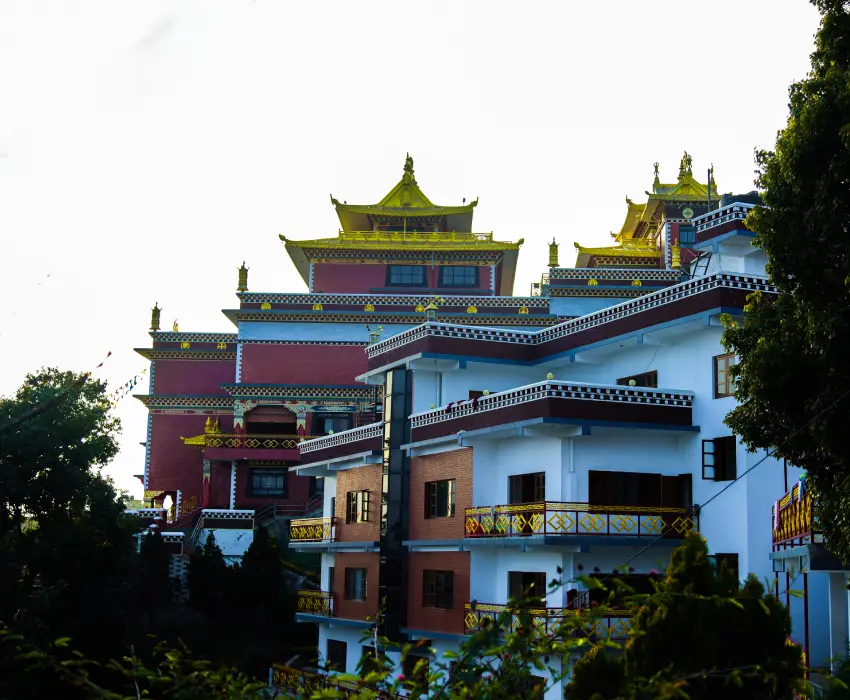
Standing adjacent to the ancient sacred sites, Thrangu Tashi Yangtse Monastery represents the continuity of the Bodhisattva path into the present day. Founded in 1978 by the Very Venerable Khenchen Thrangu Rinpoche, one of the most respected scholars and meditation masters of the Kagyu tradition, the monastery was established to preserve the sanctity of Namo Buddha while serving as a center of serious Buddhist education and practice.
The monastery complex is architecturally striking, blending traditional Tibetan design with refined contemporary craftsmanship. The main temple (Lhakhang) is adorned with Thousand Buddha statues, symbolizing the infinite manifestations of enlightenment, and richly detailed murals depicting the life of Shakyamuni Buddha, Jataka tales, and cosmological mandalas.
Thrangu Tashi Yangtse functions as a living monastic university, housing hundreds of monks who engage daily in philosophical study, ritual practice, meditation, and ethical discipline. Subjects such as Madhyamaka philosophy, Prajnaparamita, Abhidharma, debate, and Vajrayana ritual are taught systematically, ensuring that the intellectual and contemplative traditions of Buddhism remain vibrant.
Each morning and afternoon, communal pujas resonate through the hills with the sound of long horns (dungchen), drums, cymbals, and deep chanting. Visitors are often permitted to sit quietly at the back of the assembly hall, witnessing monastic devotion firsthand. This experience allows pilgrims to encounter Buddhism as a living, breathing tradition, not merely a historical inheritance.
Lining the pilgrimage pathway are the Seventeen Arhats Shrines, dedicated to the original disciples of the Buddha who vowed to protect and preserve the Dharma until the future coming of Maitreya Buddha.
Each shrine invites pause and reflection. Pilgrims often stop to offer short prayers or prostrations, contemplating discipline, perseverance, and responsibility. These shrines symbolize the continuity of teachings across generations, reminding visitors that compassion must be sustained through commitment and practice.
The physical act of moving from shrine to shrine transforms walking into meditation, reinforcing mindfulness and intention.
At the uppermost ridge of the pilgrimage route stand the Sixteen Hilltop Stupas, arranged in a subtle mandala formation. Prayer flags stretch between them, carrying mantras and aspirations on the wind across the valley.
These stupas represent completion, protection, and the integration of wisdom and compassion. Many pilgrims choose this location for silent meditation or dedication of merit, allowing the expansive view to mirror the spaciousness of awakened mind.
The openness of the hilltop encourages a sense of release and clarity, often marking the moment when the pilgrimage feels inwardly complete.
The Crowned Buddha Shrine, dedicated to Amitabha Buddha, represents enlightened vision and the aspiration for liberation. Associated with boundless light and compassion, Amitabha embodies the promise that awakening is accessible to all beings through sincere intention.
During festivals and special days, the shrine is illuminated by hundreds of butter lamps, creating an atmosphere of warmth and devotion. Pilgrims offer prayers for peace, rebirth, and the liberation of all beings, closing the pilgrimage with aspiration rather than conclusion.
Together, these sacred sites form a complete spiritual journey—from compassion arising, to sacrifice enacted, to wisdom preserved, practiced, and aspired toward. The Namo Buddha Buddhist Pilgrimage Tour is not about moving quickly between locations, but about allowing each place to speak in its own time.
Here, the land itself becomes teacher, and the pilgrimage becomes a mirror of the Bodhisattva path.

A journey to Namo Buddha naturally cultivates inner stillness, compassion, and clarity. The sacred environment supports meditation without effort, allowing the mind to settle and the heart to open.
Encountering the Bodhisattva story in its authentic geographical setting deepens understanding of altruism as a lived path. Many visitors report a renewed sense of purpose, emotional healing, and a softening of habitual self-centeredness.
Traditional practices such as circumambulation, silent sitting, and lamp offerings help release mental burdens and generate positive intention. Namo Buddha is widely regarded as a powerful field of merit, where sincere aspirations leave lasting spiritual imprints.
Nirvana Journey approaches pilgrimage as a sacred responsibility, not a commercial product. Every aspect of this journey is designed with:
Begin Your Journey to Namo Buddha
To stand at Namo Buddha is to stand at the meeting point of human vulnerability and enlightened compassion. It is a journey inward as much as outward—a reminder of what is possible when wisdom guides action.
Upon arrival in the sacred valley of Kathmandu, you will be warmly welcomed and transferred to your hotel. After check-in, take time to rest and gently settle into the spiritual atmosphere.
If you wish, you may explore nearby Buddhist sites at your own pace, allowing the energy of this ancient land to softly introduce you to your pilgrimage.
After breakfast, begin your scenic drive from Kathmandu to Namo Buddha, one of the most sacred Buddhist pilgrimage sites. The journey takes you through peaceful hills, terraced fields, and traditional villages.
Upon arrival, check into your hotel and take some time to rest. Later, visit the revered Namo Buddha Stupa, where you can perform puja, offer butter lamps, and engage in quiet meditation.
Continue with a short hike uphill to the sacred Tigress Cave, the legendary site where Prince Mahasattva compassionately offered his body to a starving tigress—an ultimate act of generosity and selflessness.
Afterward, visit Thrangu Tashi Yangtse Monastery, a peaceful monastery where monks engage in daily prayers and meditation.
In the late afternoon, you may relax at your hotel or take a gentle walk through the surrounding hills, immersing yourself in the serene natural and spiritual environment. Overnight stay in Namo Buddha.
Wake up early to participate in the morning pooja at Thrangu Tashi Yangtse Monastery, experiencing the sacred chants, rituals, and blessings from the resident monks.
After the ceremony, return to your hotel for breakfast. Then begin your drive back to Kathmandu via the same scenic route, carrying with you the blessings and spiritual energy of Namo Buddha.
Upon arrival, check into your hotel and enjoy the rest of the day at leisure.
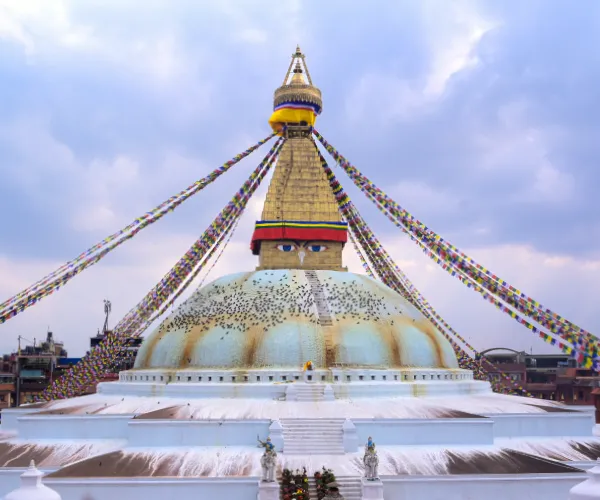
Today, embark on a meaningful spiritual journey to two of the most sacred and must-visit stupas in the Kathmandu Valley. These sites are not only architectural wonders but also living centers of Buddhist practice, devotion, and enlightenment—making them essential to complete your pilgrimage experience in Nepal. Begin at Boudhanath Stupa, one of the largest stupas in the world and a major center of Tibetan Buddhism. This sacred site represents compassion and wisdom, where pilgrims gather to perform kora (circumambulation), spin prayer wheels, chant mantras, and offer prayers. The spiritual energy here is deeply calming and transformative.
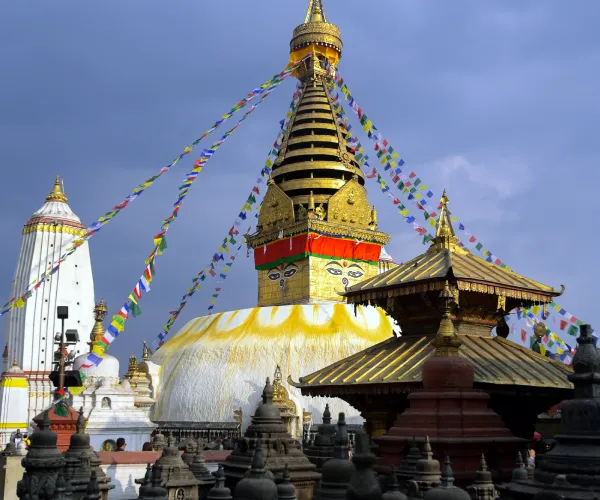
Continue to Swayambhunath Stupa, the ancient “Self-Arisen Stupa,” symbolizing the origin of wisdom and enlightenment. Perched atop a hill, it offers panoramic views of the valley along with a powerful spiritual presence, making it a place for reflection, clarity, and awakening.
Together, these two stupas represent the essence of Buddhist philosophy—compassion and wisdom—and visiting them completes the spiritual circuit of your journey.After the tour, return back to the hotel and either take rest or explore nearby places at your own pace.
Depending on your flight timing, you will be transferred to the airport (approx. 6–8 km / 20–30 minutes).
As your journey comes to an end, carry with you the blessings, compassion, and spiritual insights gained from this sacred pilgrimage to Namo Buddha and the holy sites of Kathmandu. May this experience continue to guide your path toward peace and awakening.
Nirvana Journey is the dedicated spiritual travel division of Asia Buddhist Tours & Treks, specializing in authentic Buddhist pilgrimages, sacred journeys, and transformative experiences across the Himalayan region asiabuddistours.com
© Copyright 2026, The copyright to all content on this website, including photographs, belongs to Nirvana Journey Pvt. Ltd. and cannot be reproduced without our permission. © Nirvana Journey Pvt. Ltd 2026