Journey through Nepal's sacred Vajrakilaya sites, where obstacles transform into wisdom and awakening.
The Vajrakilaya Sacred Sites of Guru Padmasambhava in Nepal Tour is a transformative pilgrimage designed for Vajrayana practitioners, pilgrims, and spiritual seekers drawn to Nepal’s powerful tantric heritage. This journey follows the footsteps of Guru Padmasambhava, visiting revered Vajrakilaya sacred sites in Nepal—places where devotion, meditation, and ritual practice have imbued the landscape with enduring spiritual power.
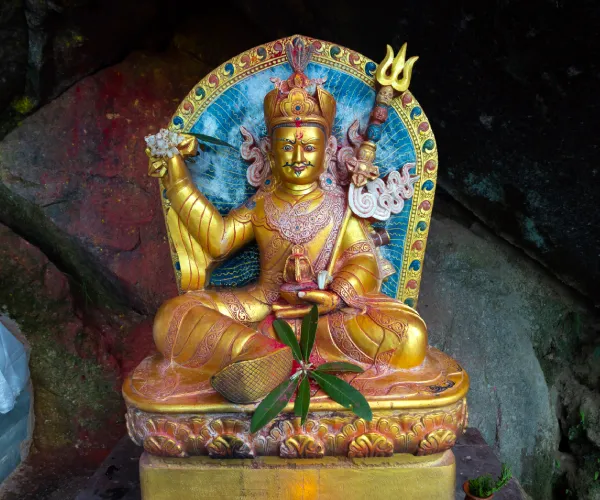
In Vajrayana Buddhism, Vajrakilaya represents the enlightened energy of Guru Padmasambhava that removes obstacles, transforms negativity, and awakens wisdom. Even for those without formal tantric training, visiting these sacred sites offers blessings, clarity, and protection. The caves, retreats, and sacred landscapes radiate a living presence that can be felt by anyone approaching with respect and openness.
This pilgrimage encompasses powerful destinations such as Asura Cave in Pharping, the secluded retreat area of Yarinak in Kavre, and the ancient Maratika Cave, where Guru Padmasambhava performed profound Vajrakilaya practices. These sites are not only essential Vajrakilaya meditation caves in Nepal, but also living pilgrimage centers where devotees of all traditions come to pray, meditate, and receive spiritual strength.
Whether you are a devoted practitioner, a Buddhist pilgrim, or a traveler drawn to Nepal’s sacred geography, this tour allows you to experience the living power places of Guru Padmasambhava, walking through landscapes charged with purification, merit, and inner renewal.
Within Vajrayana Buddhism, Vajrakilaya (Dorje Phurba) is revered as the supreme manifestation of enlightened activity—the wrathful force that removes obstacles which cannot be transformed through peaceful means alone. Guru Padmasambhava Vajrakilaya practices established sacred sites across Nepal, making them potent pilgrimage destinations for both advanced practitioners and spiritual travelers seeking clarity, protection, and inner strength.
Vajrakilaya is not a worldly protector but the awakened activity of all Buddhas manifesting in fierce form. His practice lies at the heart of Vajrakilaya obstacles purification pilgrimage traditions, especially in the Nyingma school of Vajrayana, where Guru Padmasambhava introduced and spread these powerful rituals.
The Philosophical Essence of Vajrakilaya: The “Diamond Nail”
The name Vajrakilaya reveals its profound meaning:
Vajra – symbolizes the indestructible truth of emptiness and awakened awareness.
Kīla – a nail or peg that fixes and stabilizes.
In Vajrayana, Vajrakilaya is the Indestructible Nail of Awareness. Through his practice, Guru Padmasambhava immobilized the five poisons—ignorance, attachment, aversion, pride, and jealousy—transforming them into wisdom. This is why Vajrakilaya tantra sacred sites in Nepal are especially visited by those facing deeply rooted obstacles or complex karmic challenges.
Iconography: Wrathful Form as Compassionate Skill
The fierce appearance of Vajrakilaya reflects compassionate skill, not anger. As the wrathful emanation of Vajrasattva:
Dark blue body – symbolizes the unchanging Dharmakaya.
Three faces – mastery over the three poisons and realization of the Three Kayas.
Six arms – represent the Six Paramitas of the Bodhisattva path.
Garuda-like wings – union of wisdom and skillful means.
Union with his consort – wrathful power arises from bliss and emptiness.
This iconography is reflected at Vajrakilaya sacred sites in Nepal, where the energy of the deity continues to empower meditation and ritual practice.
Vajrakilaya as the Wrathful Yidam of Obstacle Removal
In Vajrayana, a Yidam is a meditational deity used to awaken one’s own Buddha nature. Guru Padmasambhava Vajrakilaya is honored as the King of Obstacle Removal. His practice is traditionally performed before major retreats, journeys, or life transitions, addressing:
Internal obstacles – confusion, emotional imbalance, lack of focus.
External obstacles – illness, conflict, or adverse circumstances.
Secret obstacles – subtle clinging to a permanent self.
Thus, Vajrakilaya wrathful deity sites in Nepal draw both yogis and lay pilgrims seeking purification, clarity, and spiritual protection.
The Kīla (Ritual Phurba) and Tantric Protection Power
The Phurba (Kīla) is the central ritual tool of Vajrakilaya:
Three-edged blade – cuts through the three root poisons.
Vajra-knot shaft – represents indestructible truth.
Triple-faced handle – peaceful, joyful, and wrathful awareness.
Pointed tip – one-pointed concentration piercing ego-delusion.
At Vajrakilaya kīla practice power places, the Phurba activates a protective energy field, making these locations renowned tantric protection deity sites.
Why Sacred Geography Matters in Vajrakilaya Practice
Vajrakilaya practice is inseparable from the land. Unlike purely contemplative practices, it involves consecrating the ground itself.
Guru Padmasambhava Vajrakilaya rituals transformed caves, cliffs, and hills into living sacred spaces. These Vajrakilaya tantra sacred places in Nepal continue to support meditation, purification, and obstacle removal. The ritual power geography of Nepal ensures that both spiritual practitioners and pilgrims benefit from the stabilizing presence of these empowered landscapes.
Nepal is not merely a backdrop for pilgrimage—it is itself a living Vajrakilaya power mandala, a landscape consecrated by the enlightened activity of Guru Padmasambhava Vajrakilaya. The sacred caves, cliffs, and hills where he performed rituals continue to radiate protective energy, making the country one of the most potent regions for Vajrakilaya sacred sites in Nepal.
From the hidden recesses of Asura Cave in Pharping to the secluded retreat valleys of Yarinak and the ancient Maratika Cave, every location is imbued with the blessings of his tantric presence. These places form a spiritual network, a mandala of power, where the “nail” of Vajrakilaya practice is firmly anchored into the land.
Pilgrims and practitioners alike can feel this living energy. Walking these paths, meditating in the caves, or performing rituals in the same spaces once activated by Guru Padmasambhava, one experiences firsthand the purification of obstacles, the strengthening of inner resolve, and the subtle unfolding of wisdom.
In essence, Nepal itself is a map of Vajrakilaya power, a sacred geography where every hill, river, and cave contributes to the living mandala of enlightenment—a unique blessing for all who approach with devotion and openness.
Before exploring the individual sites, it is important to understand that the Vajrakilaya sacred sites in Nepal form a living spiritual mandala, each location a node of concentrated tantric energy established by Guru Padmasambhava Vajrakilaya himself. These power places are not merely historical landmarks—they are active centers of obstacle purification where the Guru’s presence continues to influence the land, the mind, and the hearts of pilgrims. Walking through Asura Cave, Yarinak, and Maratika Cave, visitors move along a continuum of sacred geography, connecting with the transformative energy of Vajrakilaya that empowers every step of the Vajrayana pilgrimage. This bridge between past and present allows both seasoned practitioners and spiritual travelers to experience the enduring blessings and protective power of these revered sites.
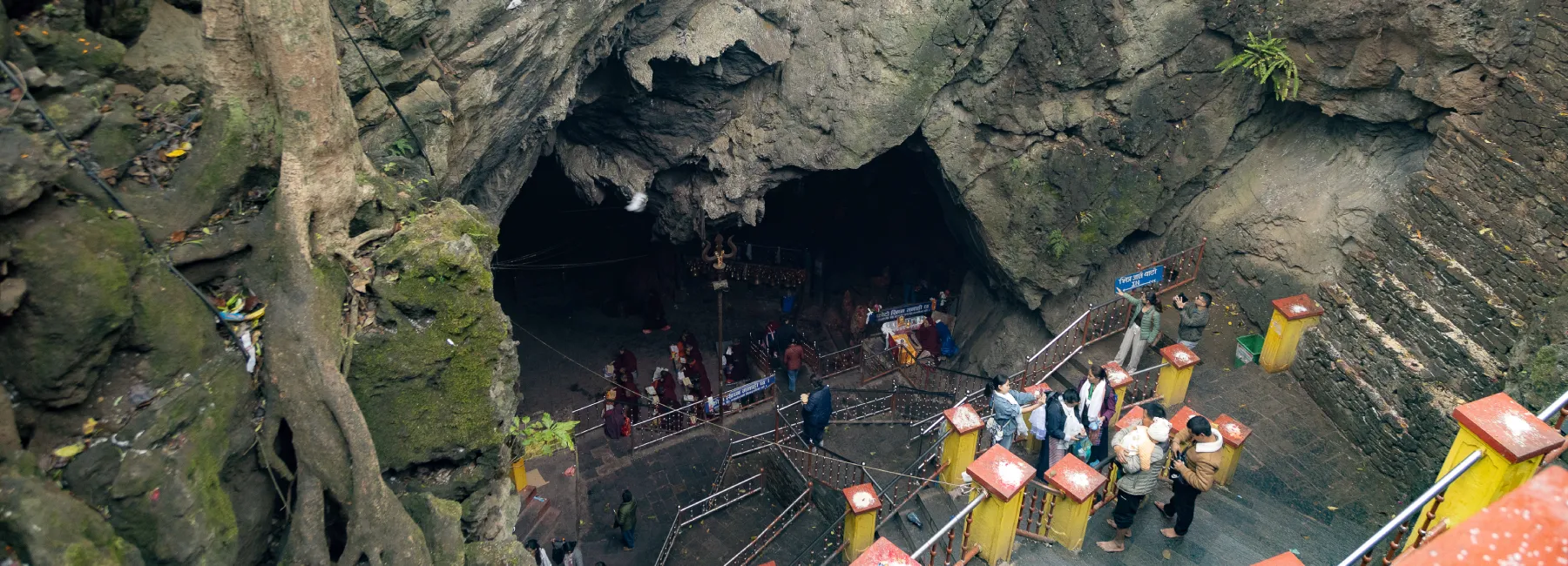
In the spiritual landscape of Vajrayana Buddhism, the Asura Cave in Pharping is considered the “Bodh Gaya of Nepal.” It is here that Guru Padmasambhava unified the Vajrakilaya lineage, creating a sacred site where enlightened activity permanently transformed the spiritual geography of Nepal. This cave remains one of the most potent Vajrakilaya sacred sites in Nepal, attracting both advanced practitioners and spiritual pilgrims.
The Union of Two Sadhanas
When Guru Padmasambhava first meditated at Pharping, he practiced Yangdak Heruka to attain Supreme Siddhi (wisdom). Yet, massive outer obstacles arose: local spirits caused famine, drought, and disease across the Kathmandu Valley. Recognizing the need for a “bodyguard” to protect the attainment of wisdom, Guru Rinpoche requested the Vajrakilaya Tantras from India. Upon their arrival, the obstacles were “nailed down,” demonstrating the power of Vajrakilaya for obstacle removal. At Asura Cave, these practices were integrated—Yangdak Heruka for supreme attainment, and Vajrakilaya for purifying all hindrances.
The Sacred Geography of the Cave
Asura Cave is not a mere rock formation—it is a living mandala of Vajrakilaya. Near the entrance, a handprint pressed into solid limestone testifies to Guru Padmasambhava’s Mahamudra realization, allowing practitioners to tangibly connect with the lineage of the Diamond Dagger. Deep within the walls, self-arisen syllables and Phurba shapes (Rangjung) emerge naturally, symbolizing the earth’s response to the Guru’s presence.
The Name “Asura” – Subduing Aggressive Energies
In Buddhist cosmology, Asuras represent powerful, combative forces. By naming the cave “Asura,” Guru Padmasambhava signified the complete subjugation of pride, jealousy, and anger—the “Asura-like” energies of the mind—transforming them into protectors of the Dharma. The cave grounds these energies, acting as a permanent site of purification and empowerment.
Why Asura Cave is the Supreme Vajrakilaya Site
Every mantra recited here is amplified by the Siddhi-Adhistana left by Guru Padmasambhava. The Vajra Fence, a protective energy field inherent to the cave, shields practitioners from negativity and Maras, ensuring:
Purification: Dissolving the deepest karmic obstacles.
Stable Meditation: Achieving a mind as unshakable as the “Diamond Nail.”
Modern Significance – A Living Lineage
The Asura Cave continues to be a living center of practice. Tulku Urgyen Rinpoche meditated here and established Nagi Gompa and nearby retreat centers to maintain the Vajrakilaya lineage. Terma Phurbas discovered in the vicinity confirm Guru Padmasambhava’s prophecy that this land would remain the source of Vajrakilaya power.
For Pilgrims:
Handprint (Upper Cave): Mastery over the physical and subtle energies.
Yangleshö (Lower Cave): Purification of the environment and obstacles in daily life.
Practice: Direct connection to the wrathful yet compassionate energy of Guru Padmasambhava Vajrakilaya.
In the remote Kavre district of Nepal, the Yarinak Cave stands as a historically and spiritually significant Vajrakilaya sacred site in Nepal. While Pharping is known for inner attainment, Yarinak is celebrated for the subjugation of demonic forces and the transformation of the environment itself through the power of Guru Padmasambhava’s Vajrakilaya practice. The name “Yarinak” translates as “Slate Mountain Forest,” reflecting the cave’s dramatic slate cliff setting.
Dükyi Shechen – The Transformation of Guru Padmasambhava
At Yarinak, Guru Padmasambhava assumed the wrathful form of Dükyi Shechen, the Great Slayer of Demons, inseparable from Vajrakilaya. In this manifestation, he radiated fierce energy, wielding the Phurba of Approach to clear the land of obstructive spirits and create a sanctuary for future tantric practice. This stage of Vajrakilaya practice exemplifies the guru’s enlightened activity, purifying both the land and the karmic obstacles of its inhabitants.
The Miracle of the Burning Forest
Legend recounts a massive sandalwood forest inhabited by dark forces. Guru Padmasambhava, empowered by Vajrakilaya, rolled a Phurba between his palms, charging it with wrathful wisdom, and hurled it skyward. The resulting Wisdom Fire destroyed the demons and their dark palace, even evaporating a nearby lake. Remarkably, the forest regenerated, lush and vibrant, symbolizing the tantric principle that destruction paves the way for rebirth.
The Origin of Bodhichitta Seeds
Yarinak is also famed as the birthplace of the Bodhichitta (Buddha Chitta) mala beads, reflecting Guru Padmasambhava’s compassion for the local villagers. By planting his walking stick or leaving sacred prayer beads, he caused the Ziziphus budhensis tree to grow, providing a sustainable source of spiritual and economic benefit for generations—a living example of Vajrakilaya’s enlightened activity in the world.
Sacred Signs in the Landscape
The cave and surrounding cliffs bear Rangjung (self-arisen) formations, creating a natural mandala of Vajrakilaya:
Tiger’s Head Rock: Above the cave entrance, guarding the sacred space.
Ritual Instruments: Stones shaped like drum, conch, and trumpet inside the cave, mirroring the Guru’s mandala.
Mala and Stupa Formations: Pebble-like shapes on the cave ceiling, remnants of the Guru’s own prayer beads.
Sogshing (Tree of Life): A pillar-like rock at the back of the cave, representing the axis of the Vajrakilaya mandala.
Why Yarinak is must visit place
While Asura Cave in Pharping symbolizes internal mastery over ego, Yarinak Cave represents the external power to protect the Dharma, purify obstacles, and stabilize the spiritual landscape. Pilgrims visiting this sacred site experience the living energy of Guru Padmasambhava Vajrakilaya, connecting directly to centuries of tantric empowerment and practice.
In the eastern region of Nepal, the ancient Maratika Cave in Hales is revered as one of the most powerful Vajrakilaya sacred sites in Nepal. While known primarily as a place where Guru Padmasambhava and the princess Mandarava attained the immortality practice of Amitayus, the cave also carries a profound Vajrakilaya legacy: the subjugation of obstacles, protection of the Dharma, and empowerment of practitioners through tantric purification rituals.
The Union of Longevity and Obstacle Removal
Guru Padmasambhava arrived at Maratika Cave to complete his retreat with Mandarava, practicing the Amitayus longevity sadhana. However, he also invoked Vajrakilaya to remove lingering karmic obstacles in the environment and ensure the spiritual empowerment of future pilgrims. Here, the wrathful and compassionate energies of Vajrakilaya and Amitayus coexist, illustrating the inseparable unity of wisdom, compassion, and enlightened activity.
The Sacred Geography of Maratika
The cave is naturally divided into inner chambers that served as meditation halls and ritual spaces. Practitioners today can see the “self-arisen” inscriptions and symbolic formations on the walls, believed to have been impressed by Guru Padmasambhava himself. These markings act as living conduits of Vajrakilaya obstacles purification, stabilizing the mind of every visitor.
Empowerment and the Ritual Phurba
The cave’s upper chambers house shrines dedicated to Vajrakilaya and Amitayus, where traditional rituals employ the Phurba (kīla) to transmute negative energies. The Phurba here is seen as both a tool of purification and protection, activating the “Vajra Fence” that Guru Padmasambhava established, making the cave a permanent sanctuary against internal and external obstacles.
Modern Significance and Living Lineage
Maratika remains a living pilgrimage site, attracting Vajrayana practitioners and spiritual travelers alike. The presence of Vajrakilaya empowerment continues through ongoing retreats, ritual offerings, and meditation, maintaining a direct connection to Guru Padmasambhava’s original activity. Visitors feel the combined power of longevity, clarity, and obstacle removal, making Maratika a unique nexus of Vajrayana energy.
Why Pilgrims Visit Maratika
Maratika Cave is not only a historical monument but a fully empowered Vajrakilaya site, where chanting, meditation, and ritual practice are amplified by centuries of consecration. Pilgrims experience purification of obstacles, inner stability, and the subtle unfolding of wisdom, connecting directly to the living presence of Guru Padmasambhava Vajrakilaya.

Visiting the Vajrakilaya sacred sites in Nepal is far more than a sightseeing journey; it is a Vajrayana pilgrimage that allows practitioners and spiritual travelers to directly connect with the awakened activity of Guru Padmasambhava Vajrakilaya. Each cave, cliff, and retreat site is a living repository of the Guru’s enlightened energy, where the practice of obstacle removal and purification continues to benefit all who approach with devotion.
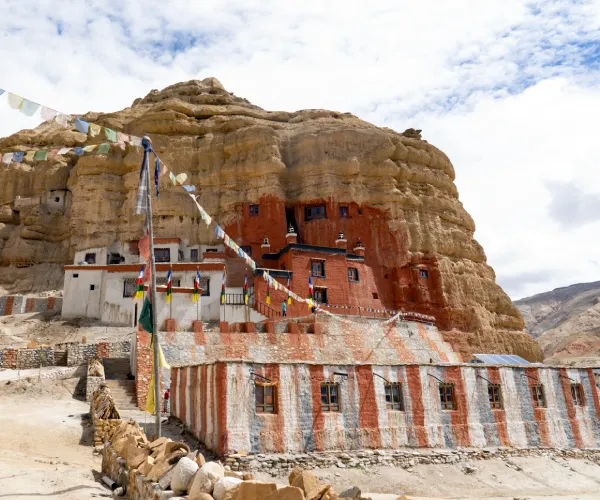
In Vajrayana, Vajrakilaya embodies the dynamic power of enlightened activity, addressing both internal and external obstacles. By visiting these sacred sites, pilgrims symbolically and energetically align themselves with the “Diamond Nail” of awareness—the force that pins down ego-clinging, karmic hindrances, and the five poisons (ignorance, attachment, aversion, pride, and jealousy).
The spiritual geography of Nepal—ranging from the Asura Cave in Pharping to the remote Yarinak valleys and the Maratika Cave in Hales—serves as a living mandala of Vajrakilaya. Each site is imbued with Guru Padmasambhava’s tantric blessings, making it possible for pilgrims, meditators, and even spiritually curious travelers to feel the purification of obstacles, the protection of the mind, and the empowerment of insight.
Ultimately, a visit to these sites is not only a journey across the Nepalese landscape—it is a journey into one’s own mind, reflecting the central Vajrayana principle that the external sacred geography mirrors the inner terrain of consciousness. Walking where Guru Padmasambhava practiced, chanting where he empowered the land, and meditating where he subjugated negativity allows each pilgrim to experience a profound transformation of body, speech, and mind, awakening resilience, clarity, and wisdom along the path.
The Vajrakilaya Sacred Sites Tour in Nepal is designed for anyone seeking to connect with the profound energy of Guru Padmasambhava Vajrakilaya and experience the transformative power of Vajrayana practice:
This pilgrimage is suitable for both experienced spiritual practitioners and sincere seekers who wish to experience the Vajrakilaya sacred sites in Nepal—a journey that combines devotion, meditation, and immersion in the tantric power of the land.
Step into the living power of Guru Padmasambhava Vajrakilaya through the sacred landscapes of Nepal. This pilgrimage is more than a journey—it is an opportunity to walk the same caves, cliffs, and retreat valleys where the Guru transformed the land with the energy of Vajrakilaya, the “Diamond Nail” of obstacle removal.
Visiting these Vajrakilaya sacred sites in Nepal allows you to engage with a living tantric heritage. Whether meditating in the Asura Cave of Pharping, witnessing the transformative power of Yarinak, or standing in the ancient Maratika Cave, each location radiates protective energy, purification, and blessings.
For practitioners, pilgrims, and sincere seekers alike, this journey is a chance to deepen your connection to the Vajrakilaya lineage, receive inspiration from Guru Padmasambhava’s enlightened activity, and experience firsthand the subtle unfolding of wisdom, courage, and clarity.
Step forward with devotion, openness, and intention, and allow the sacred power of these sites to guide your heart, mind, and spirit on a path of transformation.
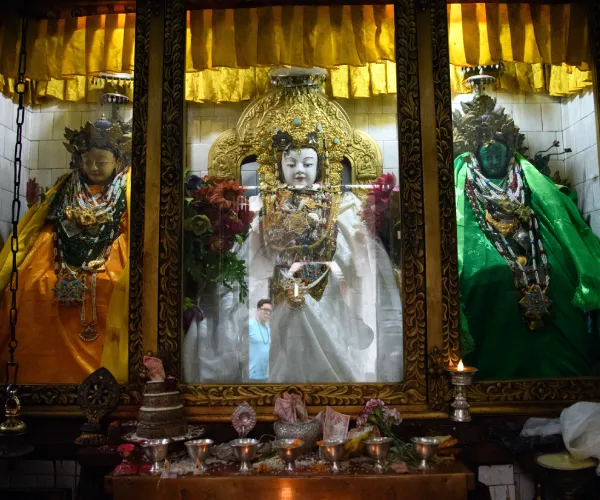
Upon arrival at Tribhuvan International Airport, you will be met and transferred to the holy ridge of Pharping. Known as the “Bodhgaya of Nepal,” this village is the primary seat of Vajrakilaya practice. We begin our pilgrimage by visiting the Self-Arisen Tara temple, where a naturally forming image of Green Tara is emerging from the rock face. This evening is for setting your spiritual intention and grounding your energy in the sacred earth of the Guru’s accomplishment.
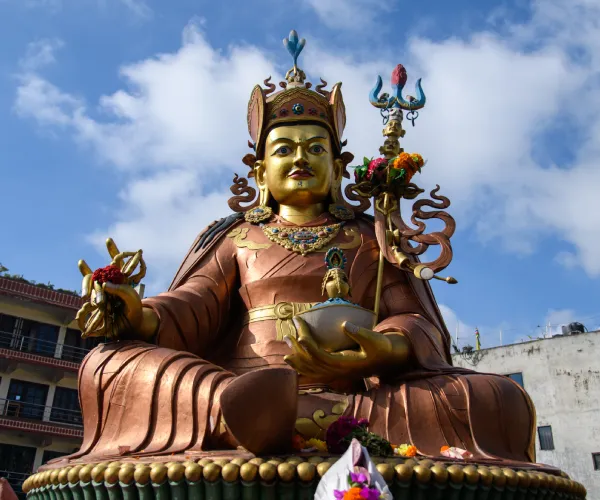
Today is the heart of the pilgrimage. We ascend to the Asura Cave, the supreme site where Guru Padmasambhava combined the Yangdak Heruka and Vajrakilaya practices to conquer the most stubborn obstacles during a period of great drought and demonic interference. It was here that he bound the Twelve Tenma Goddesses under oath to serve the Dharma. Travelers will spend the day in meditation and Phurba recitation within the cave, where the Guru’s handprint remains visible in the rock. We also visit the 131-foot statue of Guru Rinpoche and the nearby Vajra Yogini Temple, honoring the fierce feminine wisdom that supports the wrathful activity of the Phurba.
We depart early for a 7–8 hour scenic drive toward the Khotang district. This journey follows the Sun Koshi River, moving from the site of the Guru’s obstacle-clearing (Pharping) to the site of his longevity (Maratika). The drive serves as a transition into a state of retreat, leaving the distractions of the city behind for the deep silence of the Halesi hills, where the Guru achieved deathless awareness.
This day is spent exploring the vast Lower Cave of Maratika. We focus on the site where Guru Rinpoche and Princess Mandarava attained the Vidyadhara of Longevity. You will see the miraculous formations on the ceiling, believed to be the footprints of Guru Rinpoche and the marks where he flew through the solid rock. Practitioners will engage in rituals and meditation, navigating the narrow passings (karmic test passages) believed to purify the subtle channels. From the site, we view the surrounding hills of Gyalwa Kyung and Manjushree Hill, which stabilize the region’s spiritual energy.
We dedicate today to the Mandarava Cave, the sacred retreat site of the Guru’s consort, Princess Mandarava. This cave holds a unique, refined energy essential for the union of wisdom and power. We will perform rituals and meditations focused on the feminine principle and the long-life nectar that drips from the cave walls. This site offers a quieter atmosphere for deep practice, allowing for the integration of the Vajrakilaya energy with the realization of deathless awareness.
We begin our drive back toward the west, heading into the Kavre district to reach the high ridges of Timal. This region is the ancestral heart of the Tamang people and is rich with Guru Rinpoche folklore. We arrive in the village of Yarinak in the late afternoon, settled high above the clouds with breathtaking views of the Himalayan range.
A full day is dedicated to exploring Yarinak, the site where the Guru manifested his wrathful power to subdue local spirits. We visit the Yarinak Cave, where the energy of the “Demon Slayer” is palpable. Surrounding the cave are the ancient Bodhichitta (Buddha-Chitta) trees; legend says these trees sprouted from the Guru’s own prayer beads (mala). While gathering seeds is strictly prohibited, practicing under their shade is a profound blessing. We will also explore other neighboring sacred sites related to the Guru’s presence in Timal, including rock imprints and meditation seats used to bound the local protectors.
We leave the thin air of the Timal highlands and descend back into the Kathmandu Valley (approx. 5 hours). This afternoon is reserved for rest and integration. After the powerful seclusion of the caves and forests, returning to the city allows you to “bring the Phurba into the world,” reflecting on how to apply the clarity and obstacle-clearing power of Vajrakilaya to daily life.
We conclude the pilgrimage by visiting the two great “Eyes of the Valley.” We climb to Swayambhunath, where Guru Rinpoche hid various Terma (treasures), and visit Boudhanath, the heart of the Tibetan community. Here, the Guru made the vow in a previous life to protect the Dharma. We will walk the Kora (circumambulation) and offer thousands of butter lamps, dedicating the merit of our journey to the destruction of all suffering and the enlightenment of all beings.
After a final breakfast and a closing reflection, you will be transferred to the airport. We depart with the diamond-like strength of the Vajrakilaya blessings firmly rooted in our hearts, marking the end of the outer journey and the lifelong continuation of the inner one.
Nirvana Journey is the dedicated spiritual travel division of Asia Buddhist Tours & Treks, specializing in authentic Buddhist pilgrimages, sacred journeys, and transformative experiences across the Himalayan region asiabuddistours.com
© Copyright 2026, The copyright to all content on this website, including photographs, belongs to Nirvana Journey Pvt. Ltd. and cannot be reproduced without our permission. © Nirvana Journey Pvt. Ltd 2026