Experience and Feel, not just travel

The Great Stupas in Kathmandu Valley Tour

A Classical Buddhist Pilgrimage of Wisdom, Compassion, and the Bodhisattva Path

  • Duration 5 Days Days
  • Trip Grade Easy
  • Start From Kathmandu
  • Ends at Kathmandu
  • Group Size 2+
  • Transportation Private Vehicle
  • Trip Meals Included
  • Accommodation Private Vehicle
  • Best Season All Around The Year

Overview

The Kathmandu Valley Buddhist pilgrimage is one of the most profound spiritual journeys in Nepal, offering seekers a chance to experience centuries of devotion, wisdom, and living practice. At the heart of this pilgrimage are the Great Stupas of Kathmandu Valley—Swoyambhunath Stupa, Boudhanath Stupa, and Namo Buddha Stupa—three sacred sites that have guided pilgrims, monks, and practitioners for generations.

Unlike many other monuments in Nepal, these stupas are revered not merely for their size or architecture, but for their spiritual significance and connection to Buddhas and Bodhisattvas. Swoyambhunath Stupa, the oldest in the valley, symbolizes the awakening of wisdom. Boudhanath Stupa represents compassion in action, and Namo Buddha Stupa embodies the perfection of selfless giving. Together, they form a cohesive spiritual journey, traditionally visited as a sequence to cultivate insight, loving-kindness, and generosity.

This Great Stupas of Kathmandu Valley Tour is not about sightseeing alone—it is a living spiritual experience. Pilgrims move from the heart of the valley to its outskirts, following a path where each stupa reinforces the lessons of the previous one, creating a transformative pilgrimage that nurtures mind, heart, and spirit. For anyone seeking a deeply meaningful Buddhist journey in Nepal, this tour provides a rare opportunity to connect with sacred sites, rituals, and centuries-old traditions in one unforgettable experience.

In Buddhism, a stupa is far more than a simple monument or memorial. Classical texts such as the Mahāparinirvāṇa Sūtra describe stupas as supports for awakening (bodhi-sādhanā), powerful sacred structures that continue to bless sentient beings long after the historical Buddha’s lifetime. They are not objects to be worshipped as relics alone; rather, stupas are living expressions of enlightenment, providing a tangible field of merit (puṇya) and spiritual inspiration for all who approach them with devotion and mindfulness.

A stupa is understood to embody several profound dimensions:

  • The enlightened mind of a Buddha (Buddha-citta) – Each stupa reflects the clarity, compassion, and wisdom of an awakened mind. Standing before a stupa offers pilgrims an opportunity to connect with the qualities of a Buddha, cultivating awareness, concentration (samādhi), and insight (prajñā).
  • The path to awakening expressed in form – The architectural elements of a stupa are themselves symbolic. The dome represents the vastness of compassion, the spire symbolizes the stages of realization, and the eyes painted on the stupa reflect omniscience and loving-kindness. In this way, a stupa becomes a three-dimensional teaching (Dharma-rūpa), guiding pilgrims along the Bodhisattva path.
  • The continuity of the Dharma (Dharma-samsthāna) – A stupa represents the unbroken transmission of the Buddha’s teachings, serving as a living field of blessing and devotion where practitioners can accumulate merit (puṇya) and cultivate wholesome karma.

In Mahāyāna and Vajrayāna Buddhism, stupas are also understood to embody the Trikāya, or the three bodies of a Buddha:

  • Dharmakāya – the truth body, representing ultimate reality and the essence of enlightened mind.
  • Sambhogakāya – the enjoyment body, manifesting in celestial realms to guide advanced practitioners.
  • Nirmāṇakāya – the emanation body, appearing in the world to lead beings toward liberation through skillful means (upāya).

This understanding clarifies why circumambulation (kora), mantra recitation, butter lamp offerings, and mindful presence around a stupa are considered profound practices. One does not worship the stupa as a mere object; instead, one relates to it as a living manifestation of the Dharma, aligning body, speech, and mind with the enlightened qualities it embodies.

For pilgrims visiting the Great Stupas of Kathmandu Valley—Swoyambhunath Stupa, Boudhanath Stupa, and Namo Buddha Stupa—this insight transforms each act of devotion into a living meditation on the Bodhisattva path, where wisdom (prajñā), compassion (karuṇā), and generosity (dāna) are not only contemplated but experienced directly in the sacred space.

In essence, a stupa is simultaneously a field of merit, a symbolic teaching, and a bridge between the ordinary world and the awakened mind, offering pilgrims an opportunity to engage with the timeless teachings of the Buddha in a tangible, living way.

Though the valley holds countless sacred structures, Swoyambhunath, Boudhanath, and Namo Buddha are regarded as the Great Stupas because together they express the complete Bodhisattva path.

  • Swoyambhunath – awakening of wisdom
  • Boudhanath – compassion in action
  • Namo Buddha – perfection of selfless giving

Each site preserves ancient narratives, ritual continuity, and living practice, guiding pilgrims step by step through inner transformation.

Swoyambhunath Stupa: The Birth of Wisdom

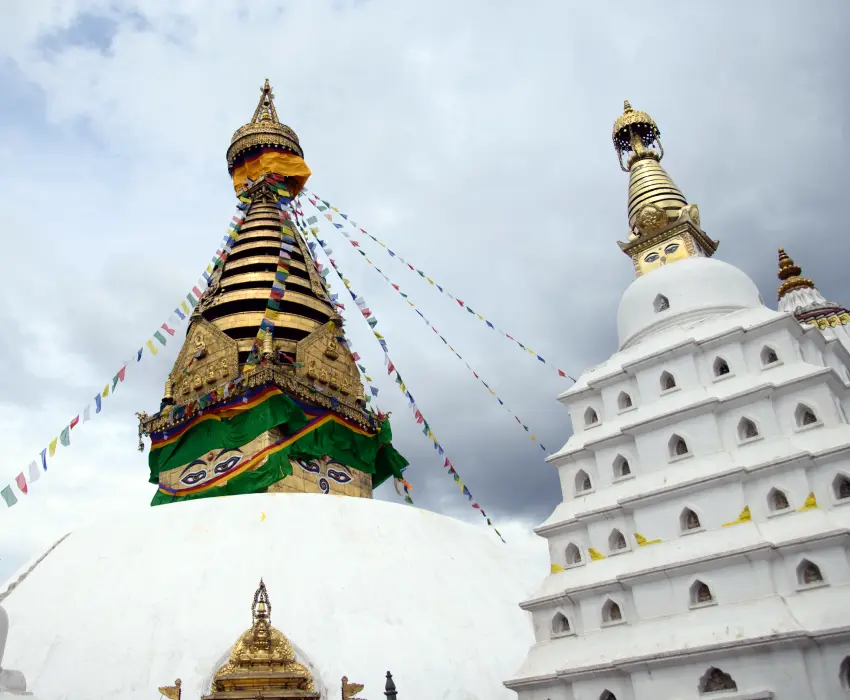
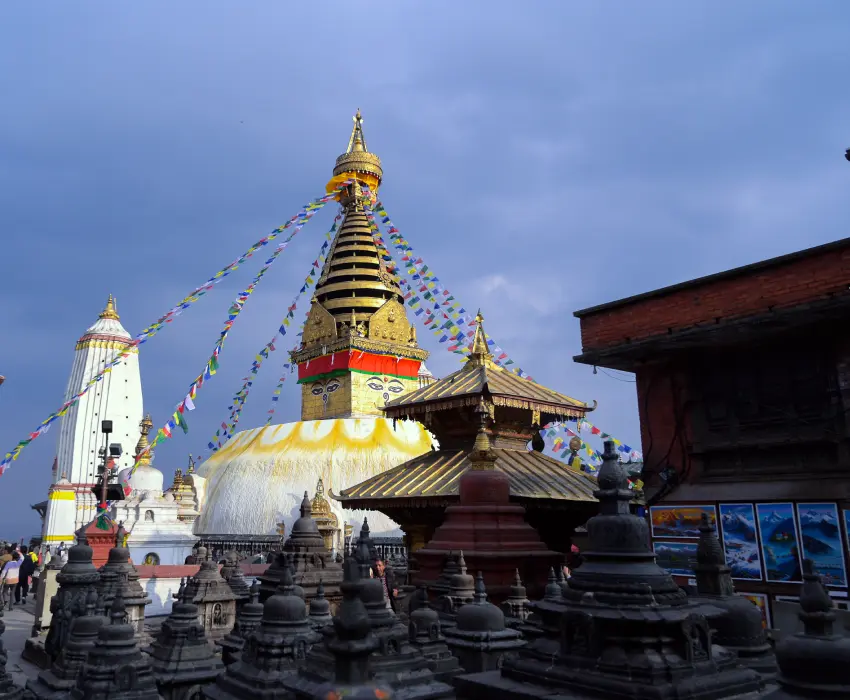
Swoyambhunath Stupa is regarded as the spiritual origin of the Kathmandu Valley and the most ancient Buddhist sanctuary in Nepal. Its story explains how wisdom enters the world and makes awakening possible.
According to the Svayambhū Purāṇa, the valley was once a vast lake. From its center arose a luminous lotus, radiating light recognized as the presence of the Adi-Buddha, later identified as Vairocana, the Buddha of universal wisdom. This manifestation did not arise through effort—it appeared naturally, symbolizing that enlightenment is inherent.

The Bodhisattva Mañjuśrī, embodiment of transcendent wisdom, perceived this light and traveled to the valley. Realizing that the sacred presence was inaccessible beneath the waters, he cut through the southern hills at Chobar, draining the lake and revealing fertile land.

The meaning is direct and profound:

  • ignorance obscures awakening
  • wisdom removes obstruction
  • clarity allows liberation to arise

The lotus then transformed into Swoyambhunath Stupa, becoming the spiritual heart of the valley.
Structure, Symbolism, and Practice

Swoyambhunath’s architecture itself is a manifestation of Buddhist teaching:

  • The white dome represents the vastness of compassion and the purity of the awakened mind.
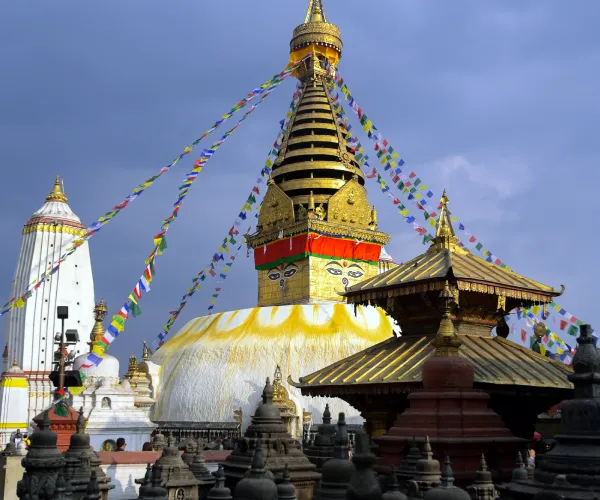
  • The Buddha eyes painted on the four sides of the stupa symbolize omniscience and awareness, reminding pilgrims that enlightenment sees all beings without discrimination.
  • The thirteen tiers of the spire correspond to the stages of realization, guiding practitioners from ordinary perception to full Buddhahood.

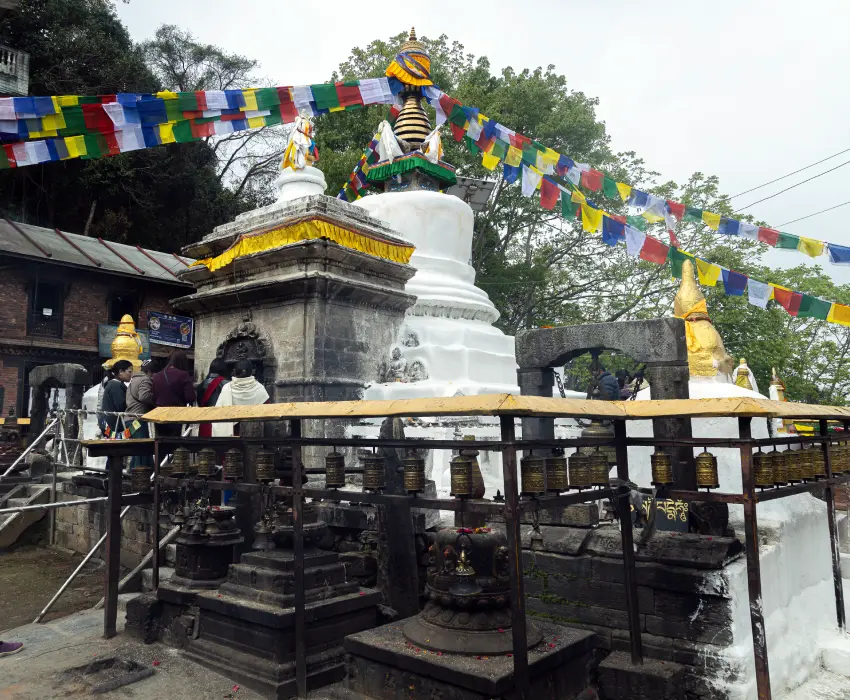
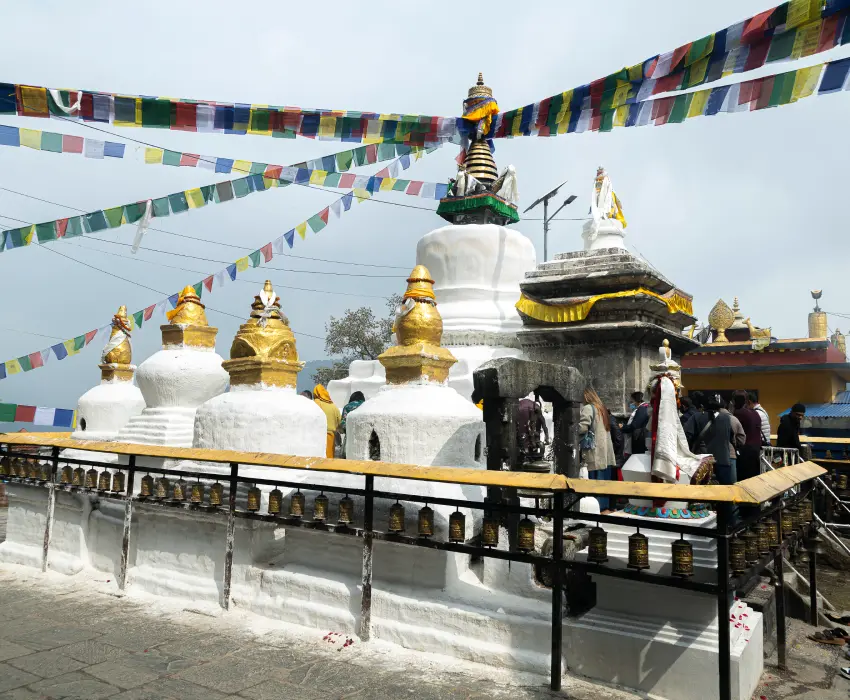
Today, pilgrims circumambulate the stupa, turn prayer wheels, and offer lamps—symbolically reenacting the moment when wisdom opened the path. Swoyambhunath is therefore the first step of the pilgrimage, where insight and awareness are awakened.

Boudhanath Stupa: Compassion in Continuous Practice

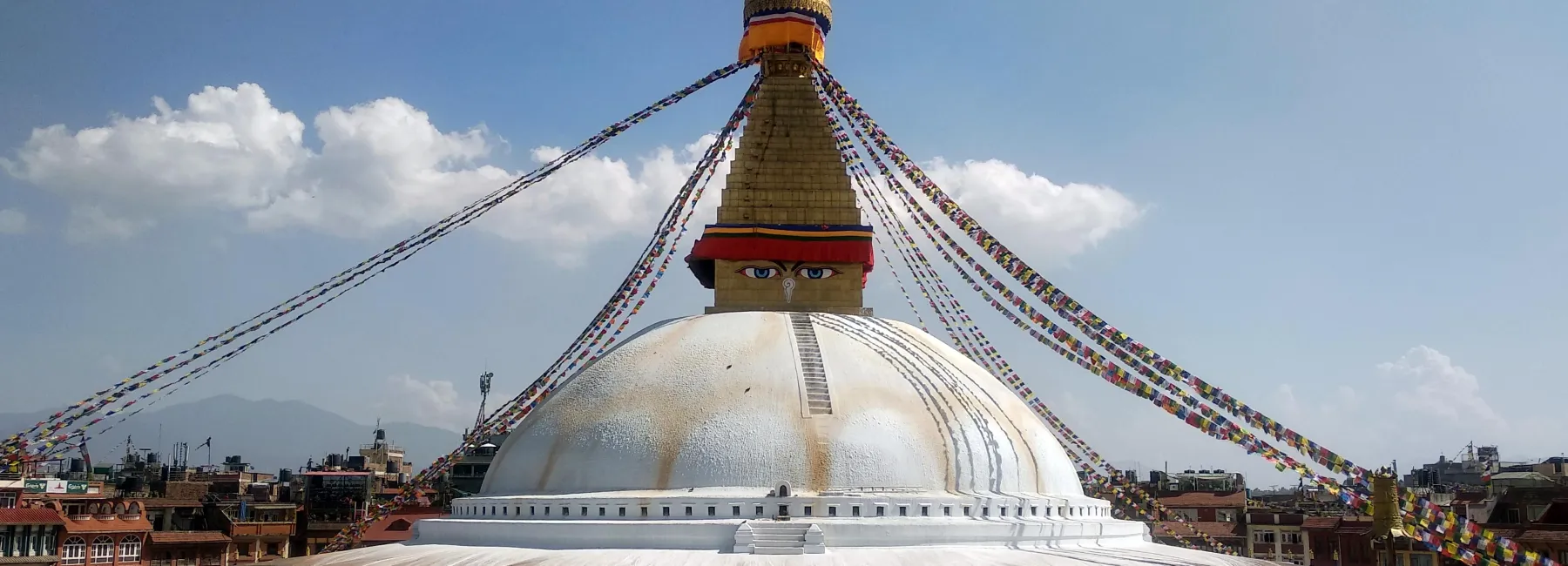
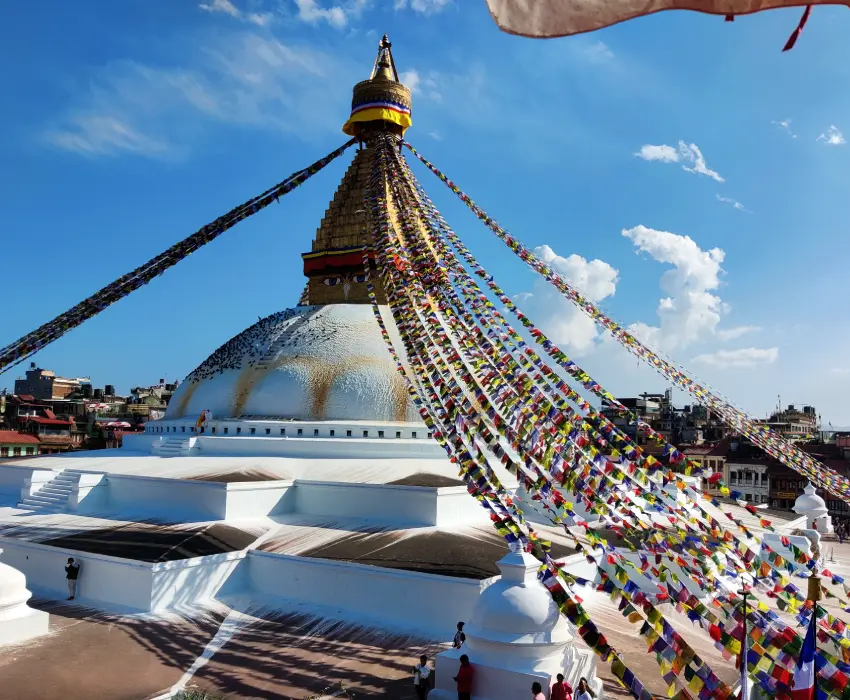
From the clarity of Swoyambhunath, the pilgrimage moves to Boudhanath Stupa, the largest and most active Buddhist stupa in the Kathmandu Valley. Here, wisdom begins to express itself as compassion in action.
The origin story of Boudhanath centers on pure intention. According to local tradition, a humble woman named Ma Jhyazima requested land from the king to build a stupa. She asked only for as much land as could be enclosed by a single buffalo hide. When permission was granted, she cut the hide into thin strips and encircled a vast area.

Moved by her sincerity and altruistic motivation, the king honored his word. The stupa was built through bodhicitta, not power or wealth.

Over centuries, Boudhanath became closely associated with Amitābha Buddha and Avalokiteśvara, the Bodhisattva of Compassion. It evolved into a living mandala of collective devotion.

Even today:

  • pilgrims walk in constant clockwise circumambulation
  • prayer wheels spin without interruption
  • butter lamps illuminate the Dharma
  • the mantra Om Mani Padme Hum resounds continuously

Boudhanath teaches that awakening is not complete until it is lived for the benefit of others.

Namo Buddha Stupa: The Fulfillment of Selfless Giving

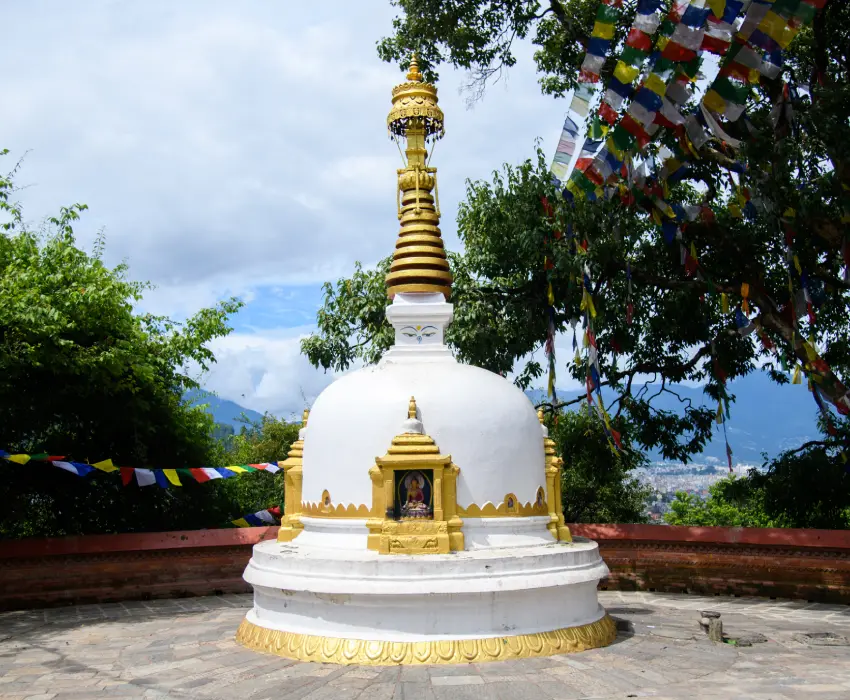
The pilgrimage culminates at Namo Buddha, located in the tranquil hills beyond the Kathmandu Valley. This sacred site commemorates the Vyāghrī Jātaka, one of the most revered stories in Mahayana Buddhism.
In a former life, the Buddha was born as Prince Mahāsattva. While walking in the forest, he encountered a starving tigress unable to feed her cubs. Understanding the situation clearly, the prince realized that compassion sometimes requires complete self-offering.
While others turned away, he offered his own body so the tigress and her cubs could live.

This act represents:

  • Dāna Pāramitā (Perfection of Generosity)
  • compassion free from self-clinging
  • courage grounded in wisdom

Great masters such as Śāntideva later cited this story as the highest expression of the Bodhisattva vow.

Namo Buddha is quiet and contemplative. Pilgrims come here to reflect deeply, allowing the teachings of the journey to integrate fully. This is where wisdom and compassion mature into fearless generosity.

Choosing a pilgrimage operator is about more than logistics—it is about trust, guidance, and spiritual alignment. Nirvana Journey is uniquely positioned to offer a deeply immersive and authentic experience of the Great Stupas, ensuring that each moment of your journey is both meaningful and transformative.

  • Expert Spiritual Guidance – Our team includes guides with profound knowledge of Buddhist philosophy, history, and rituals. They provide context for each stupa, sharing scriptural stories, local legends, and insights into the Buddhas and Bodhisattvas that bring the pilgrimage to life.
  • Personalized Pilgrimage Experience – Whether you are a seasoned practitioner or a sincere beginner, Nirvana Journey tailors the experience to your pace and interest. From quiet reflection at sacred sites to active participation in rituals, every step is designed to support inner growth and mindful engagement.
  • Authentic Cultural Immersion – Beyond the stupas, we provide opportunities to connect with local Buddhist communities, observe living traditions, and witness the lineages and practices that have been maintained for centuries.
  • Holistic Spiritual Environment – From mindful walking routes to thoughtfully selected accommodations near the stupas, every aspect of the journey is curated to enhance contemplation, devotion, and meditation.
  • Commitment to Safety and Ease – Nirvana Journey ensures all logistics are smooth, allowing pilgrims to focus fully on spiritual experience without concern for transport, guidance, or scheduling.

With Nirvana Journey, the Great Stupas pilgrimage becomes more than sightseeing—it becomes a living encounter with the teachings of the Buddha, a participation in centuries of devotion, and an opportunity to walk the Bodhisattva path with clarity, compassion, and courage.

The Great Stupas of Kathmandu Valley are not destinations competing for attention. They are a single teaching expressed through place.

To walk this pilgrimage is to encounter wisdom, compassion, and selflessness—not as abstract ideals, but as living possibilities.

Highlights

  • Perform kora, spin prayer wheels, and join in Tibetan Buddhist rituals at Boudhanath Stupa, feeling the sacred energy of one of the world’s largest stupas.
  • Visit Swayambhunath Stupa, the “Self-Arisen” stupa, offering panoramic views of the valley and a profound sense of wisdom and enlightenment.
  • Explore the sacred site of Namo Buddha, where pilgrims come to honor the story of Prince Mahasattva’s ultimate act of compassion.
  • Offer prayers, light butter lamps, and meditate at Namo Buddha Stupa, connecting with the sacred atmosphere of devotion and generosity. Hike to the holy Tigress Cave, reflecting on selflessness and the Bodhisattva path.
  • Participate in morning pooja at Thrangu Tashi Yangtse Monastery, experiencing chanting, rituals, and receiving blessings from the resident monks.
  • Enjoy quiet meditation, reflection, and mindful walking amidst the serene Himalayan hills surrounding Namo Buddha.
  • Complete a short yet meaningful spiritual journey that nurtures inner peace, mindfulness, and compassion.

Itinerary Expand All Collapse All

  • TransportationPrivate Vehicle
  • AccommodationDeluxe Hotel
  • Included MealsDinner Only

Upon arrival in the sacred valley of Kathmandu, you will be warmly welcomed and transferred to your hotel After check-in, take time to rest and settle into the peaceful spiritual atmosphere of Nepal.

Depending on your arrival time, you may take a gentle walk nearby, allowing yourself to slowly connect with the culture and rhythm of this ancient city. Overnight stay in Kathmandu.

  • TransportationPrivate Vehicle
  • AccommodationDeluxe Hotel
  • Included MealsFull Board Meal

After breakfast, begin your spiritual journey at Boudhanath Stupa, one of the largest and most important stupas in the world. As you arrive, you will witness pilgrims and monks walking clockwise around the stupa (kora), spinning prayer wheels, chanting mantras such as Om Mani Padme Hum, and offering butter lamps.

You may join in these sacred rituals—performing kora, lighting lamps, offering prayers, or simply sitting in quiet meditation while absorbing the peaceful energy that surrounds this great monument. The area is also rich with monasteries, where you can observe daily monastic life and devotion.

Later, proceed to Swayambhunath Stupa, the ancient “Self-Arisen Stupa” perched on a hilltop. After climbing the steps, you will be rewarded with panoramic views of the Kathmandu Valley. Here, pilgrims offer prayers, spin prayer wheels, and hang prayer flags while reflecting on wisdom and enlightenment.

Spend time in quiet contemplation, enjoying the spiritual ambiance and observing devotees in their daily practices. After completing the visits, return to your hotel. Evening at leisure or personal reflection.

  • TransportationPrivate Vehicle
  • AccommodationDeluxe Hotel
  • Included MealsFull Board Meal

After breakfast, drive through scenic hills and traditional villages to reach Namo Buddha, one of the most sacred Buddhist pilgrimage sites. Upon arrival, visit the revered Namo Buddha Stupa, built at the sacred site where Prince Mahasattva offered his body to a starving tigress—an act symbolizing ultimate compassion. This is a deeply spiritual place where pilgrims come to pray, offer butter lamps, light incense, and meditate.You may participate in these rituals, walk mindfully around the stupa, and spend time in silent reflection, connecting with the powerful message of generosity and selflessness.You can also take a short hike to the Tigress Cave, further deepening your understanding of this sacred story. Later, visit Thrangu Tashi Yangtse Monastery, where monks engage in daily prayers and spiritual practices.

Enjoy the peaceful surroundings, meditate, or simply sit in silence, embracing the serene Himalayan environment. Overnight stay in Namo Buddha.

  • TransportationPrivate Vehicle
  • AccommodationDeluxe Hotel
  • Included MealsFull Board Meal

Wake up early to participate in the morning pooja at Thrangu Tashi Yangtse Monastery. Experience the rhythmic chanting of monks, the sound of traditional instruments, and the sacred atmosphere filled with devotion and blessings.
You may sit quietly in meditation, receive blessings, and observe the spiritual discipline of monastic life.
After the pooja, return to your hotel for breakfast. Then begin your drive back to Kathmandu, carrying with you a sense of peace and spiritual fulfillment. Upon arrival, check into your hotel and enjoy the rest of the day at leisure.

  • TransportationPrivate Vehicle
  • Included MealsBreakfast

After breakfast and hotel check-out, you will be transferred to the airport (approx. 6–8 km / 20–30 minutes).

As your journey concludes, carry with you the blessings, insights, and inner peace gained from visiting the sacred stupas of Kathmandu and the holy site of Namo Buddha. May this pilgrimage continue to inspire your path toward compassion and awakening.

What's Included

    • Arrival & Departure: Complimentary private airport and bus station transfers to and from your hotel.
  • Accommodation:
    • Kathmandu & Cities: Deluxe hotel accommodation in Kathmandu (3 nights), and Lumbini (3 nights) on a Bed & Breakfast basis.
  • Meals: Full-board vegetarian meals (Breakfast, Lunch, and Dinner) throughout the duration of the pilgrimage.
  • Permits & Fees 
    • Sightseeing entry fees for Boudhanath and Swayambhunath.
    • All government taxes, office service charges
  • Transportation: All ground transfers via private, air-conditioned vehicle (or tourist bus where applicable) as per the sacred itinerary.
  • Expert Leadership: Highly experienced, English-speaking guide specializing in Himalayan Buddhism and Vajrayana history.
  • Safety & Support: Comprehensive first-aid medical kit and 24/7 office support during the tour.

What's Not Included

  • Travel Documentation: Nepal Entry Visa fees and International airfare.
  • Personal Gear & Expenses: Travel insurance (mandatory), laundry, telephone calls, and internet/Wi-Fi charges.
  • Beverages: Bottled water, soft drinks, juices, and alcoholic beverages.
  • Monastery Offerings: Individual donations (Dana) to monasteries, monks, or for private butter lamp offerings and poojas.
  • Tipping: Gratuities for your guide and driver (a traditional gesture of appreciation).
  • Contingencies: Any costs arising from unforeseen circumstances such as flight delays, landslides, political unrest, or health evacuations.

Talk to an Expert

Quick Inquiry

Nirvana Journey is the dedicated spiritual travel division of Asia Buddhist Tours & Treks, specializing in authentic Buddhist pilgrimages, sacred journeys, and transformative experiences across the Himalayan region asiabuddistours.com

Contact us