Walking the Sacred Path of the Eight Great Bodhisattvas
In the heart of the Himalayas, the Kathmandu Valley is not merely a place of residence or commerce—it is a living spiritual mandala, sanctified by centuries of Buddhist practice. Revered in Newar Buddhism as the Nepal Mandala, this sacred landscape is uniquely shaped by the compassionate activity of Shakyamuni Buddha and the Eight Great Bodhisattvas, known as the Asta Mahābodhisattva.
These Bodhisattvas embody the Buddha’s enlightened qualities: wisdom, compassion, generosity, perseverance, ethical conduct, and protection. Across the Mahayana tradition, they act as manifestations of the Buddha’s intent, appearing whenever sentient beings face suffering that cannot be alleviated by ordinary means. Within the Kathmandu Valley, their activity became physically localized, giving rise to eight sacred power-places called the Asta Vitaraga, where the Bodhisattvas manifested to heal, guide, and protect.
The Asta Vitaraga Tour of Nepal Mandala is not merely a sightseeing itinerary—it is a living pilgrimage, designed to allow pilgrims, spiritual seekers, and cultural travelers to experience the Buddha’s compassion through place, story, and ritual. By visiting these eight sites, one engages in a journey that purifies the mind, strengthens virtue, deepens insight, and aligns the practitioner with the awakened energy present in the Nepal Mandala.
The Asta Mahābodhisattva, or Eight Great Bodhisattvas, are central figures in Mahayana Buddhism. They are not limited to Newar Buddhism; their origin is pan-Mahayana, directly connected to the compassionate activity of Shakyamuni Buddha. Each Bodhisattva embodies a specific aspect of the Buddha’s enlightened qualities, allowing practitioners to cultivate these qualities in their own lives:
While these Bodhisattvas are revered across Mahayana Buddhist cultures, Newar Buddhism has uniquely localized their presence, creating the sacred sites of the Asta Vitaraga within the Nepal Mandala. This localization reflects the Newar understanding that enlightened activity leaves traceable, transformative energy in the land, allowing practitioners to engage with compassion and wisdom in a tangible way.
The pilgrimage through the Asta Vitaraga is more than visiting temples or landmarks; it is a living practice of Mahayana Buddhism, where each site embodies the compassionate intervention of the Bodhisattvas.
The tour also integrates cultural immersion, offering insight into Newar rituals, festivals, and art, providing a rich understanding of how Buddhism is lived in daily life.
Before visiting the individual sites, it is important to understand that these eight locations are strategically mapped across the Nepal Mandala, forming a mandala of enlightened activity. Pilgrims move through the circuit in sequence, allowing the progressive cultivation of virtues represented by each Bodhisattva. The spatial distribution symbolizes the integration of ethical conduct, wisdom, compassion, and protection into the practitioner’s mindstream.
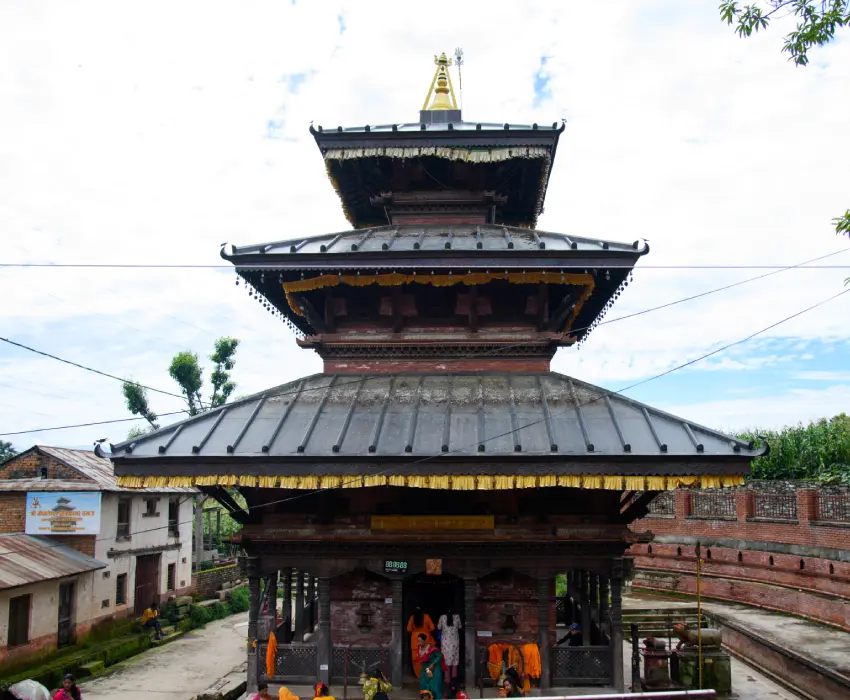
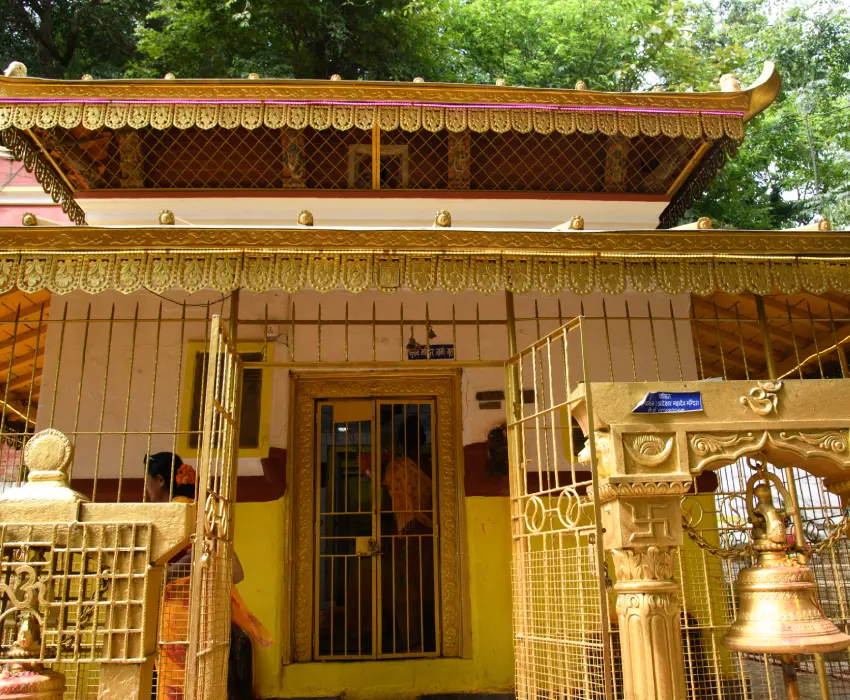
Gokarna is the northern gateway of the Asta Vitaraga circuit and the manifestation site of Bodhisattva Gaganganja, who embodies generosity, purification, and emotional transformation.
According to Newar Buddhist tradition, Prince Gokaranaka was consumed by intense hatred toward his parents, a destructive karmic force that threatened his spiritual growth. Bodhisattva Gaganganja manifested in a radiant form, pacifying the prince’s anger and guiding him toward refuge in the Three Jewels. This event exemplifies the Mahayana teaching that even deeply entrenched negativity can be transformed through compassion and mindfulness.
Today, pilgrims come to Gokarna to purify resentment, cultivate gratitude, and strengthen emotional clarity, aligning themselves with the Buddha’s compassionate presence in both land and mind.
Manichud, near the town of Sankhu, is the seat of Bodhisattva Maitreya, the Future Buddha, symbolizing loving-kindness, hope, and generosity.
Here, the legendary King Manichuda displayed supreme selflessness by offering his own flesh and a jewel to save a starving being. Maitreya’s manifestation affirmed that the path of compassion is expressed through concrete action, inspiring all future generations to cultivate ethical generosity.
Pilgrims at Manichud are reminded of the Mahayana principle that future awakening is shaped by present ethical and compassionate action, making this a powerful site for cultivating altruism and devotion.
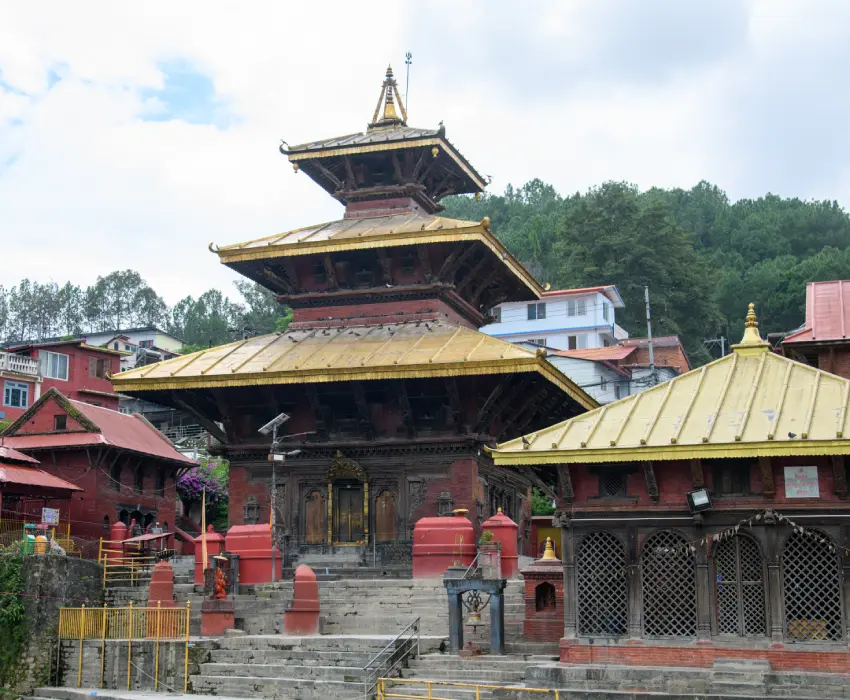
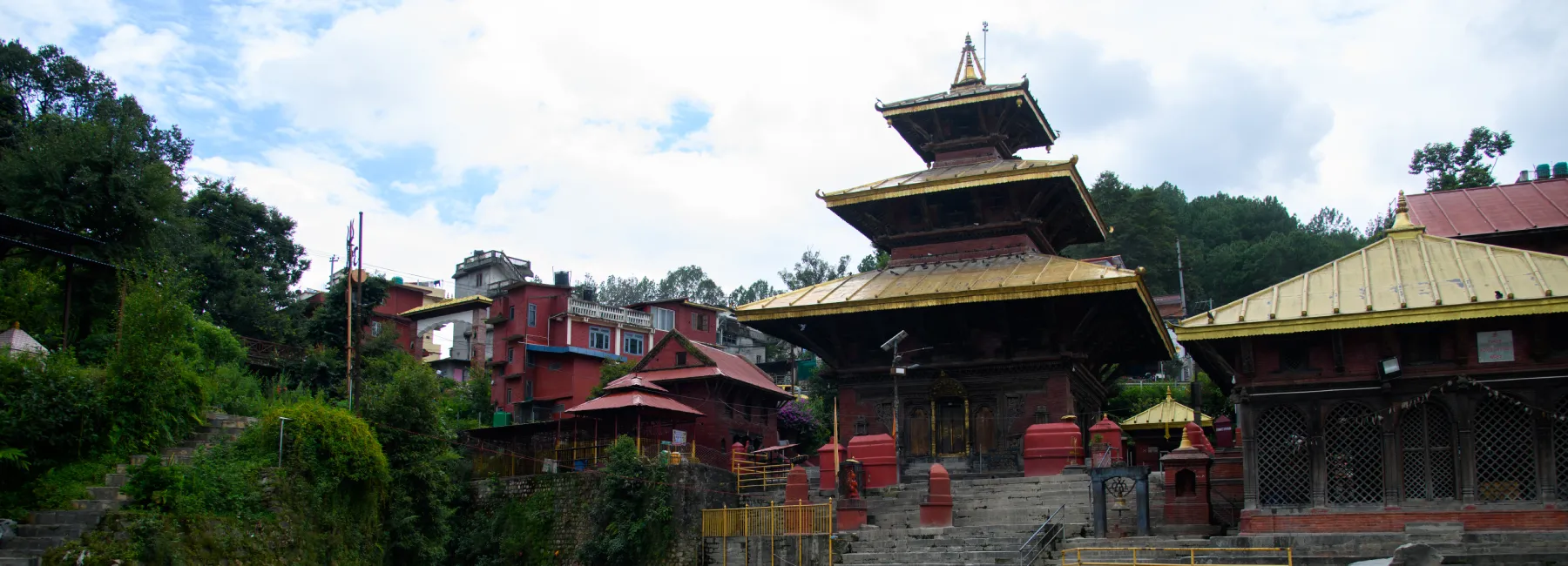
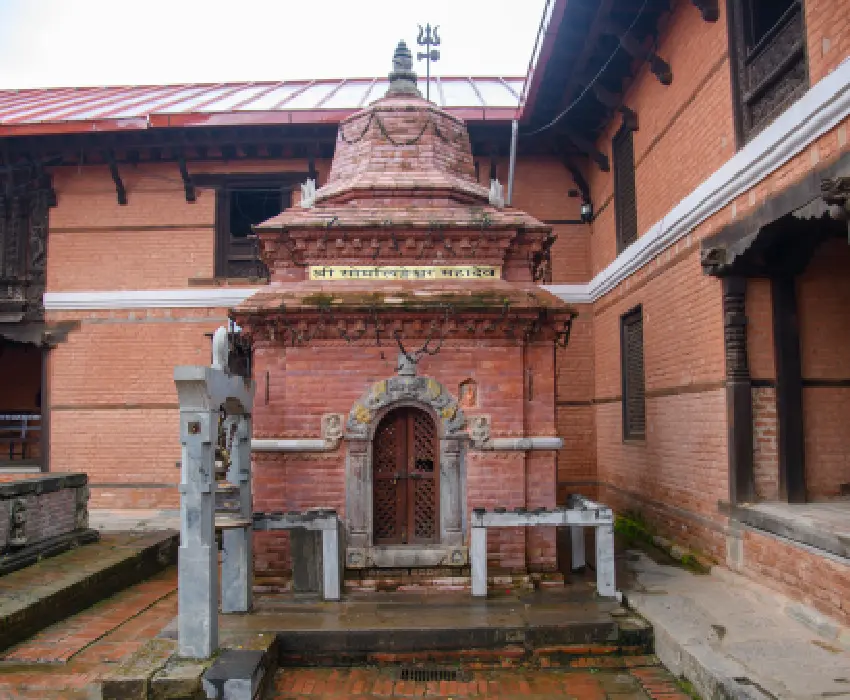
Located on the ridge of Changu, Kileshvara is associated with Samantabhadra, who embodies universal ethical conduct and harmonious action.
During a period of ecological imbalance in the Valley, Samantabhadra manifested to restore natural harmony, symbolizing the integration of ethical responsibility with spiritual awakening. Kileshvara is thus a sacred site for reflecting on interdependence, responsible action, and the role of virtue in shaping both society and the environment. Pilgrims meditate on how enlightened conduct actively transforms the world.
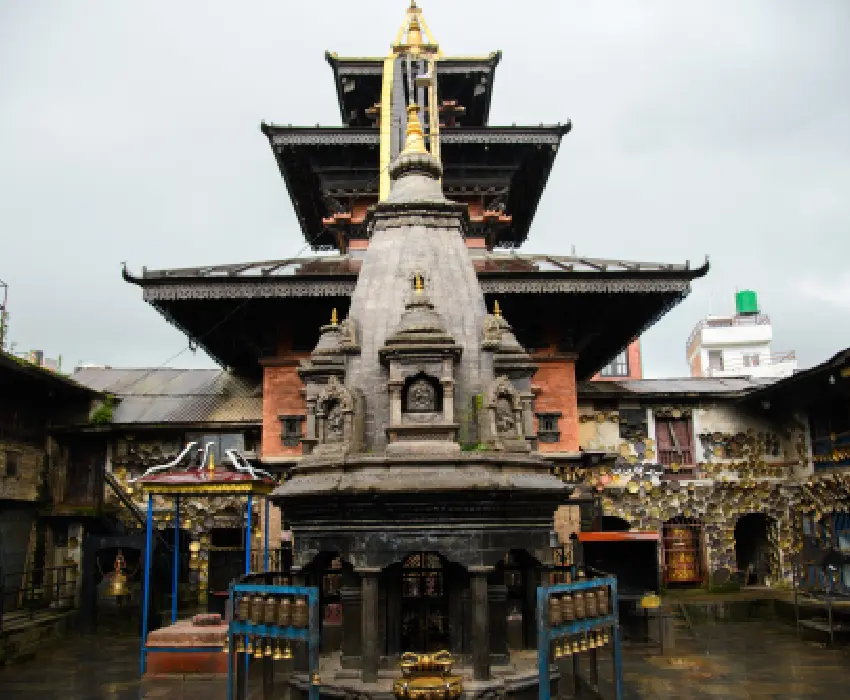
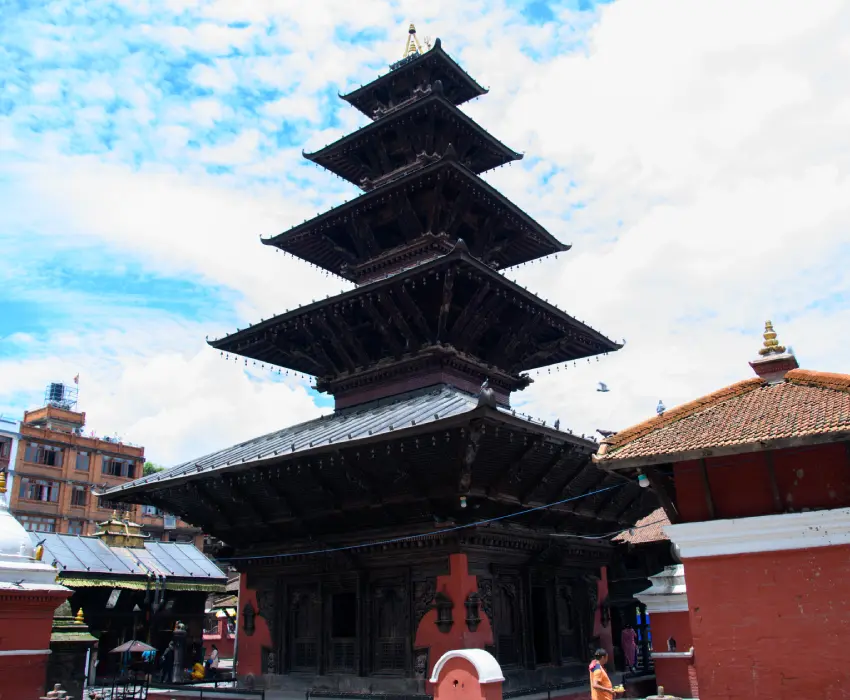
Kumbheshvara, in northern Patan, is the power-place of Bodhisattva Vajrapani, embodying spiritual strength, courage, and protection of the Dharma.
The site’s history tells of Sarvapala Vaidhya, a physician who fell into greed and unethical conduct. Vajrapani appeared to accept his sincere repentance, illustrating that inner strength and ethical restoration are always possible. Pilgrims visiting Kumbheshvara cultivate courage, resilience, and steadfastness in practice, reflecting the protective energy of the Buddha’s enlightened mind.
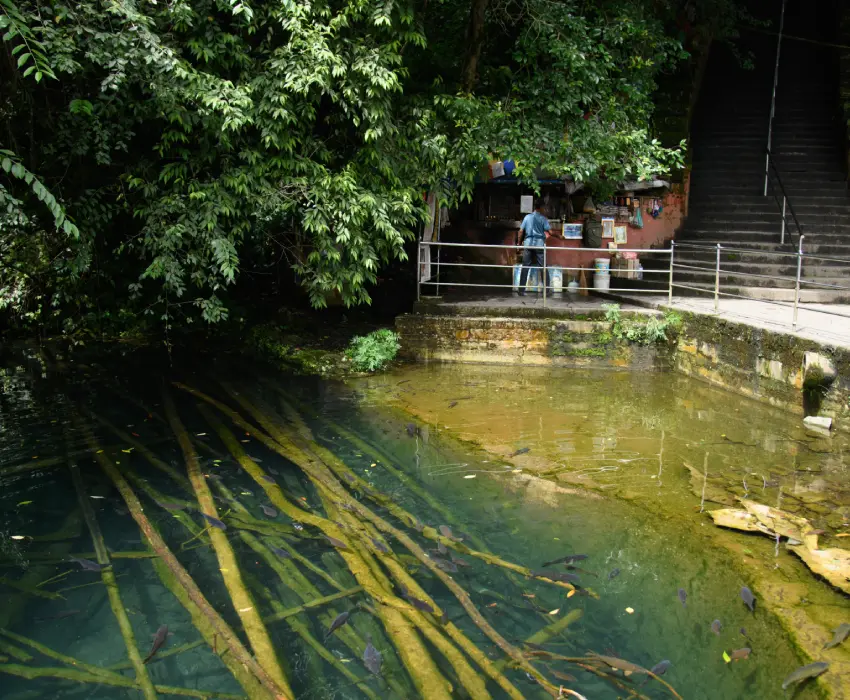
Perched on the cliffs of Pharping, Phanikeshvara is the manifestation site of Sarvanivarana Viskambhi, whose compassionate activity clears mental, spiritual, and karmic obstacles.
This site is central for those who face stagnation in meditation, repetitive karmic challenges, or emotional blockages. Pilgrims come to Phanikeshvara to purify obstacles, develop perseverance, and experience spiritual breakthrough, aligning with the Mahayana emphasis on skillful means to relieve suffering.
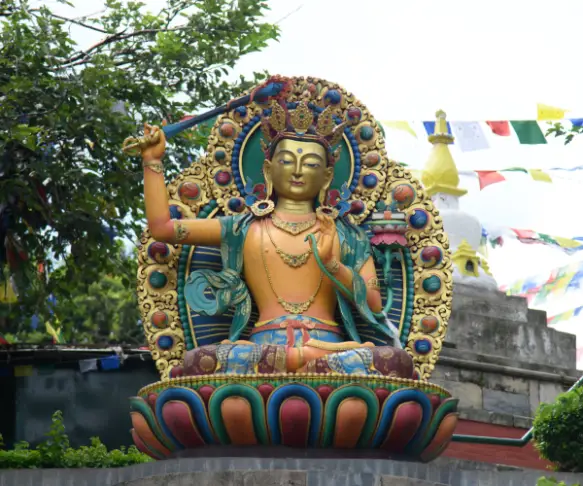
Nearby at Gopaleshvar, Garteshvara honors Manjushree, the Bodhisattva of wisdom. The site commemorates the rescue of a being trapped in ignorance, with Manjushree cutting through delusion to reveal transcendental insight (prajñā).
Pilgrims engage in study, reflection, and meditation, cultivating discernment and clarity. The experience reinforces the Mahayana teaching that wisdom is the ultimate tool to liberate beings from suffering.
At the Chovar Gorge, Gandhesvara marks the manifestation of Kshitigarbha, protector of beings in danger and distress. A legendary event recounts how a practitioner faced mortal peril, and Kshitigarbha intervened to provide refuge. Pilgrims come here to seek courage, resilience, and protection, reflecting the Mahayana vow to never abandon beings in suffering. Gandhesvara also symbolizes stability and steadfastness amid transitions and challenges.
The final site, Vikrameshvara, is dedicated to Akashagarbha, whose activity embodies inexhaustible support and resourcefulness.
During a historic drought, Akashagarbha manifested to rejuvenate the Valley, restoring crops, water, and life. Pilgrims visiting Vikrameshvara are reminded of the Bodhisattva’s capacity to provide hope, renewal, and spiritual sustenance even in the most barren circumstances, completing the journey through the Asta Vitaraga circuit.

The Asta Vitaraga Tour offers profound spiritual benefits for every pilgrim, providing an opportunity for the purification of mind and karma while cultivating merit (puṇya) through mindful devotion and ethical practice. As travelers move through the sacred sites of the Eight Great Bodhisattvas, they are inspired to develop compassion, wisdom, and ethical awareness, aligning their hearts and actions with the Mahayana path. The pilgrimage also supports meditation, the fulfillment of vows, and moral discipline, creating a framework for inner growth and spiritual resilience. Beyond personal development, the journey instills protection, courage, and hope during life’s challenges, allowing practitioners to draw strength from the enduring presence of the Bodhisattvas. Above all, it provides a rare and direct encounter with the Bodhisattva path and Shakyamuni Buddha’s compassionate activity, making the pilgrimage a transformative experience of devotion, insight, and awakening.
Traveling with Nirvana Journey ensures an authentic and spiritually enriching experience, offering:
This journey is not merely a tour—it is a transformative pilgrimage, connecting travelers with the Bodhisattva path, the Buddha’s compassionate energy, and the sacred Nepal Mandala.
The Asta Vitaraga Tour of Nepal Mandala invites pilgrims to engage with the living presence of the Eight Great Bodhisattvas, cultivating purification, insight, compassion, and courage. Each site represents a unique aspect of the Mahayana path and the compassionate activity of Shakyamuni Buddha.
Walking this pilgrimage is both spiritual practice and cultural immersion, offering profound opportunities for reflection, devotion, and transformation. Whether you are a practitioner, scholar, or mindful traveler, the Asta Vitaraga Tour provides a path to wisdom, compassion, and self-realization, deeply anchored in the living Buddhist tradition of Nepal.
Traveling with Nirvana Journey ensures an authentic and spiritually enriching experience, offering:
This journey is not merely a tour—it is a transformative pilgrimage, connecting travelers with the Bodhisattva path, the Buddha’s compassionate energy, and the sacred Nepal Mandala.
Upon arrival at Tribhuvan International Airport in Kathmandu, our representative will greet you and transfer you to your hotel. Take the day to rest and acclimatize after your journey. This is a good time to prepare mentally and spiritually for the sacred pilgrimage ahead. Overnight stay in Kathmandu.
After breakfast, the day begins with a visit to Bodhisattva Gaganganja at Gokharna, a revered site offering a peaceful environment for meditation and devotional rituals. Next, proceed to the ancient town of Sankhu to pay homage to Bodhisattva Maitreya, symbolizing loving-kindness and the promise of the future Buddha. Spend time in quiet reflection and engage in traditional prayers. The final stop is Bodhisattva Samantabhadra at Changu, known as the Bodhisattva of practice and vows. Immerse yourself in the serene surroundings, observe local rituals, and feel the spiritual energy of this sacred site. Return to Kathmandu for an overnight stay.
Begin the day with a visit to Bodhisattva Vajrapani in Patan, the protector Bodhisattva embodying power and strength. Explore the temple, witness traditional devotional practices, and appreciate the exquisite craftsmanship. In the afternoon, continue to Sita Paila to visit Bodhisattva Akashagarbha, associated with wisdom and expansive knowledge. Enjoy panoramic views of the valley, engage in prayers, and spend time meditating in the peaceful environment. Return to Kathmandu for overnight stay.
Start with Bodhisattva Kshitigarbha at Chovar, the Bodhisattva of compassion. The tranquil riverside and caves offer a serene setting for reflection and spiritual practice. Next, visit Bodhisattva Sarvanivarana Viskambhi, the remover of obstacles, where devotees perform traditional rituals and prayers. The final stop is Bodhisattva Manjushree at Pharping, the Bodhisattva of wisdom. Explore the monastery, meditate in its sacred surroundings, and connect deeply with the teachings. Return to Kathmandu for overnight stay.
After breakfast, you will be transferred to Tribhuvan International Airport for your onward journey. Depart Kathmandu with the blessings and wisdom of the Eight Great Bodhisattvas, carrying a sense of spiritual fulfillment and inner peace.
Nirvana Journey is the dedicated spiritual travel division of Asia Buddhist Tours & Treks, specializing in authentic Buddhist pilgrimages, sacred journeys, and transformative experiences across the Himalayan region asiabuddistours.com
© Copyright 2026, The copyright to all content on this website, including photographs, belongs to Nirvana Journey Pvt. Ltd. and cannot be reproduced without our permission. © Nirvana Journey Pvt. Ltd 2026