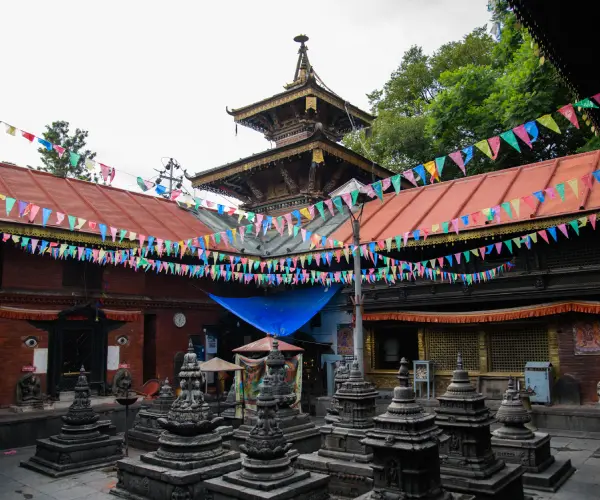
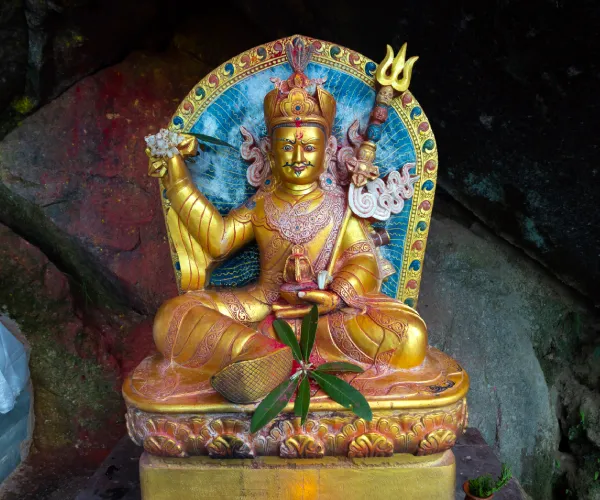
Discover the holy places where Guru Rinpoche meditated, bestowed blessings, and established the Vajrayana tradition in Nepal.
To enter the sacred sites of Guru Padmasambhava in Nepal is to step into a living Vajrayana landscape where spiritual realization has been imprinted upon the land itself. Nepal is revered not merely as a historical setting in the life of Guru Rinpoche, but as a constellation of power places—caves, valleys, and hidden sanctuaries—where the Lotus-Born Master resided, practiced, and awakened the spiritual potential of the Himalayan world.
This Sacred Sites Tour of Guru Padmasambhava in Nepal is designed as a focused pilgrimage to the core places of his enlightened activity. Rather than tracing every footstep, the journey leads directly to the most potent locations where Guru Rinpoche meditated inside caves, subdued obstructive forces, concealed terma (hidden treasures), and transformed natural landscapes into Vajrayana mandalas. These power places are still approached today through living oral lineage, continuous practice, and deep devotional reverence.
In Vajrayana Buddhism, sacred sites are not symbolic destinations—they are awakened environments. When approached with mindfulness and respect, such places naturally support inner clarity, emotional purification, and spiritual stability. The power places of Guru Padmasambhava in Nepal are believed to carry his blessing presence (byin rlabs), accessible not through belief alone, but through direct experience.
This pilgrimage is open to sincere seekers of all backgrounds. Whether you come as a Vajrayana practitioner, a spiritual traveler, or someone drawn to Nepal’s sacred geography, this journey invites you to slow down, listen inwardly, and encounter Guru Padmasambhava not as history, but as living presence—still active within the sacred sites of Nepal today.
In the Vajrayana tradition, Nepal is not regarded as a mere passageway in the life of Guru Padmasambhava, but as a primary field of realization where enlightened activity unfolded directly within the natural world. Long before his journey into Tibet, Guru Rinpoche chose Nepal’s caves, valleys, and secluded landscapes as places for sustained retreat, profound sadhana, and the stabilization of the awakened mind.
The sacred geography of Nepal is defined not by monuments alone, but by meditation caves where the Guru resided, power places where obstacles were transformed, and landscapes imbued with terma—hidden spiritual treasures intentionally concealed for future generations. Many of these sites also contain rangjung (self-arisen) signs, naturally formed symbols perceived through lineage and devotion as expressions of enlightened presence rather than historical proof.
What gives these power places their enduring vitality is the continuity of living lineage. For centuries, yogis, monastics, and local practitioners have preserved these sites through mantra recitation, retreat, and oral transmission. In Vajrayana understanding, such continuity maintains the blessing stream (byin rlabs), allowing sincere pilgrims to encounter Guru Padmasambhava not as a distant figure, but as a living guide present within the land itself.
This understanding sets the foundation for the Sacred Sites Tour of Guru Padmasambhava in Nepal—approaching each location not as a stop on a route, but as an awakened environment where inner transformation can naturally arise through stillness, presence, and direct experience.
Within this awakened landscape, certain sites hold an especially intimate connection to Guru Padmasambhava’s personal presence.
The Guru Padmasambhava sacred sites of Nepal are revered not simply as historical locations, but as places where his spiritual presence remains vividly alive. In Vajrayana understanding, when a fully realized master abides in a place through meditation, sadhana, and enlightened activity, the realization itself permeates the environment. Nepal’s caves and power places thus became living vessels of Guru Rinpoche’s awakened mind.
Across these sacred sites, Guru Padmasambhava resided within caves, practiced advanced tantric disciplines, subdued obstructive forces, and blessed the land for future practitioners. His presence is remembered through oral lineage, ritual continuity, and subtle signs—such as rangjung formations, sacred springs, and energetic stillness—rather than through inscriptions or monuments. These are not viewed as symbolic reminders, but as expressions of ongoing enlightened activity accessible through devotion and mindful presence.
In Vajrayana Buddhism, such sites are known as practice fields, where outer geography and inner awareness meet. Pilgrims visiting these places often report a natural quieting of the mind, heightened clarity, and a sense of being gently guided inward. This is understood as the blessing stream (byin rlabs) of Guru Rinpoche—an unbroken transmission carried by the land itself.
To enter these sacred sites of Guru Padmasambhava in Nepal is therefore to step into a living relationship with the Guru. The experience does not depend on belief or background, but on openness. In silence, in caves, and in consecrated landscapes, the Guru’s spiritual presence continues to invite awakening—softly, directly, and timelessly.
“The following sacred sites represent the most concentrated power places of Guru Padmasambhava in Nepal—locations where realization was stabilized, terma concealed, and the land itself awakened as a field of practice.”
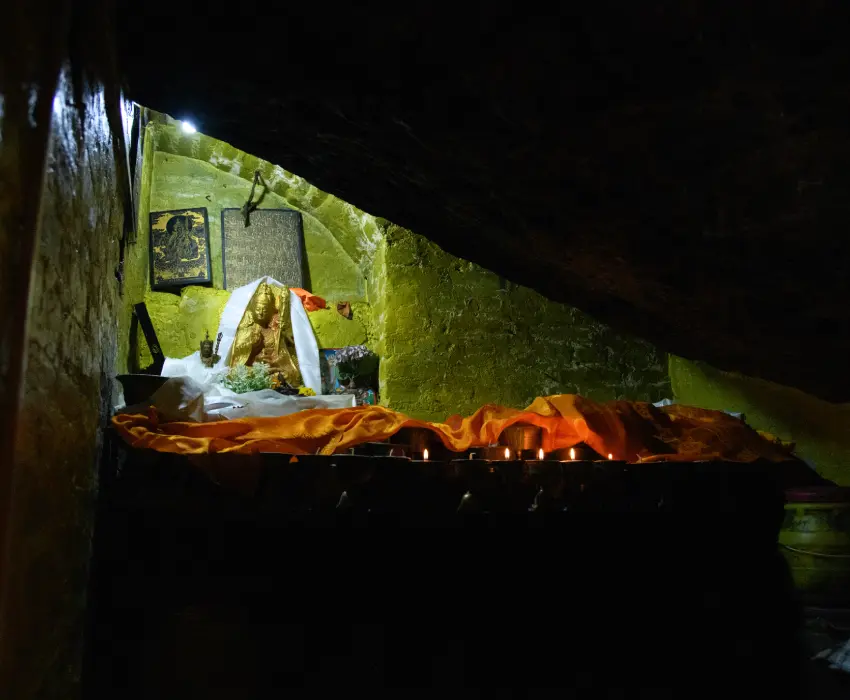
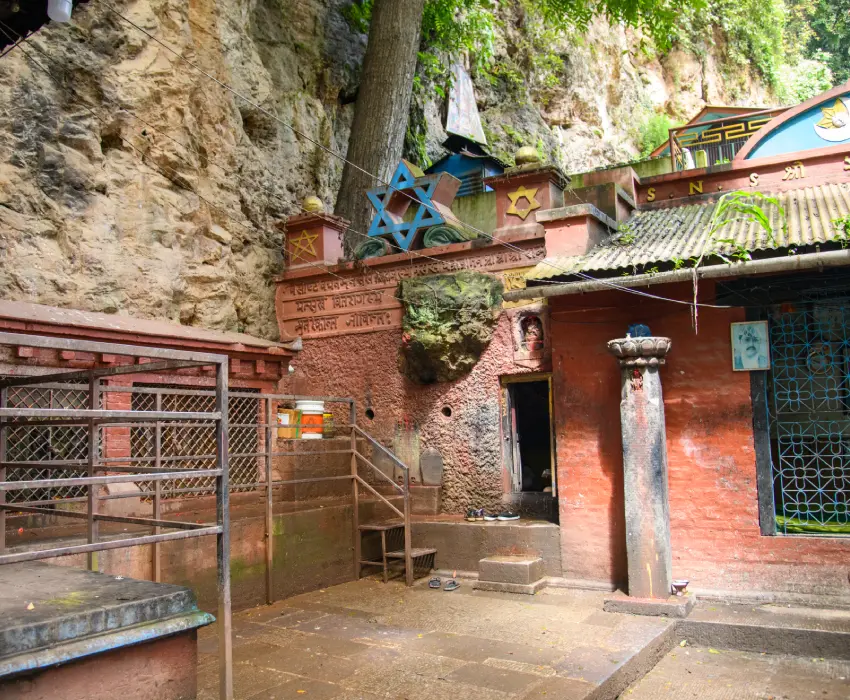
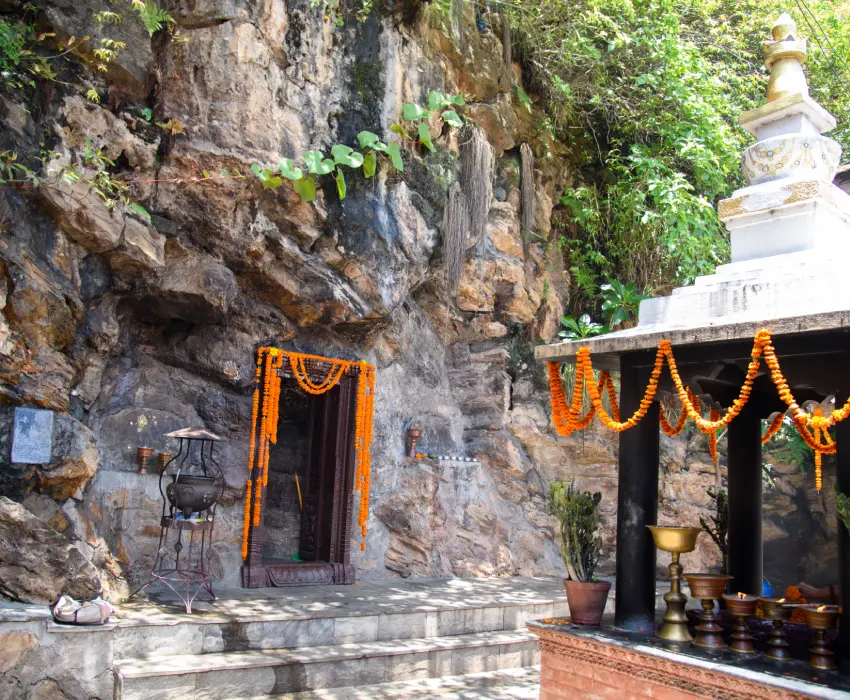
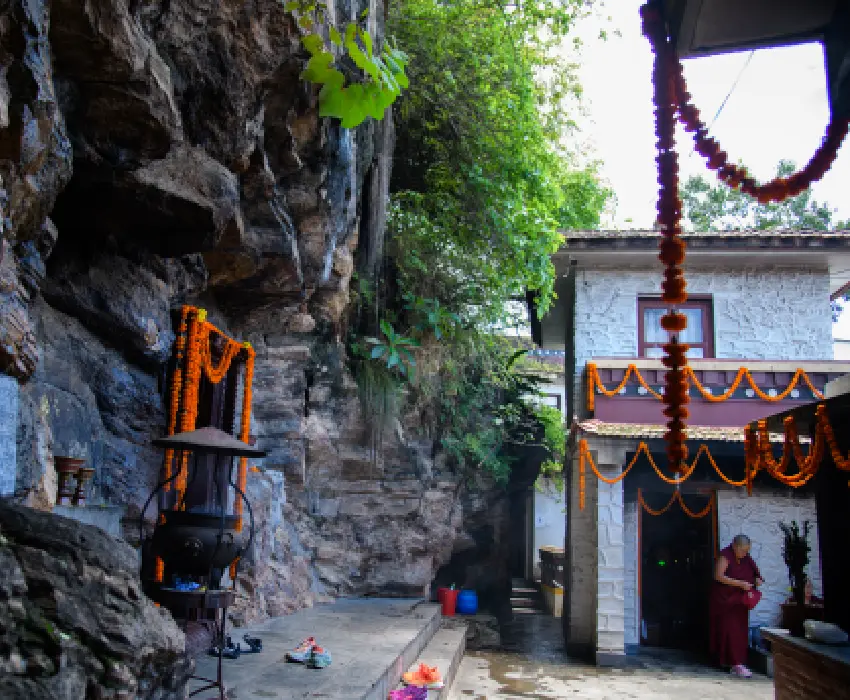
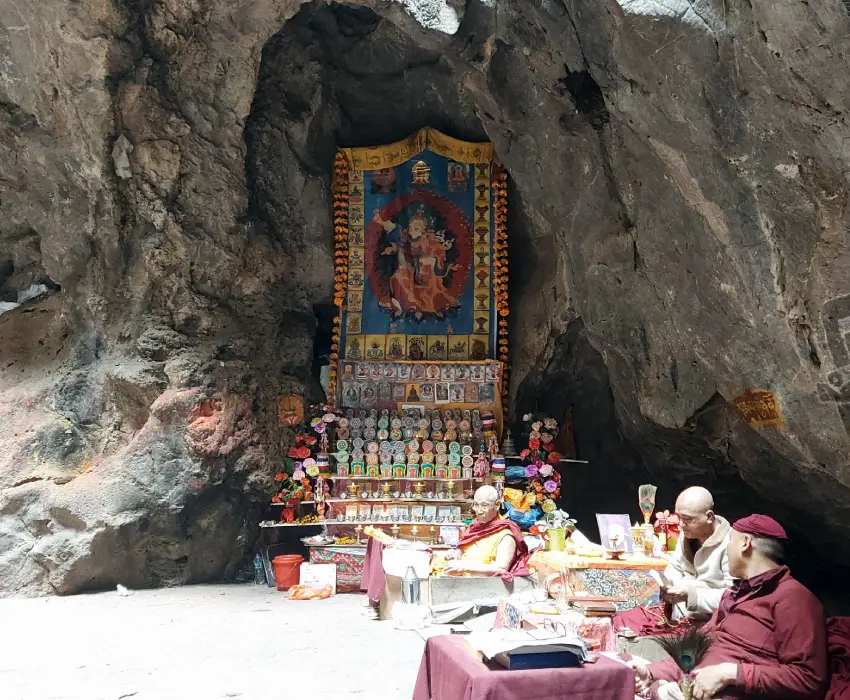
Pharping, also known traditionally as Yangleshö, is among the most revered Pharping Guru Padmasambhava sacred sites in Nepal and is considered one of the most profound Vajrayana power places connected with Guru Rinpoche outside of Tibet. Here, in the wooded hills just south of the Kathmandu Valley, the Lotus-Born Master entered retreat twice a year—shifting between the lower Yangleshö Cave and the upper Asura Cave according to season—to undertake profound tantric practice.
At Yangleshö Cave, Guru Padmasambhava began deep meditation focusing on Yangdak Heruka, a wrathful manifestation of the wisdom mind, engaging in intensive sadhana that laid the foundation for his later accomplishments in Nepal. At the Asura Cave, he combined the practices of Yangdak Heruka with Vajrakīlaya, the principal deity for removing obstacles, culminating in the attainment of the siddhi of Mahamudra—the direct realization of the nature of mind—within this sacred sanctuary.
The caves of Pharping are not only spiritually powerful because of these accomplishments but also because they continue to be fields of meditation and devotion. Modern retreat facilities built by realized masters support ongoing contemplative practice, and many pilgrims come to sit in silence, offer prayers, and connect with the enduring energy of Guru Rinpoche’s presence.
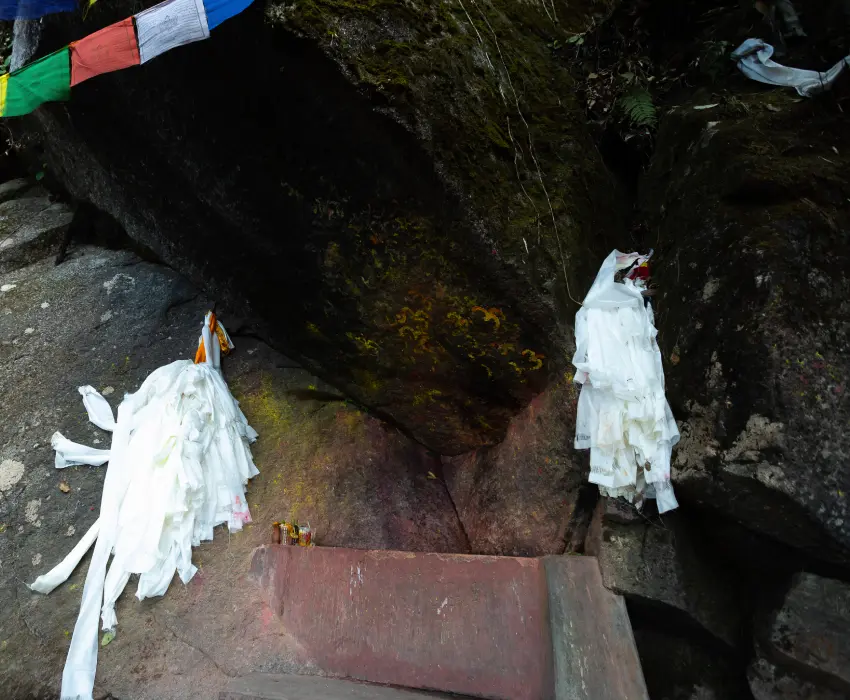
Pharping’s sacred geography also includes naturally occurring symbols—such as handprint impressions, self-arisen syllables, and rock formations—which practitioners regard as evocative supports (byang ’byung), enabling a felt sense of connection to the Guru’s spiritual activity. Even today, visitors often describe a deep sense of peace and spiritual gravity while meditating within these caves, as though the Vajrayana lineage itself breathes through the rock and earth.
For those on the Sacred Sites Tour of Guru Padmasambhava in Nepal, Pharping is an essential power place: a living testament to the Mahaguru’s mastery of tantra and realization—an environment where Sangha from centuries past meet the pilgrim of today in silent, awakened presence.
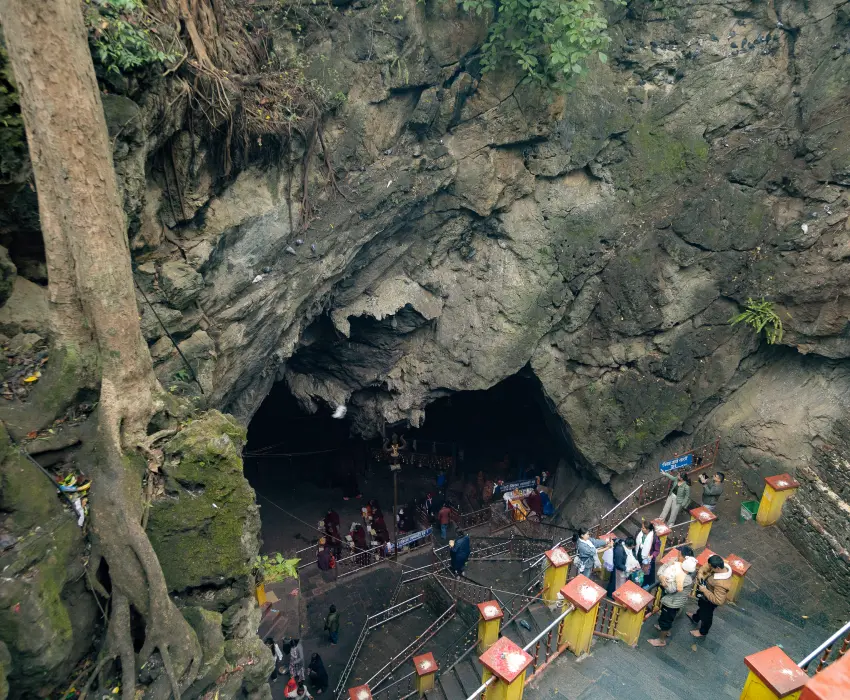
Maratika Cave, also known as Halesi, is one of the most revered Vajrayana power places in Nepal. Nestled in the limestone hills of Khotang District, it is celebrated as the sacred site where Guru Padmasambhava and Princess Mandarava attained the Vidyādhara of Deathless Awareness through the profound practice of Amitāyus long-life sadhana.
The very name Maratika reveals its destiny—derived from Mara (death) and Atika (to transcend), meaning “the place where death is brought to an end.” In Tibetan, it is known as Chi ba mthar byed, the termination of death. Guru Rinpoche recognized this cave as one of the eight supreme sacred sites and revealed it as a natural mandala where immortality could be realized for the benefit of all beings.
Surrounding hills representing Avalokiteshvara (compassion), Manjushri (wisdom), and Vajrapani (power) form a sacred geometry around the cave. Within its chambers are self-arisen sacred signs (rangjung), the Guru’s body imprint, the Tsebum long-life vase rock, and the Guru’s sacred spring (Drubchu), believed to carry healing blessings.
During their ninety-day retreat, Amitāyus himself is said to have manifested, granting the long-life empowerment and transforming their realization into immortal awareness. The cave also contains the Five Gates of Liberation—narrow passages symbolizing karmic purification and spiritual rebirth—and the Sky Door in the lower cavern, marking Guru Rinpoche’s wrathful mastery as Hayagriva.
Mandarava’s nearby retreat cave radiates the energy of feminine wisdom, offering empowerment and blessing to practitioners, especially women walking the path of Dharma.
Today, Maratika remains a living field of practice. Pilgrims believe that visiting this sacred site restores life-force, multiplies merit, protects from lower rebirths, and removes fear of death. To enter Maratika is to step into a natural mandala where mortality is transcended and the blessing stream of the Lotus-Born Master continues to flow.
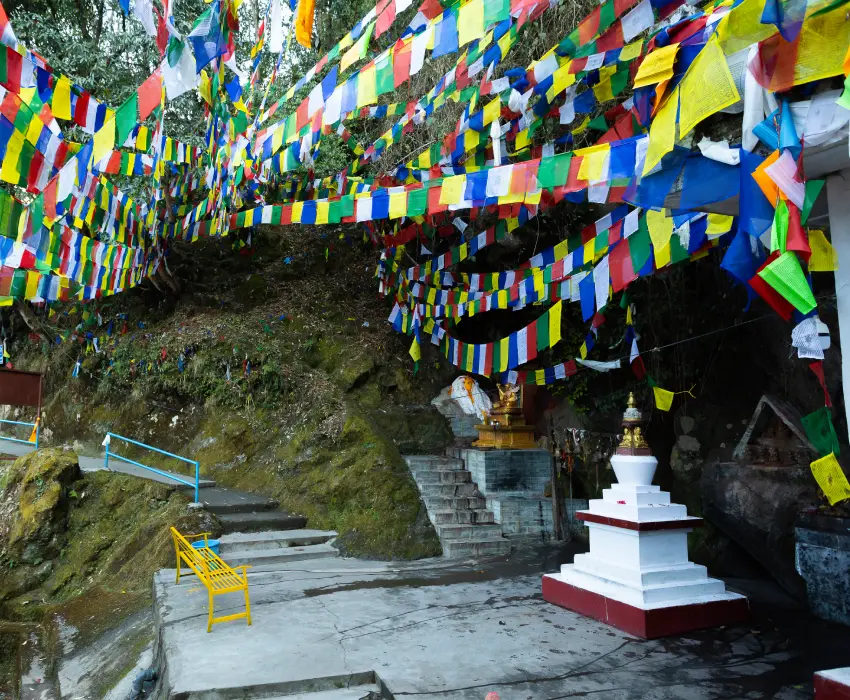
Chumik Changchup Cave, literally the “Spring of Enlightenment,” stands as one of the most symbolic Guru Padmasambhava sacred sites in Nepal—an authentic Vajrayana power place where the Lotus‑Born Master manifested profound spiritual presence and blessing. The cave and its sacred spring lie nestled in the forested hills near Daman, where Guru Rinpoche, on his way toward Tibet, displayed his mastery over obstructive forces and awakened the land with the Dharma.
According to traditional Vajrayana accounts, at Chumik Changchup Guru Padmasambhava appeared as Kyechok Tsulzang, the Eminent Noble Being, and engaged in tantric practice that bound local guardian spirits to their vows as protectors of the Dharma. The spring (Chumik) that arises here is known as the Spring of Awakening, a living symbol of purification, insight, and the spontaneous flowering of wisdom from the depth of practice. Even in deep winter, the hills around the spring are said to bloom with flowers, reflecting the timeless nature of spiritual awakening in the midst of life’s challenges.
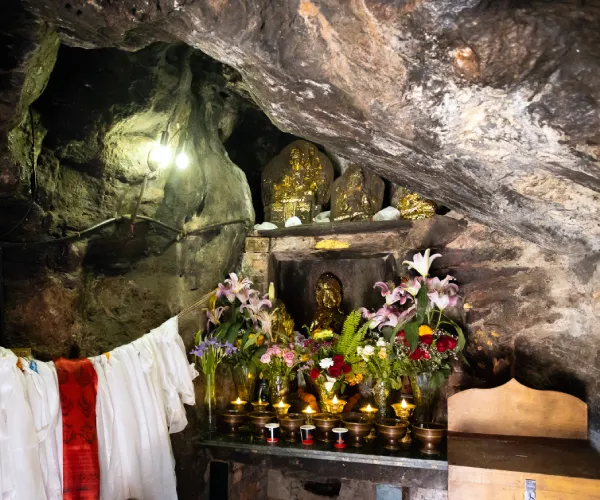
At the cave’s entrance and along the spring’s pool, images of Avalokiteshvara, Buddha Shakyamuni, and Guru Rinpoche are often present, creating an atmosphere where pilgrims sit, recite mantras, and enter meditative stillness. Local tradition holds that the Guru’s energetic imprint remains in the stones and flowing water, supporting those who come with heartfelt devotion and sincere intention.
Chumik Changchup is more than a geographic landmark; it is an energetic sanctuary where the outer environment reflects the inner path of awakening. For many pilgrims on the Sacred Sites Tour of Guru Padmasambhava in Nepal, the cave offers a profound sense of grounding and clarity, making it a pivotal place to pause, meditate, and connect with the embodied presence of Guru Rinpoche within the Himalayan land.
Tucked away in the rolling, forested hills of Kavre (also known locally as Timal or Temal), Yarinak & Timal stand as one of the most important Guru Padmasambhava sacred sites in Nepal. Here, far from the bustle of Kathmandu, Guru Rinpoche entered deep retreat to practice Vajrakīlaya sadhana and vividly manifest his wrathful‑compassionate aspect to clear obstacles and stabilize realization.
According to traditional Vajrayana accounts, while meditating at the Yarinak cave, Guru Padmasambhava took the form of Dükyi Shechen, the Great Demon Slayer. In this sacred landscape, he is said to have wielded his vajra and kila (ritual dagger) to set ablaze hostile forces opposed to the Dharma, liberating them into awareness and protecting the path for future practitioners.
Local oral traditions and pilgrimage lore describe naturally formed sacred symbols, rock formations, and cave features at Yarinak that practitioners regard as powerful supports (byang ’byung) for contemplation and devotion. These include formations interpreted as faces, instruments, and mystical syllables that awaken presence and deepen connection to the Guru’s spiritual field.
Timal’s surrounding valleys are also closely associated with bodhi seeds, regarded in regional tradition as physical expressions of Bodhicitta—the awakened mind of compassion that Guru Rinpoche taught and blessed here. These seeds have been widely used by Himalayan practitioners for making malas, symbolizing the Guru’s compassionate wish to benefit all beings through continuous mantra recitation and mindful engagement with the sacred land.
Pilgrims visiting Yarinak and Timal today often describe a palpable sense of grounding and protection. Walking along forested paths, pausing at secluded springs, or sitting quietly within the cave, many feel a subtle stabilization of mind and heart—an inner stillness that mirrors the outer sanctity of the landscape. This hidden power place remains an essential stop for those seeking to connect with Guru Padmasambhava’s living energy and the transformative spirit of Vajrakīlaya practice in Nepal.
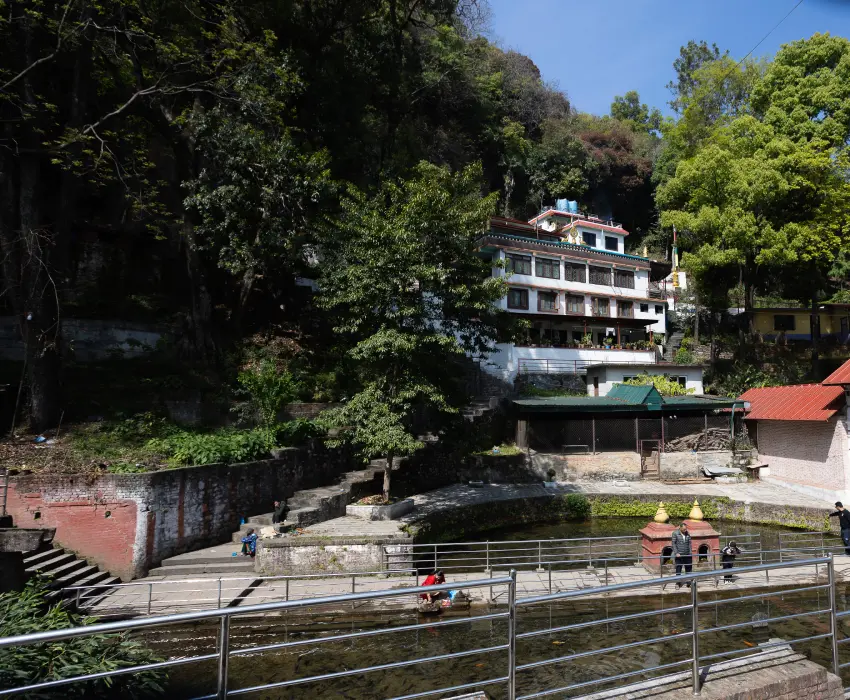
Located at the foot of Phulchowki Hill in Lalitpur, Godawari Kunda is one of the sacred pilgrimage sites connected to Guru Padmasambhava (Guru Rinpoche) during his 8th-century journey through the Kathmandu Valley. Revered in the Nyingma tradition, this peaceful forest sanctuary is believed to preserve the living blessings (Adhiṣṭhāna) of the Second Buddha.
According to Vajrayana tradition, Guru Rinpoche practiced tantric meditation in the caves and forests above Godawari, where he subdued Nagas, Yakshas, and local protector spirits, binding them under sacred oath (Samaya) to safeguard the Buddhadharma and future practitioners. The surrounding landscape is also honored as a Terma (hidden treasure) realm, where Guru Padmasambhava concealed sacred teachings and blessed relics to be revealed by future Tertöns during times of spiritual decline.
Today, pilgrims visit the crystal-clear Godawari Kunda to offer butter lamps, incense, flowers, and khatas, collect its blessed spring water, and meditate in its serene natural setting. As part of the Sacred Sites Tour of Guru Padmasambhava in Nepal, Godawari Kunda offers a profound experience of purification, protection, and spiritual connection before continuing to the Guru Rinpoche sacred sites of the Kathmandu Valley.

Walking through Guru Padmasambhava power places in Nepal is far more than sightseeing—it is a living Vajrayana pilgrimage that connects the practitioner with the sacred energy embedded in the land. Each site, from the meditation caves of Pharping to the Amitayus cave of Maratika, and the secluded retreats of Yarinak and Chumik Changchup, serves as a field of realization where spiritual blessings continue to flow through centuries of living lineage.
In Vajrayana understanding, these power places are not merely historical monuments; they are activated landscapes where Guru Rinpoche’s enlightened activity left subtle imprints (rangjung), terma treasures, and protective energies. Visiting these sites allows pilgrims to:
This pilgrimage is therefore an invitation to move beyond ordinary travel. By visiting these core Guru Padmasambhava sacred sites in Nepal, one receives both visible and subtle blessings, awakening the mind and heart to Vajrayana insight, compassion, and spiritual presence.
This pilgrimage is not just another sightseeing itinerary—it is a journey into the heart of Guru Padmasambhava’s Vajrayana power places. Unlike broader tours, this experience focuses exclusively on the core sacred sites in Nepal—Pharping, Maratika Cave, Yarinak, and Chumik Changchup Cave—where the Lotus-Born Master directly practiced, consecrated the land, and left subtle blessings for generations of practitioners.
What makes this tour unique:
In essence, this tour allows travelers to walk the intimate path of Guru Padmasambhava in Nepal, not just as observers, but as participants in the ongoing spiritual field. It is designed for those seeking direct encounter with sacred energy, personal insight, and a deeper understanding of Vajrayana practice—a focused, profound pilgrimage unlike any other.
Embarking on this Guru Padmasambhava tour is more than visiting historical landmarks—it is a spiritual pilgrimage in Nepal, designed to awaken insight, purify mind and body, and harmonize with the enlightened energy of the Lotus-Born Master.
Key spiritual benefits include:
This tour ensures that travelers not only witness Nepal’s sacred geography but experience it as an active spiritual field, making it a rare opportunity to walk in the footsteps of Guru Padmasambhava and integrate his teachings into one’s own path.
Choosing Nirvana Journey ensures that your Guru Padmasambhava tour is not just a visit, but a deeply guided spiritual pilgrimage in Nepal. Our expertise, lineage awareness, and careful planning create an authentic and transformative experience.
Reasons to choose Nirvana Journey:
With Nirvana Journey, this tour is more than a path through Nepal—it is a transformative experience, where each step through the sacred caves and valleys brings you closer to the living energy of Guru Padmasambhava.
This Guru Padmasambhava pilgrimage in Nepal is designed for seekers of spiritual depth, cultural immersion, and Vajrayana practice experience. Whether you are a devoted practitioner or a curious traveler, this Vajrayana tour in Nepal offers meaningful engagement with Nepal’s most powerful Guru Rinpoche sacred sites.
Spiritual Practitioners: Those wishing to meditate, practice sadhana, or connect with Guru Padmasambhava power places.
Pilgrims and Devotees: Travelers aiming to follow the authentic footsteps of Guru Rinpoche and experience the energy of living Vajrayana lineages.
Cultural and Spiritual Explorers: Visitors seeking to understand Nepal’s living Buddhist heritage, monastic traditions, and the mystical geography of sacred caves and valleys.
Beginners to Vajrayana: Even those new to Buddhism can benefit from the transformative energy of Guru Padmasambhava sacred sites without prior study, as the journey emphasizes direct experience.
Mindfulness and Inner Growth Seekers: Anyone wishing to slow down, reflect, and integrate spiritual teachings into daily life through the guided pilgrimage.
This tour is a Vajrayana-focused spiritual journey, tailored to connect travelers deeply with Guru Padmasambhava sacred sites while providing a safe, guided, and immersive experience in Nepal’s core power places.
Step into a journey that transcends sightseeing and enters the realm of the sacred. This pilgrimage invites you to experience Nepal’s living sacred sites, where the presence of Guru Padmasambhava blessings continues to resonate through caves, valleys, and monastic retreats.
As you walk through Pharping, Maratika, Yarinak, and Chumik Changchup caves, each step becomes more than movement—it is an opportunity to connect with the enduring spiritual energy of the Lotus-Born Master. These core Vajrayana power places are not only historical landmarks but living fields where practitioners have meditated, realized, and left the imprint of enlightened activity
.
The journey encourages mindfulness, reflection, and openness, allowing the subtle blessings of Guru Rinpoche to awaken clarity, compassion, and inner stillness. It is an invitation to witness, feel, and participate in the living continuity of Vajrayana practice in Nepal, embracing the transformative potential of every sacred site.
Upon arrival at Tribhuvan International Airport, you will be met and transferred to the sacred hills of Pharping. Often called the “Bodhgaya of Nepal,” this village is a living sanctuary of the Nyingma lineage. We begin our pilgrimage at the Self-Arisen Tara temple, where a natural image of Green Tara is emerging from the rock face. This evening is for setting your spiritual intention and absorbing the quiet, resonant energy of the valley.
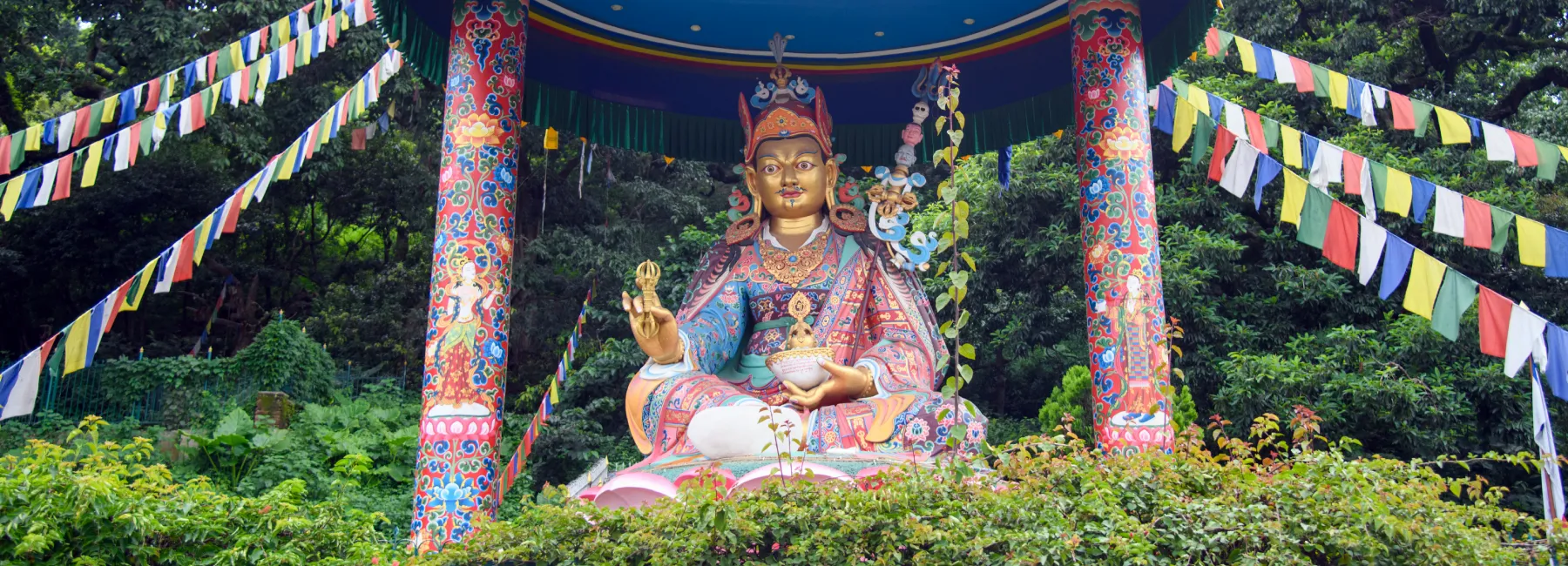
Today is a deep immersion into the two most significant caves of Pharping. We start at the Lower Yangleshö Cave, where Guru Rinpoche and his consort Shakyadevi practiced the Yangdak Heruka deity, ultimately attaining the profound level of Mahamudra Vidyadhara. Here, you will see the serpentine rock shapes on the ceiling—evidence of local nagas who bowed in reverence to the Guru. We then ascend to the Asura Cave (Upper Cave), where the Guru practiced Vajrakilaya to subdue the final obstacles to enlightenment and bound the Twelve Tenma Goddesses under oath to protect the Dharma. To conclude the day, we visit the 131-foot statue of Guru Rinpoche, the largest of its kind in the region, overlooking the valley. Travelers can engage in Yangdak Heruka or Vajrakilaya chanting or visit the nearby Vajra Yogini Temple to receive blessings.
We depart early for a 7–8 hour drive toward the Khotang district. This journey follows the Sun Koshi River, crossing through the winding middle hills of Nepal. The long drive serves as a transition period, moving from the “Place of Accomplishment” (Pharping) toward the “Place of Immortality” (Maratika). We arrive in the village of Halesi by evening, greeted by the mystical atmosphere of the cave-riddled landscape.
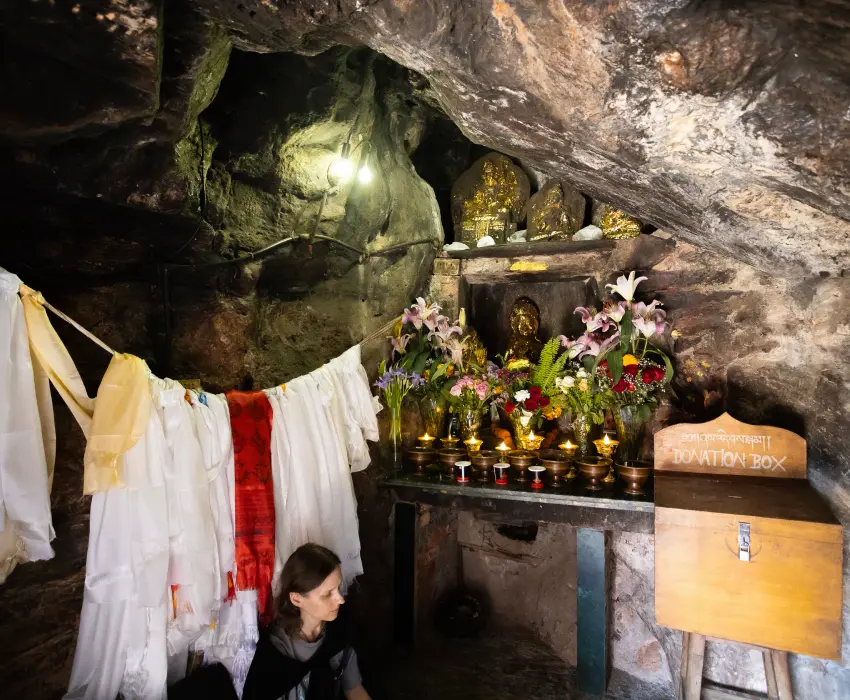
This day is spent exploring the vast spiritual complex of Halesi Maratika. We spend time in the Lower Cave, a massive limestone cathedral where Guru Rinpoche and Princess Mandarava attained the Vidyadhara of Longevity. On the cave ceiling, look for the miraculous holes and formations believed to be the footprints of Guru Rinpoche and the marks where he flew through the solid rock to subdue negative forces. We also visit the Upper Cave and the sacred pond located near the entrance. A key part of the ritual here is navigating the narrow passings (karmic test passages) which are believed to purify negative karma. From the site, we can view the surrounding hills of Gyalwa Kyung and Manjushree Hill, where the Guru meditated to stabilize the region’s energy. Pilgrims can participate in Amitayus (Long-Life) practices and seek the nectar of immortality that still drips from the sacred rock formations.
We begin our drive back toward the west, heading into the Kavre district to reach the high ridges of Timal. This region is the ancestral heart of the Tamang people and is rich with Guru Rinpoche folklore. We arrive in the village of Yarinak in the late afternoon, settled high above the clouds with breathtaking views of the Himalayan range.
A full day is dedicated to exploring the sacred landscape of Timal. We visit the Yarinak Cave, the site where the Guru manifested his power to subdue local spirits. Surrounding the cave are the ancient Bodhichitta (Buddha-Chitta) trees; legend says these trees sprouted from the Guru’s own prayer beads (mala). While the seeds are protected and gathering them is strictly prohibited, being in their presence is a profound blessing. We will also explore other neighboring sacred sites related to the Guru’s presence in Timal, including rock imprints and meditation seats. Travelers can spend the day practicing Trekchö (Cutting Through) meditation or making offerings for the benefit of all beings.
We drive from Timal toward the high-altitude pass of Daman (approx. 5 hours). This route climbs into the crisp air of the high hills, offering some of the most expansive mountain views in Nepal. Daman is a site of “View Meditation,” where the outer vastness of the snow-capped peaks reflects the natural, unobstructed state of the mind.
Located in the serene, moss-covered forests of Rikheshwar, we set out to reach Chumik Changchup, the “Eight Springs of Awakening.” This journey requires a 45-minute hike downward from the Daman ridge into the heart of the forest sanctuary. Legend tells that when the Guru’s disciples were parched with thirst, the Guru struck the rock face with his staff, and eight miraculous springs burst forth. Pilgrims can perform ritual washing for purification at the eight spouts and practice the Seven-Line Prayer inside the small meditation cave. After our practice, we hike back up to Daman, reflecting on the Guru’s ability to provide for his followers in the wilderness.
We leave the thin air of Daman and descend back into the Kathmandu Valley (approx. 4 hours). This afternoon is reserved for rest and integration. After the seclusion of the caves and forests, returning to the city allows you to “bring the practice into the world,” reflecting on the internal changes sparked by the pilgrimage.
On the final day of our pilgrimage, we begin at Godawari Kunda, the sacred spring beneath Phulchowki Hill where Guru Padmasambhava is believed to have meditated, subdued local Nagas and protector spirits, and concealed hidden Terma (spiritual treasures). Surrounded by peaceful forests, this is a place for purification, meditation, and receiving the living blessings (Adhiṣṭhāna) of Guru Rinpoche.
We then visit the two great Eyes of the Kathmandu Valley. At Swayambhunath, the self-arisen stupa, Guru Rinpoche is believed to have hidden sacred Terma and blessed the valley as a place of wisdom and protection. Finally, we arrive at Boudhanath, the spiritual heart of Tibetan Buddhism, where Guru Padmasambhava made the profound aspiration in a previous life to protect the Dharma during the dark age. We complete the pilgrimage by walking the sacred Kora and offering thousands of butter lamps, dedicating the merit of our journey to the peace, compassion, and enlightenment of all sentient beings.
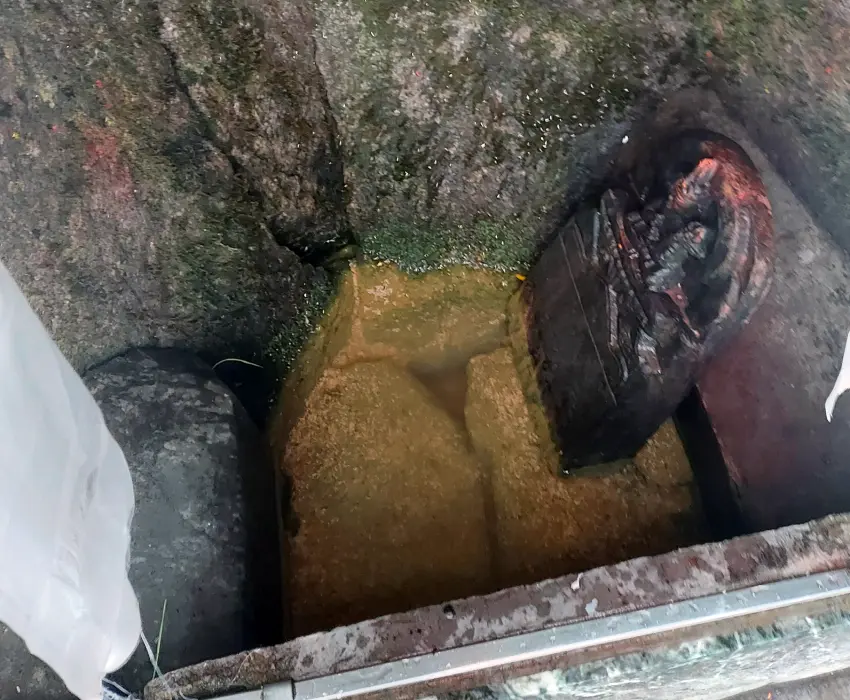
After a final breakfast and a closing reflection, you will be transferred to the airport. We depart with the blessings of the Lotus-Born Guru firmly rooted in our hearts, marking the end of the outer journey and the lifelong continuation of the inner one.
Nirvana Journey is the dedicated spiritual travel division of Asia Buddhist Tours & Treks, specializing in authentic Buddhist pilgrimages, sacred journeys, and transformative experiences across the Himalayan region asiabuddistours.com
© Copyright 2026, The copyright to all content on this website, including photographs, belongs to Nirvana Journey Pvt. Ltd. and cannot be reproduced without our permission. © Nirvana Journey Pvt. Ltd 2026