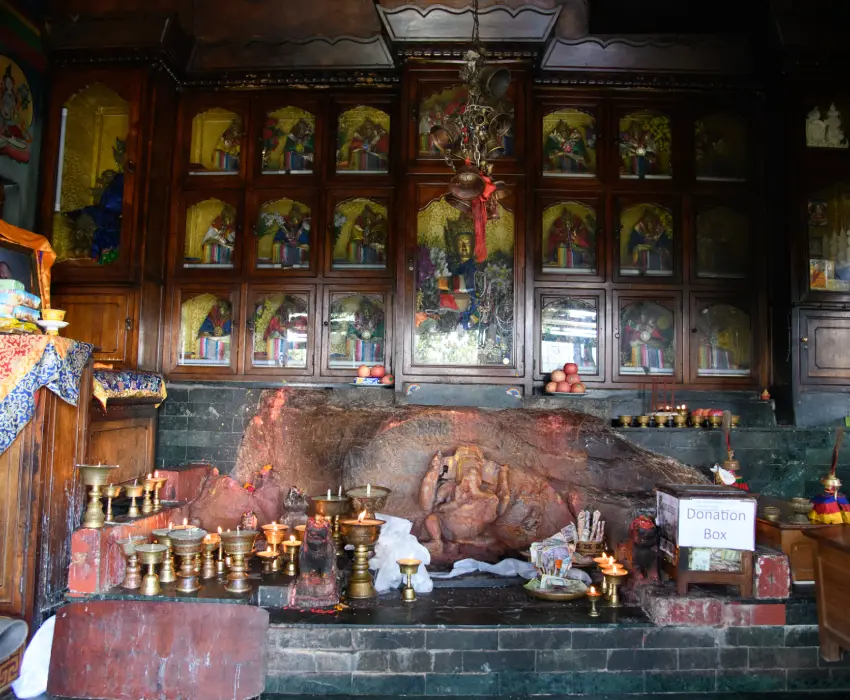
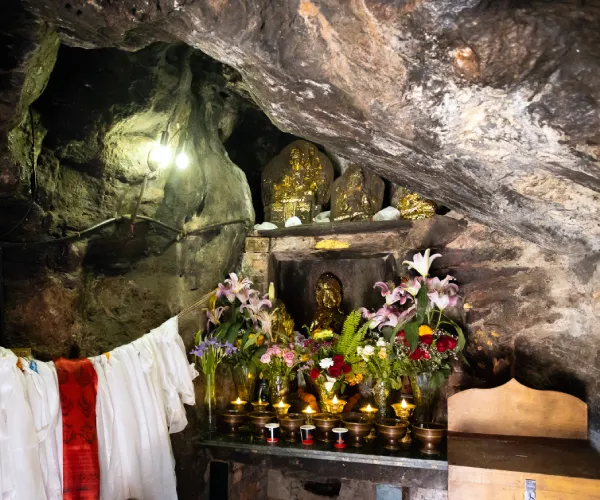
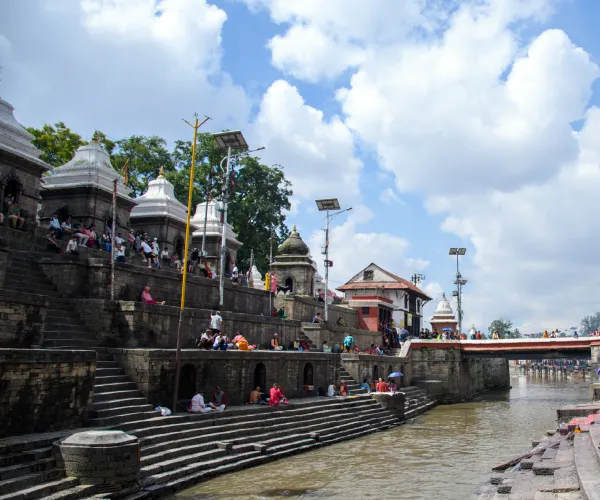
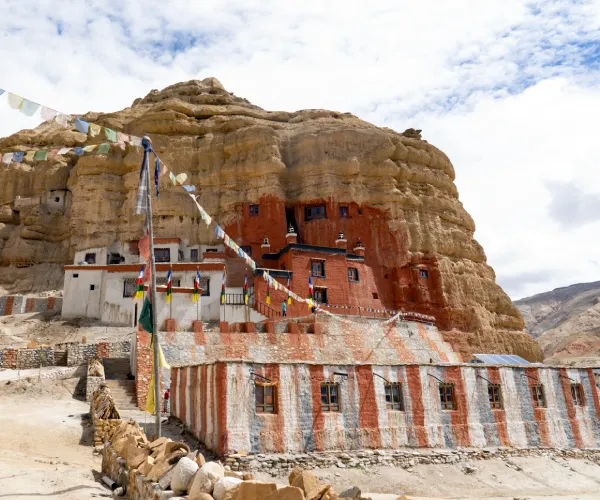
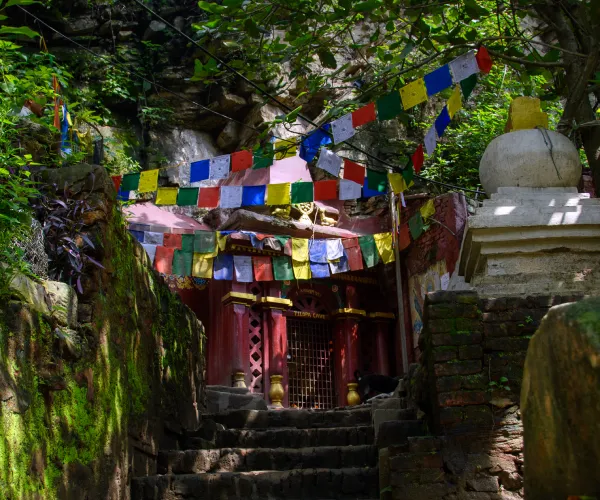
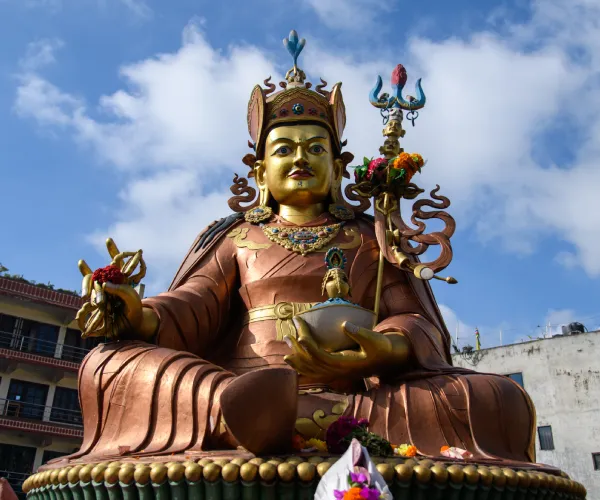
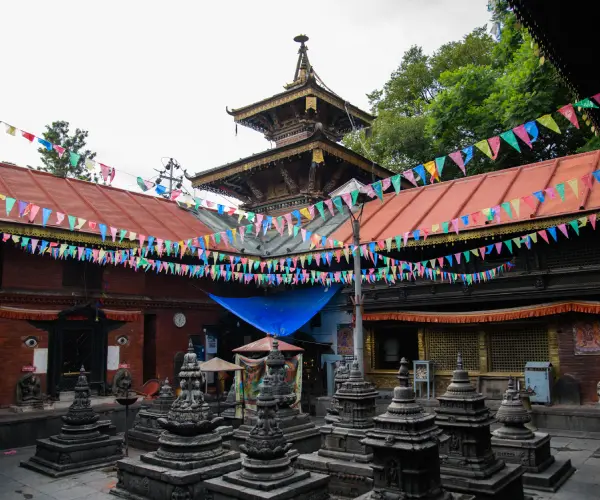
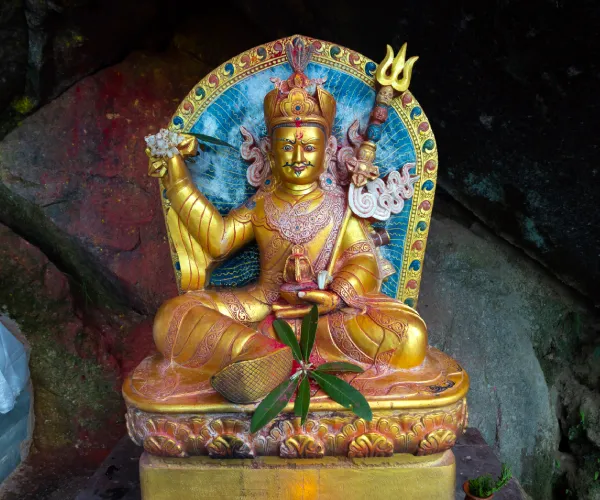
Before exploring each sacred site individually, it is important to understand that the Tara sacred sites of the Kathmandu Valley are not isolated temples, but interconnected vajra-points within a living spiritual mandala. Spread across Kathmandu, Patan, and Bhaktapur, these ancient Mahavihars preserve centuries of Newar Vajrayana devotion, where Tara is invoked daily through mantra, ritual offerings, and lineage practices. As we enter each sacred courtyard, we are not simply visiting historical monuments; we are stepping into continuous fields of blessing where the compassionate presence of Tara has been sustained for generations. Each site reveals a different dimension of her enlightened activity—protection, healing, magnetizing compassion, and spiritual awakening—guiding pilgrims progressively deeper into the heart of the Tara mandala.
White Tara (Talking Tara) – Itumbaha, Kathmandu
Hidden within the sacred courtyards of Itumbaha (Keshchandra Krit Paravarta Mahavihar) in the old city of Kathmandu lies one of the most revered Tara shrines in Nepal—the shrine of the “Talking Tara.” Located inside the ancient monastic complex of Itumbaha, this White Tara temple is not only an architectural treasure of the 11th century but also a living Siddha site where the deity is believed to be spiritually “awake.”
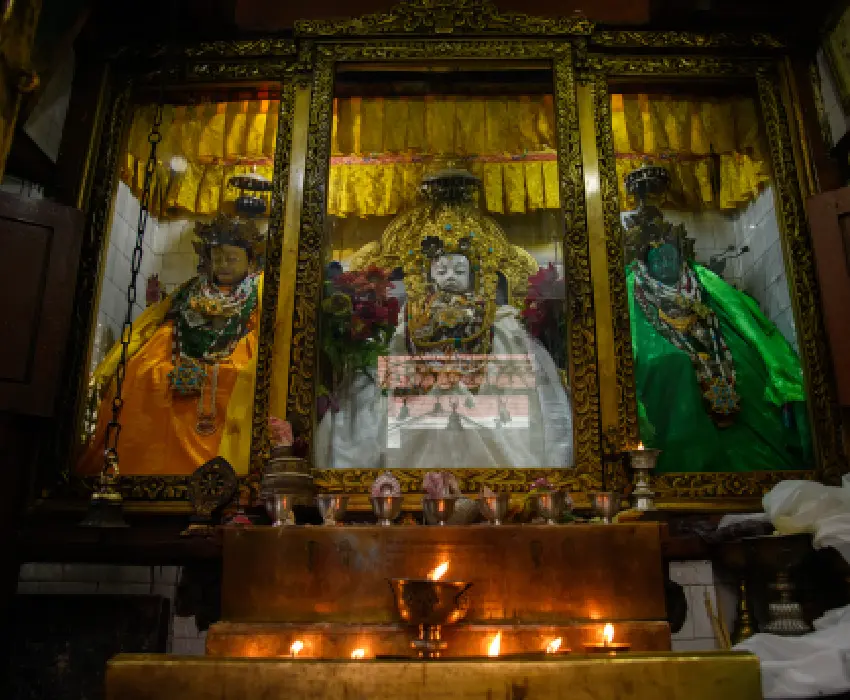
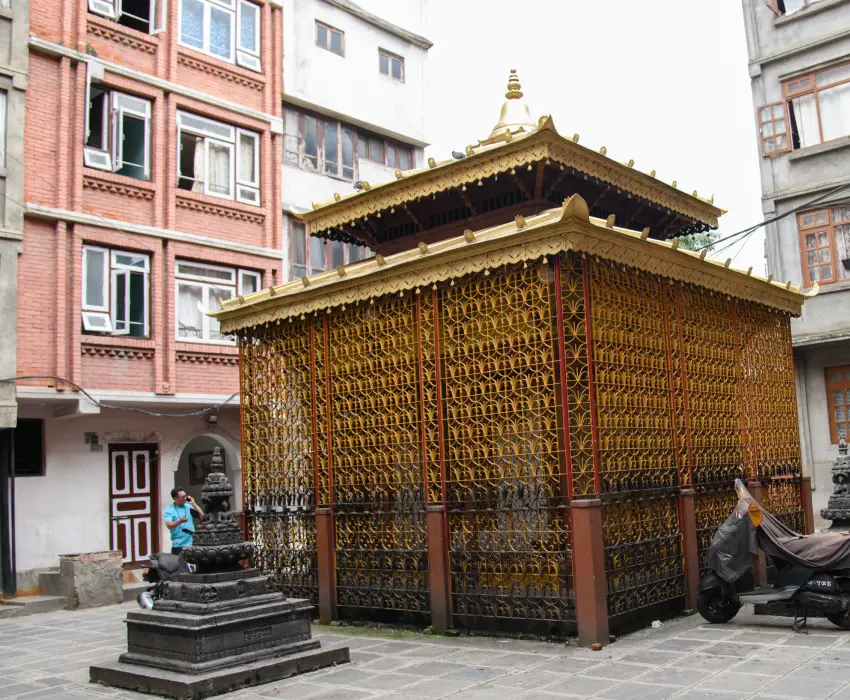
Tucked in the northern sub-courtyard known as the Tara Nani, the shrine offers a quieter, intimate atmosphere compared to the larger bahal. The courtyard floor is paved with traditional terracotta tiles and surrounded by red brick walls adorned with small stone chaityas. The temple itself is a compact two-story Newar structure—the lower level housing the sanctum, while the upper floor is traditionally reserved for ritual purposes. A distinctive protective metal grill surrounds the inner shrine, safeguarding the precious bronze images and serving as a frame for hundreds of butter lamps during festivals. When illuminated, their golden light reflects softly upon the sacred forms of Tara, creating a deeply contemplative ambiance.
Architecturally, the shrine is a masterpiece of classical Newar craftsmanship. Above the entrance, a finely carved wooden torana (tympanum) depicts protective deities framed by mythical makaras and crowned by the fierce Chepu, symbolizing the triumph of sacred wisdom. The carved roof struts (tunala), dating from the 13th and 14th centuries, portray celestial beings and protective goddesses, embodying both artistic refinement and tantric symbolism. Stone lions and guardian figures at the threshold protect the sanctity of the inner space.
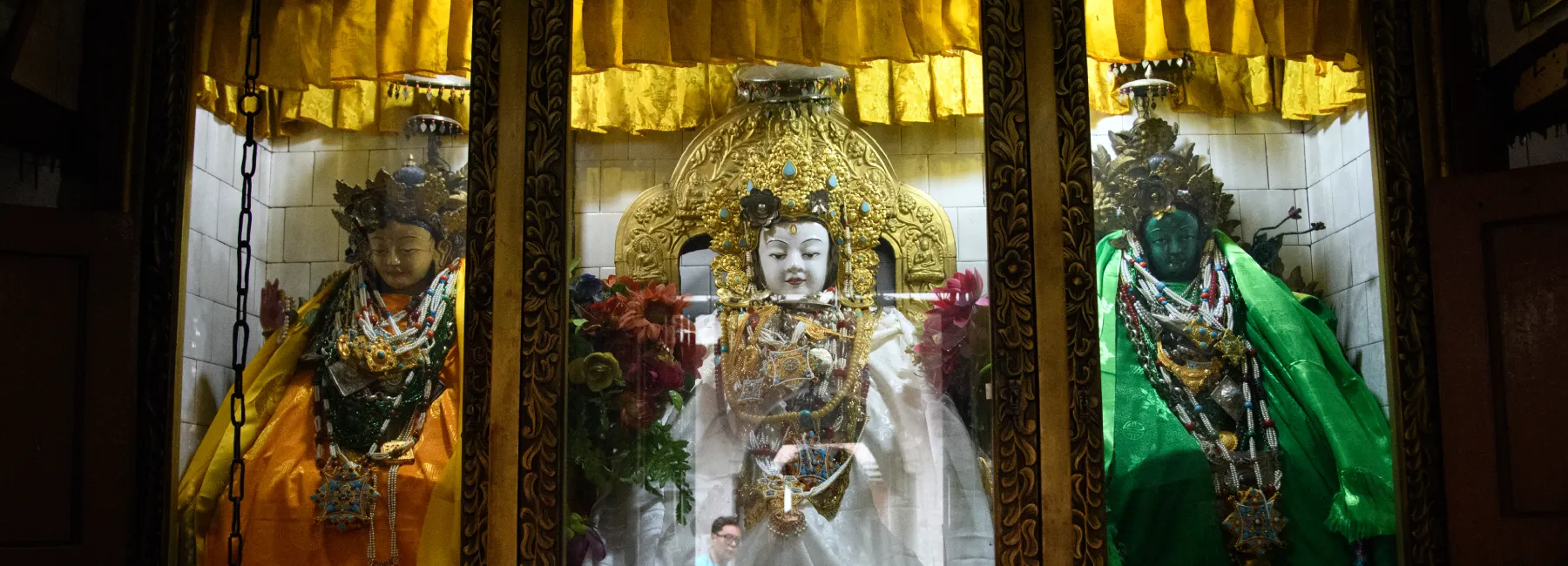
Inside the gated sanctum sits a powerful trinity of Taras. At the center is White Tara (Mahashanta Shweta), the “Talking Tara,” a large bronze figure distinguished by her seven eyes—symbols of omniscient awareness and compassionate vigilance. To her left is Green Tara (Harit Tara), seated in lalitasana with one leg extended, ready to rise swiftly to protect devotees from fear and danger. To her right is Yellow Tara, often identified with Prajnaparamita, representing transcendent wisdom and the merit necessary for enlightenment. Together, this triad forms a complete mandala of compassionate activity—peaceful, active, and wisdom aspects unified within one sacred space.
The spiritual depth of Itumbaha is inseparable from the dramatic legend of Keshchandra and the demon Guru Mapa. According to local tradition, Guru Mapa, once a child-devouring demon, assisted Keshchandra in acquiring gold to build the monastery. In return, the demon demanded offerings, spreading fear among the townspeople. Through skillful means, Keshchandra relocated him to a corner of the monastery and established an annual ritual feast to pacify him. Brass plaques along the northern wall depict this once-terrifying figure. Symbolically, the fierce hunger of Guru Mapa represents untamed desire and ignorance, while the serene presence of White Tara—Mahashanta, the Great Peace—symbolizes the wisdom that transforms inner demons into protectors of the Dharma.
The shrine is especially significant to the Newar Vajrayana community and to pilgrims from Tibet and Bhutan. Legend holds that White Tara flew from Potala and descended upon a white sandalwood tree at this very site to teach the Dharma. Her “Talking” aspect refers not to literal speech, but to the living accessibility of wisdom—her blessings are believed to respond directly to sincere devotion. The temple remains the center of the Tara Vrata ritual, during which women fast, chant, and pray for the health, longevity, and well-being of their families.
Visiting White Tara at Itumbaha is therefore not simply a cultural encounter—it is a meeting with a living embodiment of compassion, longevity, and awakened presence. As butter lamps flicker and mantra resonates softly within the ancient brick walls, pilgrims experience a rare continuity of faith preserved in the heart of Kathmandu for nearly a thousand years.
Green Tara – Hiranya Varna Mahavihar (Golden Temple), Patan
If Itumbaha is the intimate home of the “Talking Tara,” then Hiranya Varna Mahavihar—widely known as the Golden Temple—is her royal palace. This magnificent 12th-century monastery in Patan is a radiant masterpiece of Newar metal artistry, where gilded walls, sacred courtyards, and tantric ritual life merge into a living mandala. Though the temple is formally dedicated to Shakyamuni Buddha, the pervasive presence of Tara infuses the entire complex with nurturing, protective energy. Here, Tara is not simply an icon—she is the golden current of compassion guiding practitioners through the intricate rituals of Newar Vajrayana Buddhism.
Within the inner courtyard, Tara appears in multiple sacred forms, strategically positioned as a spiritual guardian of the monastery. A dedicated shrine to Green Tara (Harit Tara) is especially revered by devotees seeking swift protection. Seated in her dynamic posture with one leg extended, she embodies active compassion, ever ready to liberate beings from the Eight Great Fears—symbolic of both outer dangers and inner mental afflictions. Above the central sanctum’s gilded torana, Tara is depicted flanking the Five Dhyani Buddhas, representing Prajna—the indispensable feminine wisdom without which enlightenment cannot arise. In the upper prayer halls where monks gather for meditation, White Tara is invoked for longevity and the protection of the Sangha, her seven eyes watching over the spiritual continuity of the lineage.
The Golden Temple itself is designed as a living mandala, and Tara is woven into its sacred geometry. The monastery’s shimmering gilt-copper façade reflects the luminous quality associated with Yellow Tara (Vasudhara), symbolizing abundance—not only material prosperity but spiritual wealth and merit. At the center of the courtyard stands a magnificent chaitya adorned with intricate bronze reliefs, including delicate images of Tara. Devotees circumambulate this stupa, gently touching the reliefs to gather blessings and accumulate merit. Before entering the most sacred inner chambers, many practitioners pause before Tara’s image, seeking purification and permission to cross from the ordinary world into sacred space. In this sense, she is the divine ferrywoman, guiding consciousness from samsara toward awakening.
Spiritually, Tara’s role in the Golden Temple is deeply practical and protective. In the Newar Vajrayana tradition of Patan, she is invoked to remove astrological obstacles and negative planetary influences (grahas), steering devotees away from misfortune and karmic hindrance. The temple’s unique tradition of being served by a young boy priest—symbolizing purity and continuity—harmonizes beautifully with Tara’s maternal aspect as the “Mother of All Victorious Ones.” Throughout the day, the gentle resonance of the mantra Om Tare Tuttare Ture Svaha drifts through the courtyard, and it is often said that the very walls of the Golden Temple are charged with this sacred sound, transforming the entire monastery into a vast prayer wheel of compassion.
Unlike the intimate, shadowed serenity of Itumbaha’s White Tara shrine, the Golden Temple radiates grandeur and brilliance. Its atmosphere is vibrant, luminous, and ceremonially alive—a palace of gilded devotion where Tara’s protective wisdom shines in every corner. Here in Patan, her presence is royal yet accessible, majestic yet maternal, guarding the Dharma with golden light and guiding pilgrims deeper into the mandala of Vajrayana realization.
Red Tara – Dipankar Mahavihar, Bhaktapur
In the ancient red-brick city of Bhaktapur, often called the Living Heritage of Nepal, lies a profound Vajrayana sanctuary hidden beyond the main royal squares. Within the quiet lanes of Kwathandau stands Dipankar Mahavihar, also known as Prashannashil Mahavihar—home to one of the most enigmatic and emotionally powerful forms of Tara in the Kathmandu Valley: the Red Tara. Revered by the local Newar community in connection with Dipankar Buddha and known to Tibetan pilgrims as the Wish-Fulfilling Red Tara, this deity is surrounded by a legend of sacred “binding” and boundless compassion.
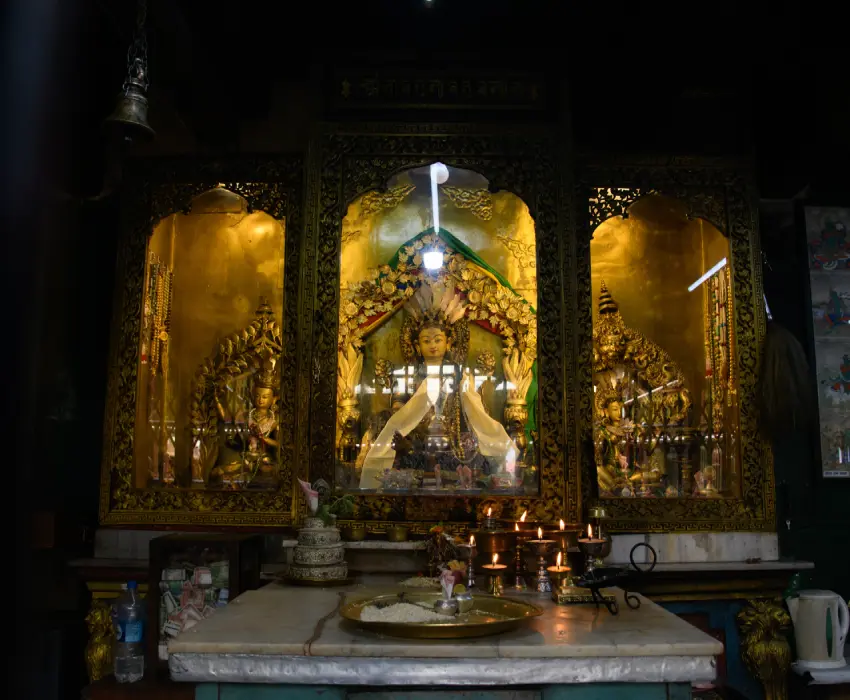
Architecturally, Dipankar Mahavihar is a classic Newar bahal, reflecting the medieval Malla-era transition between monastic simplicity and tantric devotional needs. Entry is through a modest, low stone doorway that opens into a tranquil rectangular courtyard—far quieter than the golden brilliance of Patan’s monasteries. The scent of incense and aged timber fills the air. The Red Tara resides on the ground floor of a two-story pagoda-style shrine, its dark wood beams deeply seasoned by centuries of oil lamps and ritual smoke. She is often viewed through a protective metal lattice or screen, a feature that not only ensures security but physically embodies the central legend that defines her presence here—the goddess who is spiritually “bound” to Bhaktapur.
According to local tradition, this Red Tara once journeyed to Tibet or manifested there, performing miracles and bestowing blessings. Yet Bhaktapur was her original seat, and she eventually returned. The people, overwhelmed by devotion and fearful of losing her protective power, believed she might depart again. In response, tantric masters performed a ritual of “binding,” spiritually anchoring her to the Mahavihar. Symbolically—and perhaps even physically—they ensured she would remain. It is said that the subtle sadness visible in her expression reflects this sacred tension: though held in place, she remains willingly out of infinite compassion for the city she protects.
The iconography of the Red Tara at Dipankar Mahavihar is unlike any other Tara in Nepal. Her face carries a quiet melancholy, eyes downcast in a gaze that evokes both longing and profound empathy. Many pilgrims speak of feeling deeply moved before her presence. Her deep red hue symbolizes the transformation of desire into wisdom—magnetizing energy (vashikaran) in Vajrayana philosophy. Red Tara represents the power that attracts positive conditions, gathers merit, and draws practitioners closer to realization. Some believe that subtle marks near her feet symbolize the fetters of the ancient binding ritual, reinforcing the legend that she remains here for the sake of her devotees.
Spiritually, this shrine is not a relic of the past but a vibrant center of living faith. Known widely as the Wish-Fulfilling Tara (Moelam), she is believed to possess concentrated spiritual potency precisely because she is “bound” to the site. Devotees pray that her compassionate tension—remaining in one place for the benefit of beings—propels sincere aspirations swiftly toward fulfillment. During the Dashain festival, the Living Goddess Kumari of Bhaktapur resides within this Mahavihar for fifteen days, symbolizing a profound intersection between Buddhist Tara devotion and the Shakta-Kumari tradition of the Valley. Tibetan lineages also connect this site to Yeshe Tsogyal, the enlightened consort of Guru Padmasambhava, regarding the Red Tara here as an emanation of her wisdom and life-force.
In Dipankar Mahavihar, Red Tara is not radiant in golden splendor nor serene in quiet healing; she is magnetizing, emotionally alive, and fiercely compassionate. Her presence reflects a unique Vajrayana truth—that enlightened compassion sometimes chooses to remain, even in restraint, for the protection and spiritual flourishing of an entire city.