The Manjushri Sacred Sites Tour guides travelers through the most spiritually significant locations in the Kathmandu Valley, offering both cultural insight and opportunities for reflection and meditation. Each site has its own unique atmosphere, rituals, and panoramic views that enrich the pilgrimage experience.
Swayambhunath Stupa – The Hilltop Stupa
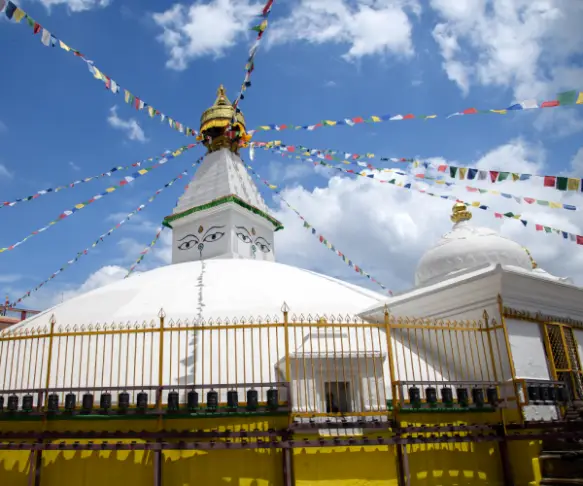
Swayambhunath Stupa stands as the spiritual heart of the Manjushri Sacred Sites Tour, embodying both the tangible and the transcendent. According to the Swayambhu Purana, the Kathmandu Valley was once a vast, serpent-inhabited lake, with a radiant self-arisen lotus at its center, glowing with a divine flame of wisdom known as Swayambhu. It was this sacred energy that inspired Manjushri to act, cutting a gorge at Chovar to drain the waters and reveal the fertile valley, creating a space where humans could live and spiritual practice could flourish. The lotus ultimately settled atop a hill, forming the site of the stupa that has guided pilgrims for centuries.
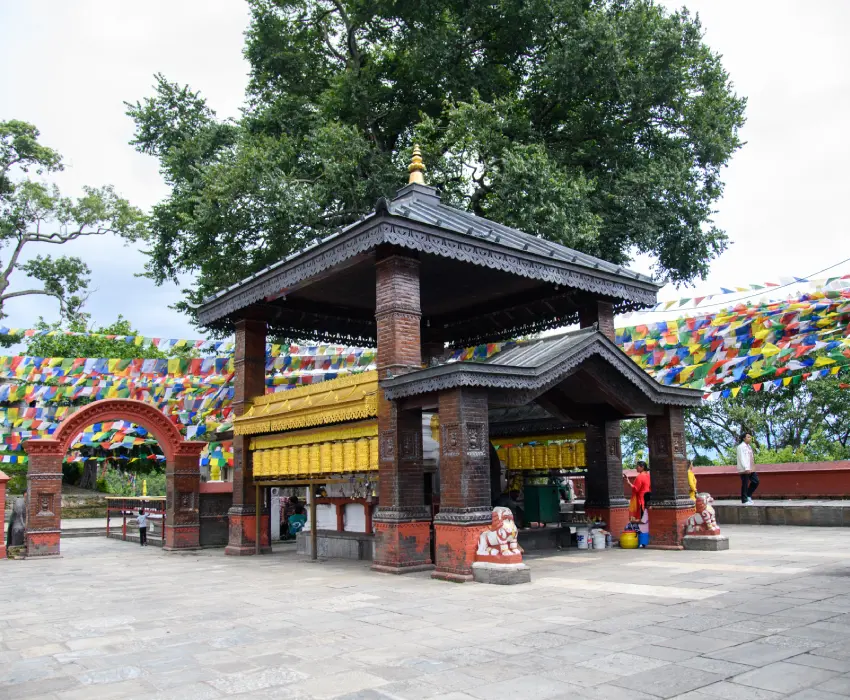
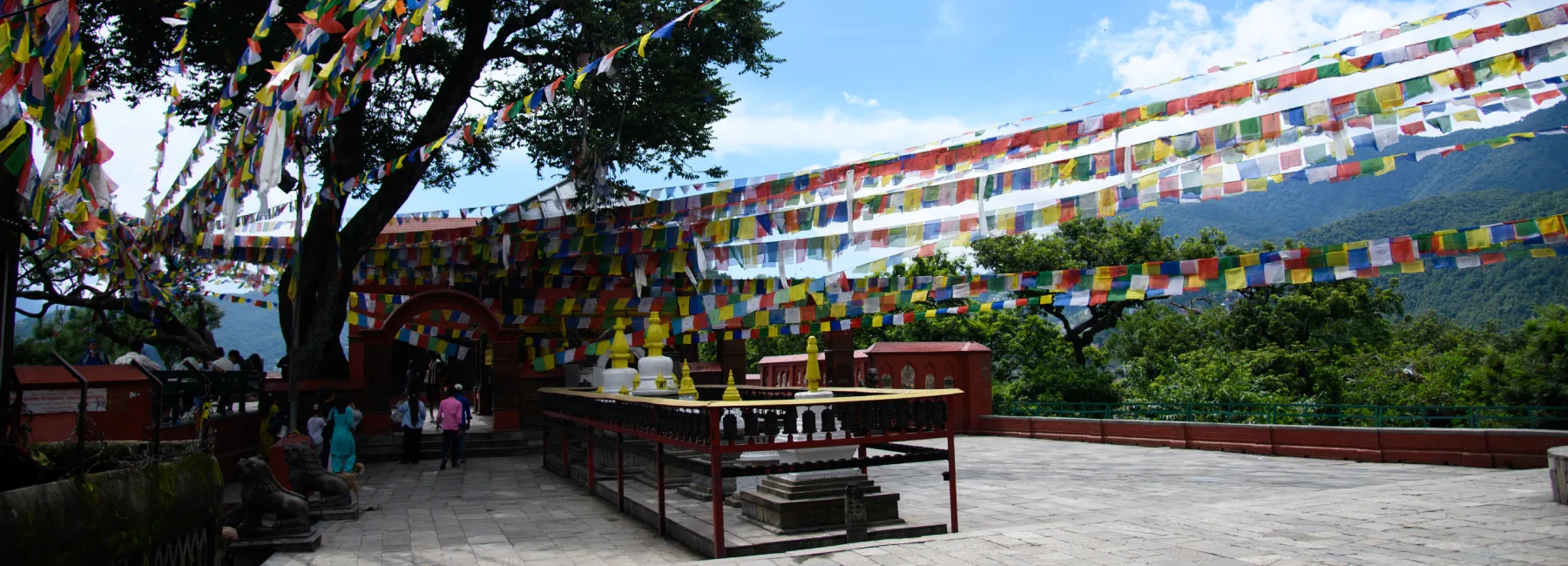
The stupa itself is a masterpiece of symbolism and devotion. Its pristine white dome represents the world, while the golden spire rises above, signifying the stages of spiritual attainment toward enlightenment. Painted on all four sides are the iconic all-seeing eyes of the Buddha, symbolizing omniscient wisdom, with the Nepali numeral one below, reminding pilgrims of unity and the singular path of insight. Surrounding the main stupa are smaller shrines, prayer wheels, and temples, while colorful prayer flags flutter in the wind, carrying mantras across the valley. Pilgrims circumambulate the terraces, spin the prayer wheels, and pause for meditation, immersing themselves in the sacred energy of the site.
Every aspect of Swayambhunath reflects the presence of Manjushri. The hilltop location amplifies spiritual energy, offering panoramic views of the Kathmandu Valley and a profound sense of elevation—both physical and spiritual. As pilgrims walk the steps, meditate, or observe daily rituals, they are connecting with the same wisdom that Manjushri brought to the valley, a wisdom that is ever-present, self-arisen, and accessible to those who seek clarity and insight. In this way, Swayambhunath Stupa is not just a monument; it is a living embodiment of enlightenment, a place where devotees can experience the guiding presence of Manjushri in both form and spirit.
Manjushri Hill – Manjushreestan
Manjushri Hill, also called Manjushreestan, is a sacred hill on the northern rim of the Kathmandu Valley, deeply connected to Manjushri. Tradition holds that from this vantage point, Manjushri first perceived the valley’s spiritual and earthly potential, envisioning it as a fertile, sacred land for both human life and spiritual practice. The hill is adorned with stone pathways, terraces, meditation platforms, and groves of native trees, providing pilgrims a serene and reflective environment. At the summit stands a prominent statue of Manjushri, depicted in his youthful form, holding the flaming sword (Chandrahas) to cut through ignorance and the Prajnaparamita Sutra to represent ultimate wisdom. Smaller stupas, carved images, and prayer platforms along the trails provide tangible signs of the Bodhisattva’s enduring presence, allowing pilgrims to feel spiritually connected as they meditate, pray, or circumambulate.
Manjushreestan is also revered by Hindus, who maintain shrines along the hill and perform rituals alongside Buddhist devotees, reflecting the valley’s harmonious spiritual traditions. The combination of natural beauty, sacred architecture, and ritual spaces creates a profoundly spiritual atmosphere, where visitors experience both inner reflection and outer reverence. Walking along the terraces, meditating under the shade of ancient trees, or pausing at shrines, pilgrims are enveloped by the spiritual energy of Manjushri, sensing clarity, insight, and inspiration. From the hilltop, panoramic views of the Kathmandu Valley reinforce the legend of Manjushri shaping the land while providing a meditative perspective on the interconnectedness of the physical and spiritual world.
In essence, Manjushreestan is a living sanctuary where spiritual presence, sacred space, and the legendary guidance of Manjushri converge, offering pilgrims a journey of insight, devotion, and inner awakening
.
Chovar Gorge & Manjushree Park – The Sacred Passage of Wisdom
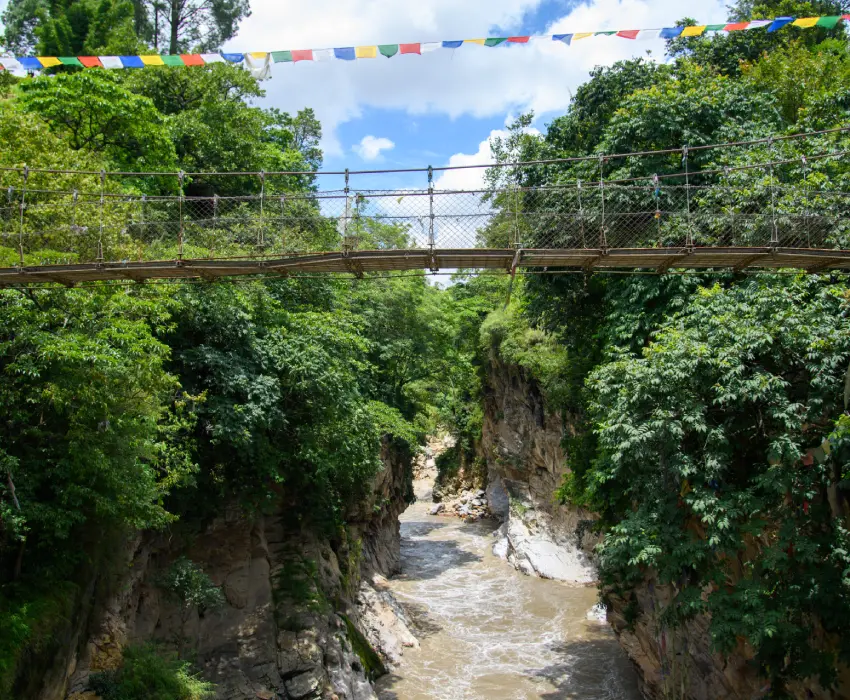
Chovar Gorge stands as a powerful sacred threshold where the physical landscape and spiritual transformation converge, marking the very point where Manjushri is believed to have opened the Kathmandu Valley for human habitation. According to tradition, moved by the vision of a radiant self-arisen wisdom, Manjushri used his flaming sword to cut through the encircling hills at this very location. This act not only released the waters of the primordial lake but symbolized the cutting of ignorance, allowing both the land and spiritual life to flourish. Today, the flowing Bagmati River through the narrow gorge continues to echo this moment of transformation.
Adjacent to the gorge, Manjushree Park offers a peaceful and contemplative setting where nature and spirituality blend seamlessly. The park is home to a striking 33-foot-tall statue of Manjushri, carved in dark stone and standing in a rare upright posture. With the flaming sword raised toward the sky and the sacred text held close, the statue powerfully represents wisdom in action—serving as both a visual landmark and a spiritual focal point for pilgrims seeking clarity and insight. Surrounding the statue are stone pathways, viewpoints, meditation spaces, and quiet caves, inviting visitors to pause, reflect, and connect with the deeper meaning of the site.
The area is also revered by both Buddhists and Hindus, with nearby temples such as Jal Binayak attracting Hindu devotees, while Buddhist pilgrims honor Manjushri’s wisdom and compassionate act. Standing at the edge of the gorge, observing the dramatic cliffs and the river flowing below, pilgrims often experience a sense of release and inner clarity—symbolizing the removal of obstacles and the awakening of wisdom within.
Together, Chovar Gorge and Manjushree Park form a living symbol of transformation, where the physical opening of the valley and the spiritual awakening of insight come together, offering a powerful and memorable experience for all who visit.
Taudaha Lake – The Sacred Naga Sanctuary
Taudaha Lake represents a profound moment of balance and compassion in the sacred story of the Kathmandu Valley, closely connected to the wisdom of Manjushri. When Manjushri opened the valley by cutting through the hills at Chovar, the draining waters of the primordial lake threatened the existence of the powerful Naga beings—the ancient serpent deities who had long inhabited and protected the waters. Recognizing their importance as guardians of rain, fertility, and natural harmony, Manjushri did not displace them but instead created a sanctuary where they could continue to reside.
This sanctuary is Taudaha, literally known as the “Snake Lake,” believed to be a remaining fragment of the original lake. It is said to be the dwelling place of Karkotak Naga, the king of serpents, who resides beneath the still waters in a hidden, mystical realm. The lake itself is calm and reflective, surrounded by gentle hills and greenery, creating a peaceful yet deeply sacred atmosphere. Out of respect for the presence of the Naga king, local traditions discourage swimming or disturbing the waters, preserving the lake’s purity and spiritual dignity.
The site holds deep significance for both Buddhists and Hindus, who visit to offer prayers and seek blessings, particularly during Nag Panchami. Devotees gather along the shores to make offerings, praying for protection, rainfall, and harmony with nature. The quiet surface of the lake, often undisturbed, reflects not only the sky but also a sense of spiritual stillness, inviting pilgrims into contemplation.
Taudaha Lake thus stands as a symbol of coexistence and respect between the human and natural worlds, reflecting Manjushri’s deeper wisdom—not only in creating a land for human life, but in preserving the balance of all beings. For pilgrims, it offers a space of calm, reverence, and connection, where the visible landscape and unseen spiritual realm meet in silent harmony.
Maha Manjushree Temple (Saraswatisthan / Lhasapakhe) – The Sacred Point of Vision
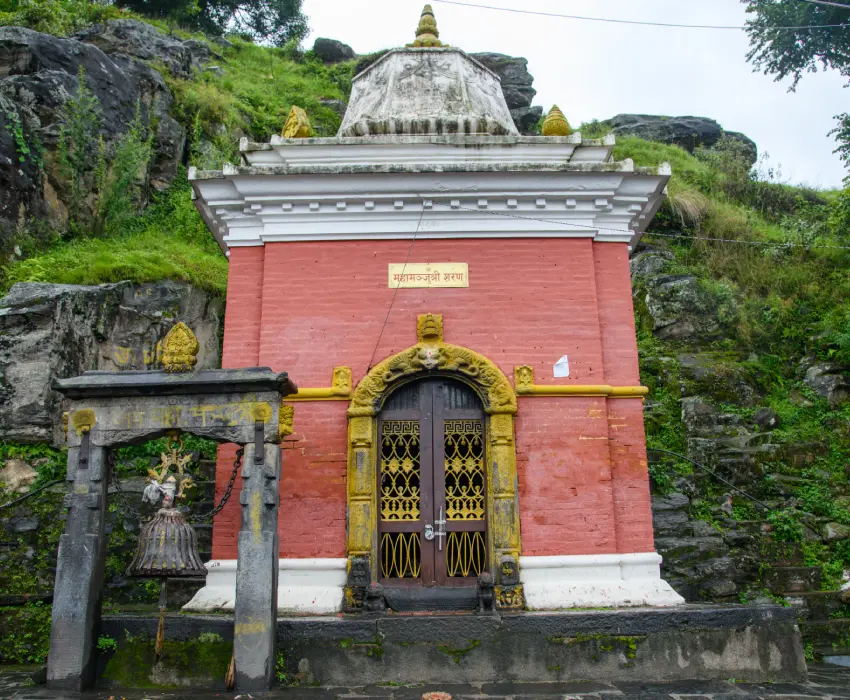
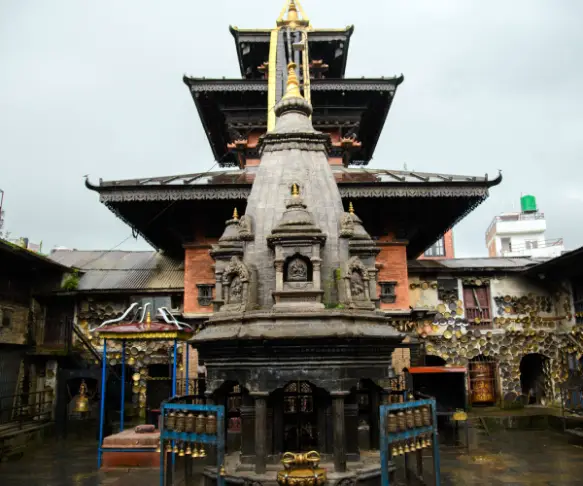
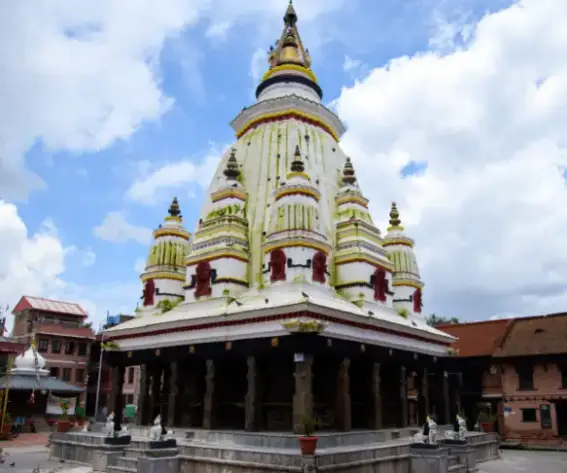
Maha Manjushree Temple, located on the peaceful ridge of Thakalmath Hill (Mahamandapgiri) in Bhaktapur, is revered as the place where Manjushri first arrived and envisioned the transformation of the Kathmandu Valley. According to the Swayambhu Purana, before opening the valley at Chovar, Manjushri rested here for three nights after journeying from Maha Chin. From this elevated point, known locally as Lhasapakhe (“the slope facing Lhasa”), he beheld the radiant self-arisen light of the Swayambhu lotus shining from the primordial lake—marking the moment when the intention to make the valley habitable and spiritually vibrant first arose.
The temple complex reflects a beautiful blend of natural setting and sacred architecture, with stone stairways, prayer flags, shrines, and quiet meditation spaces leading up to the main temple and cave area. A sacred cave within the area is believed to have been a meditation retreat for great masters, including the renowned yogi Milarepa, who is said to have attained profound realizations here. Local tradition speaks of a natural wind passage within the cave, symbolically linked to Tibet, enhancing the site’s mystical atmosphere.
The site is equally important in Hindu tradition, where it is worshipped as Saraswatisthan, dedicated to Goddess Saraswati, the deity of wisdom, learning, and the arts. During Shree Panchami, the hill becomes a vibrant pilgrimage center, where families bring children to write their first letters on temple stones, seeking blessings for knowledge and creativity. This shared reverence highlights the deep spiritual harmony between Buddhist and Hindu practices in the Kathmandu Valley.
From the hilltop, visitors are rewarded with panoramic views of Bhaktapur and the surrounding landscapes, creating a sense of elevation and inspiration. The ascent itself—often along stone steps lined with prayer flags—symbolizes the journey from ignorance to wisdom. Whether approached as the sacred ground of Manjushri’s first vision or as the abode of Saraswati, this site remains a powerful sanctuary of insight, where the energy of wisdom, devotion, and spiritual awakening continues to resonate across the valley.
Nagarjun Hill – The Sacred Vantage of Vision
Nagarjun Hill, also known as Vindhyagiri, rises above the Kathmandu Valley as a powerful spiritual vantage point closely associated with Manjushri. Tradition holds that before opening the valley, Manjushri first ascended this hill to survey the vast primordial lake of Nagdaha, carefully observing its depth and form. From this elevated peak, he performed divine acts of insight, casting symbolic “stone arrows” across the valley to mark sacred points that would later become important spiritual and cultural centers, including areas like Chabahil, Asan, and Makhan—sites that today hold stupas, shrines, and vibrant human activity.
The hill itself is characterized by dense forest, winding trails, stone steps, and secluded meditation spots, creating an atmosphere ideal for contemplation and spiritual retreat. Among its most sacred features is the Nagarjun Cave, where Manjushri is believed to have entered deep meditation (samadhi), visualizing the transformation of the valley from a silent lake into a thriving center of Dharma. This cave later became associated with the great philosopher Nagarjuna, further strengthening its reputation as a source of profound wisdom and realization.
Spiritually, Nagarjun Hill represents the inner preparation before transformation—a place where wisdom is cultivated before it is expressed through action. The quiet forest, the stillness of the cave, and the elevated views together create an environment where pilgrims can reflect deeply, meditate, and connect with the essence of Manjushri’s insight. The presence of both Buddhist meditation sites and nearby Hindu shrines also reflects the shared spiritual heritage of the valley, where different traditions honor the same sacred landscape.
Walking through Nagarjun Hill, pilgrims experience a gradual shift from the outer world into inner stillness, mirroring Manjushri’s own journey—from contemplation on the hilltop to the decisive act that shaped the valley. In this way, the site stands as a living sanctuary of wisdom, where the transformation of the land begins with the transformation of the mind.