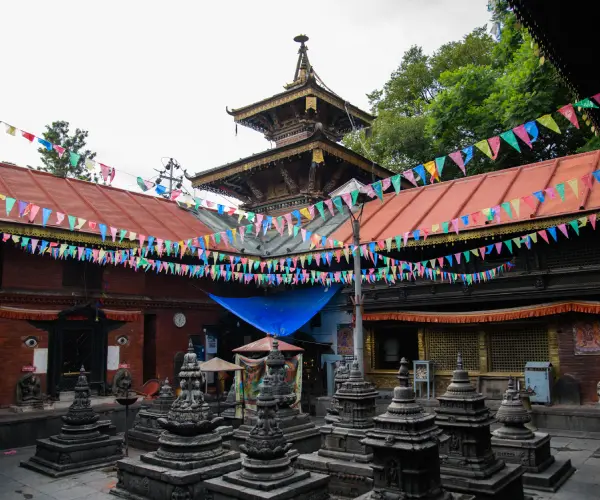
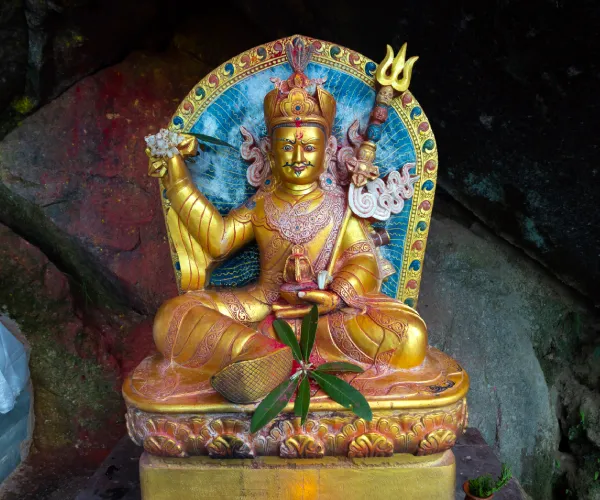
Experience and Feel, not just travel

Tilopa and Naropa Sacred Sites Tour in Kathmandu Valley

Journey through the holy places of Tilopa and Naropa, where wisdom, meditation, and realization continue to inspire seekers

  • Duration 4 Days
  • Trip Grade Easy
  • Start From Kathmandu
  • Ends at Kathmandu
  • Group Size 2+
  • Transportation Private Vehicle
  • Trip Meals Breakfast
  • Accommodation Deluxe hotel

Overview

The Kathmandu Valley is celebrated for its magnificent stupas, ancient monasteries, and living Buddhist traditions. Hidden within this sacred landscape are lesser-known places deeply revered by Vajrayana practitioners—the meditation sites associated with the great Indian Mahasiddhas Tilopa and Naropa. Though modest in appearance, these sacred places represent the roots of some of Buddhism’s most profound meditation teachings and continue to inspire practitioners from around the world.

The Naropa and Tilopa Sacred Sites Tour in Kathmandu Valley is a spiritual pilgrimage that introduces travelers to the origins of the Kagyu lineage and the transmission of Mahamudra. More than a sightseeing experience, this journey offers an opportunity to reflect on the lives of two enlightened masters whose unwavering dedication to realization shaped the course of Vajrayana Buddhism.

Along the way, you will visit the meditation caves traditionally associated with Tilopa and Naropa near the sacred Pashupatinath area, circumambulate the great stupas of Boudhanath and Swayambhunath, and experience the vibrant Buddhist culture that continues to flourish in Kathmandu. Whether you are a Buddhist practitioner, a student of Buddhist philosophy, or a traveler seeking meaningful spiritual experiences, this pilgrimage provides a rare opportunity to connect with Nepal’s living Buddhist heritage.

Among the many accomplished masters of Indian Buddhism, Tilopa and Naropa occupy an extraordinary place in the history of Vajrayana. Their lives demonstrate that genuine awakening arises not merely through intellectual study but through deep meditation, devotion, perseverance, and direct realization.

Mahasiddha Tilopa – The Source of Mahamudra Transmission
Tilopa (approximately 988–1069 CE) is regarded as one of the greatest Mahasiddhas of Indian Vajrayana Buddhism and the founding master of the Kagyu lineage. Traditional biographies describe him as receiving profound tantric instructions directly from enlightened manifestations such as Vajradhara and various wisdom dakinis. Through years of disciplined meditation and yogic practice, Tilopa attained complete realization and became renowned for transmitting the essence of Mahamudra—the direct recognition of the mind’s true nature.

Unlike scholars who emphasized philosophical debate, Tilopa taught from personal realization. His instructions encouraged practitioners to move beyond conceptual thinking and discover the innate clarity and freedom already present within the mind. His concise yet profound teachings continue to guide meditation practitioners across the Kagyu tradition.

According to Buddhist tradition, Nepal was among the regions where Tilopa practiced meditation, and the cave associated with him near Pashupatinath remains a place of devotion for practitioners seeking inspiration from his life and teachings.

Mahasiddha Naropa – The Great Scholar Who Became a Yogi
Naropa (approximately 1016–1100 CE) began his spiritual life as one of the most distinguished scholars of Nalanda Mahavihara, the great Buddhist university of ancient India. Despite his vast knowledge of Buddhist philosophy, he realized that intellectual understanding alone could not lead to complete liberation. This insight inspired him to search for a master capable of revealing the direct path to awakening. His search led him to Tilopa.

The relationship between Tilopa and Naropa is one of the most celebrated teacher-disciple stories in Buddhist history. Under Tilopa’s guidance, Naropa underwent a series of profound challenges traditionally known as the Twelve Great Hardships and the Twelve Lesser Hardships. These experiences were not punishments but skillful methods designed to dissolve attachment, pride, and conceptual limitations.

After years of unwavering devotion and practice, Naropa attained realization and became Tilopa’s principal lineage holder. He later transmitted these teachings to the Tibetan translator Marpa Lotsawa, who passed them to Jetsun Milarepa, eventually giving rise to the Kagyu schools of Tibetan Buddhism.

Naropa is also remembered for preserving and transmitting the celebrated Six Yogas of Naropa, an advanced system of Vajrayana meditation that remains central to Kagyu practice today.

Many visitors come to Kathmandu to admire its magnificent temples and UNESCO World Heritage monuments. Yet beyond these famous landmarks lie sacred places that hold deep meaning for Vajrayana practitioners. The meditation sites associated with Tilopa and Naropa offer a quieter and more contemplative dimension of Nepal’s Buddhist heritage.

For Buddhist pilgrims, these sites are not simply historical locations. They are places where generations of practitioners have gathered to meditate, offer prayers, and remember the lives of enlightened masters whose wisdom continues to guide countless beings.

Visiting these sacred places allows pilgrims to:

  • Deepen their understanding of the Kagyu lineage and the Mahamudra tradition.
    Reflect on the lives, discipline, and realization of Tilopa and Naropa.
    Experience the spiritual atmosphere of ancient meditation sites within the Kathmandu Valley.
    Connect with Nepal’s living Vajrayana traditions through monasteries, stupas, and sacred landscapes.
    Combine historical learning with personal meditation and quiet contemplation.
    Discover a lesser-known pilgrimage that complements visits to Boudhanath, Swayambhunath, and other renowned Buddhist sites.

For travelers without a Buddhist background, the journey also offers valuable insight into the spiritual history of the Himalayas and the enduring influence of Indian Mahasiddhas on Nepalese and Tibetan Buddhism.

The Naropa and Tilopa Sacred Sites Tour takes you through some of the Kathmandu Valley’s most meaningful Buddhist landmarks. Each destination represents a different aspect of Vajrayana Buddhism—from the secluded meditation retreats of the Indian Mahasiddhas to the magnificent stupas and monasteries that continue to preserve their teachings today.

Together, these sacred places tell the story of meditation, realization, lineage, and the living transmission of the Dharma.

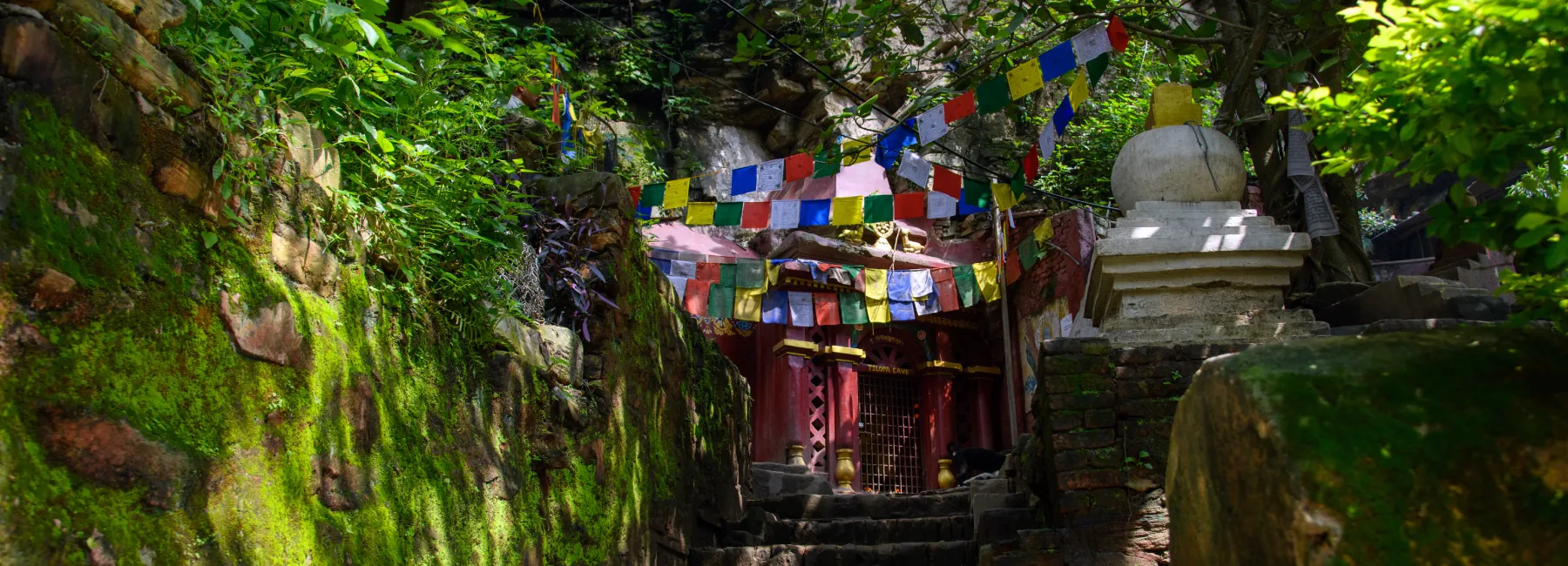
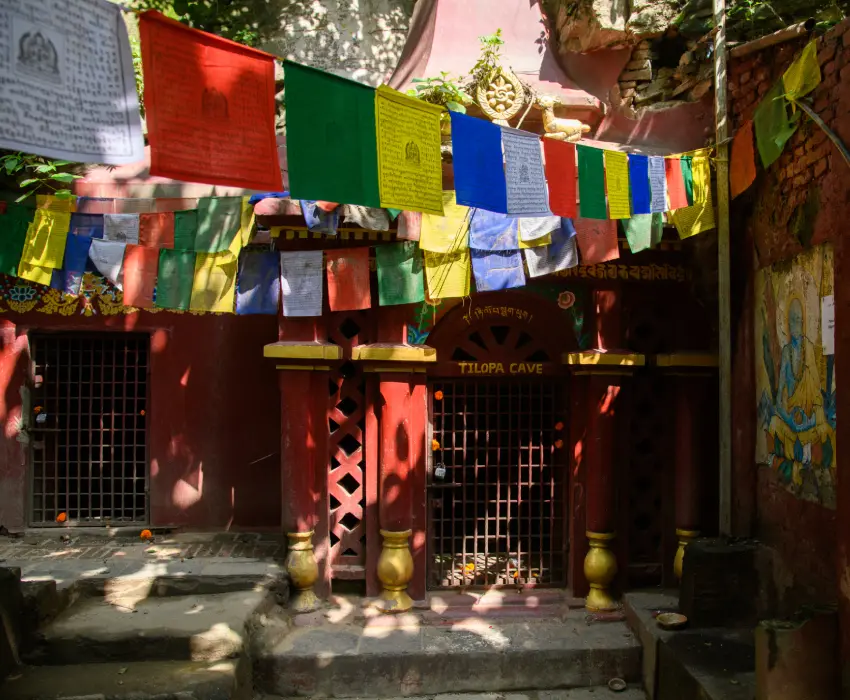
Tilopa’s Meditation Cave
Nestled within the sacred landscape surrounding Pashupatinath lies a cave traditionally associated with Mahasiddha Tilopa, one of the greatest meditation masters in Buddhist history. Although simple in appearance, this quiet retreat is regarded by many Vajrayana practitioners as a place of profound spiritual significance.

According to Buddhist tradition, Tilopa spent time in the Kathmandu Valley engaged in deep meditation and tantric practice. Away from the distractions of ordinary life, he devoted himself to direct realization through unwavering contemplation. It was through such dedicated practice that he became one of the principal holders of the Mahamudra teachings.

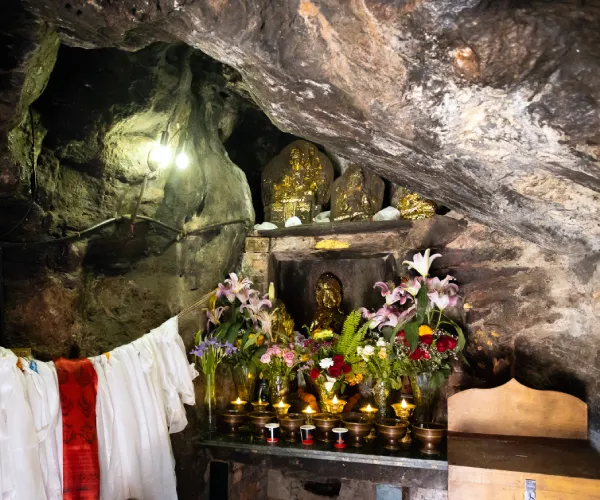
Today, pilgrims visit the cave not because of its size or architecture, but because of its spiritual legacy. The peaceful surroundings encourage silent meditation and reflection, allowing visitors to appreciate the simplicity that characterized the lives of the great Mahasiddhas.

Many practitioners sit quietly inside or near the cave, recite prayers, meditate, or simply contemplate Tilopa’s famous advice to rest the mind in its natural, uncontrived state.

For followers of the Kagyu lineage, the cave represents more than a historical site—it symbolizes the origin of a lineage that has guided countless practitioners toward awakening for nearly a thousand years.

Naropa’s Meditation Cave
A short distance from Tilopa’s retreat is the meditation cave traditionally connected with Mahasiddha Naropa, Tilopa’s foremost disciple and one of the greatest scholars-turned-yogis in Buddhist history.

Naropa’s life illustrates the transformation from intellectual knowledge to direct spiritual experience. Despite serving as a renowned scholar at Nalanda, he realized that genuine wisdom could only be attained through practice and complete trust in an authentic spiritual teacher.

The cave associated with Naropa serves as a reminder of this transformative journey. Pilgrims come here to honor his perseverance, humility, and unwavering devotion to his guru. It is a place where visitors can reflect upon the importance of disciplined practice, patience, and inner transformation.

Many Buddhist pilgrims quietly recite lineage prayers, meditate, or contemplate the teachings of Mahamudra while visiting the cave. The peaceful environment encourages a deeper appreciation of Naropa’s realization and his role in preserving some of Vajrayana Buddhism’s most profound meditation instructions.

Together, the caves of Tilopa and Naropa represent the inseparable relationship between guru and disciple—a relationship that remains central to Vajrayana practice today.

Pashupatinath: A Shared Sacred Landscape
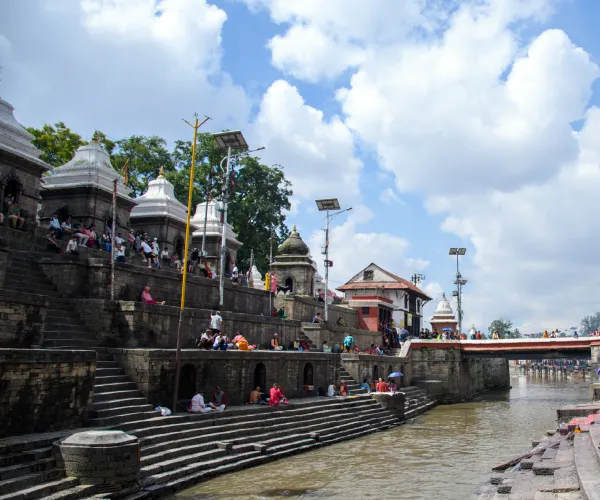
Although Pashupatinath is internationally renowned as one of Hinduism’s most sacred temples dedicated to Lord Shiva, the surrounding area has also been respected for centuries by Buddhist practitioners. Throughout Nepal’s history, Buddhist yogis, Hindu ascetics, wandering monks, and meditation masters have practiced side by side within this sacred landscape. The forests, hillsides, cremation grounds, and quiet caves around Pashupatinath have long provided suitable places for contemplation and spiritual retreat.

For Vajrayana Buddhists, the area is especially meaningful because of its traditional association with Mahasiddhas such as Tilopa and Naropa. Their meditation sites reflect Nepal’s unique spiritual heritage, where Buddhist and Hindu traditions have coexisted and influenced one another for many centuries.

Walking through this sacred environment allows visitors to appreciate Nepal’s remarkable religious harmony while gaining a deeper understanding of the cultural setting in which many great masters practiced.

Boudhanath Stupa – The Heart of Tibetan Buddhism in Nepal
No Vajrayana pilgrimage in Kathmandu is complete without visiting Boudhanath Stupa, one of the largest and most revered Buddhist stupas in the world.

For centuries, Boudhanath has welcomed pilgrims from Nepal, Tibet, Bhutan, Mongolia, the Himalayan regions, and many other parts of the Buddhist world. Today, it remains a vibrant center of Buddhist learning, meditation, and daily devotional practice.

As pilgrims walk clockwise around the great white dome, turning prayer wheels and reciting mantras, they participate in a tradition that has continued for generations. The compassionate gaze of the Buddha, painted on each side of the stupa’s golden tower, symbolizes wisdom that watches over all beings.

The neighborhoods surrounding the stupa are home to numerous monasteries representing different schools of Tibetan Buddhism, including the Kagyu tradition established through the teachings of Tilopa, Naropa, Marpa, and Milarepa.

Visitors may observe monks engaged in debate, hear the chanting of sacred prayers, light butter lamps, receive blessings, or simply enjoy the peaceful atmosphere that surrounds one of the world’s great centers of Buddhist devotion.

For practitioners following the footsteps of Tilopa and Naropa, Boudhanath offers an opportunity to witness how their teachings continue to flourish in living Buddhist communities.

Swayambhunath Stupa – The Self-Arisen Wisdom Stupa
Perched atop a hill overlooking the Kathmandu Valley, Swayambhunath Stupa is among Nepal’s oldest and most sacred Buddhist pilgrimage sites.

According to Nepalese Buddhist tradition, the hill marks the place where the primordial lotus of wisdom emerged from the ancient lake that once filled the Kathmandu Valley. It symbolizes the spontaneous arising of enlightenment and has attracted pilgrims for well over a thousand years.

The climb to the summit is itself regarded as part of the pilgrimage. Along the way, visitors pass prayer wheels, shrines, small stupas, and playful monkeys before reaching the magnificent white dome crowned by the all-seeing eyes of wisdom.

From the hilltop, sweeping views of the Kathmandu Valley remind pilgrims of the interconnectedness of all life while providing an ideal setting for meditation and quiet contemplation.

Numerous monasteries, temples, prayer halls, and meditation centers surrounding Swayambhunath preserve the rich traditions of Vajrayana Buddhism. The site is visited daily by monks, nuns, lay devotees, and international pilgrims who come to make offerings, perform circumambulation, and cultivate merit.

For those following the spiritual journey of Tilopa and Naropa, Swayambhunath represents the timeless continuity of Buddhist wisdom—from the ancient Mahasiddhas of India to the living traditions of Nepal today.

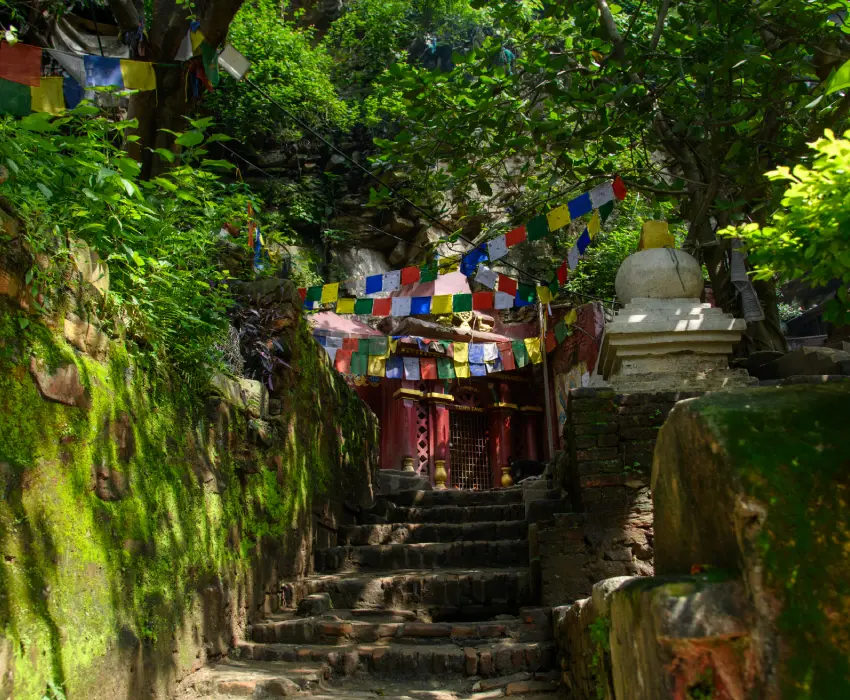
The sacred sites associated with Mahasiddhas Tilopa and Naropa are more than historical landmarks—they are places that represent the living transmission of Vajrayana Buddhism. Their teachings continue to inspire meditation practitioners, monastics, and pilgrims throughout the Himalayan world.

Tilopa is revered as one of the greatest Mahasiddhas of Indian Buddhism and is regarded as the source of the Mahamudra lineage within the Kagyu tradition. Through years of profound meditation and direct realization, he transmitted the essence of Mahamudra to his foremost disciple, Naropa.

Naropa, once a renowned scholar of Nalanda Mahavihara, left behind academic prestige in search of genuine spiritual realization. Under Tilopa’s guidance, he underwent years of rigorous practice and eventually became one of the most accomplished meditation masters in Buddhist history. His teachings, including the renowned Six Yogas of Naropa, remain central to advanced Vajrayana practice today.

This lineage continued through the great Tibetan translator Marpa Lotsawa, who journeyed repeatedly to India and Nepal to receive authentic teachings. Marpa then transmitted these precious instructions to Jetsun Milarepa, Tibet’s most celebrated yogi, whose life of devotion and meditation has inspired generations of practitioners.

From Milarepa, the lineage continued through Gampopa and many accomplished Kagyu masters, eventually spreading throughout Tibet, Nepal, Bhutan, India, and across the world. Today, the teachings of Tilopa and Naropa are still preserved in Kagyu monasteries, meditation centers, and Buddhist communities, making this one of the oldest living spiritual lineages in Vajrayana Buddhism.

As you visit the sacred sites traditionally associated with Tilopa and Naropa, you are not only exploring places connected to the past—you are walking in the footsteps of masters whose wisdom continues to guide practitioners on the path of meditation, compassion, and awakening.

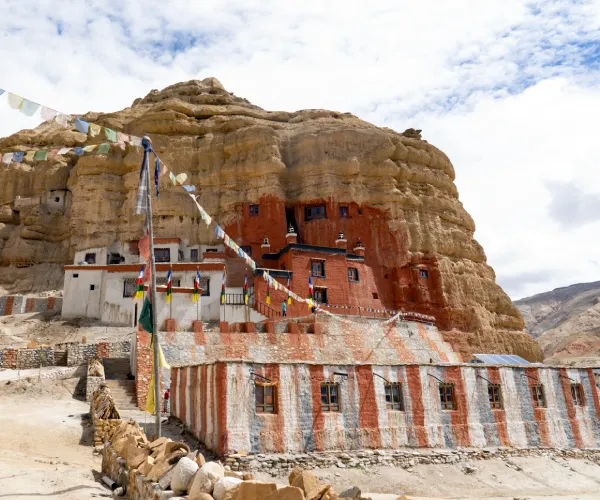
For centuries, caves have held a special place in Buddhist practice. Away from the distractions of everyday life, they provided ideal environments for deep meditation, contemplation, and spiritual realization. Many of Buddhism’s greatest yogis chose the solitude of caves to cultivate concentration, insight, and unwavering mindfulness.

The meditation caves traditionally associated with Tilopa and Naropa near the sacred Pashupatinath area are respected by many Vajrayana practitioners as places of spiritual inspiration. While modest in appearance, they symbolize the dedication, perseverance, and profound realization of two of Buddhism’s greatest Mahasiddhas.

Pilgrims visit these sacred sites not only to learn about history but also to cultivate a deeper connection with the Dharma. Sitting quietly for a few moments, offering prayers, reciting mantras, or simply reflecting in silence allows visitors to experience the peaceful atmosphere that has attracted practitioners for generations.

These caves also remind us of an important Buddhist teaching: genuine awakening does not depend on magnificent temples or material comfort, but on sincere practice, ethical conduct, wisdom, and compassion. The simplicity of these sacred places reflects the humble lives of the Mahasiddhas, who sought inner transformation rather than worldly recognition.

For many pilgrims, visiting the meditation caves becomes one of the most meaningful moments of the journey. Surrounded by the sacred landscape of Kathmandu Valley, these sites offer an opportunity to pause, turn inward, and reflect on the timeless path of awakening taught by Tilopa, Naropa, and the generations of masters who followed.

Whether you are a devoted Buddhist practitioner, a student of Vajrayana philosophy, or a traveler seeking a deeper understanding of Nepal’s spiritual heritage, these meditation caves invite you to experience not only the history of Buddhism but also its enduring spirit of wisdom, compassion, and mindful living.

Highlights

  • Visit the traditional meditation caves associated with Mahasiddhas Tilopa and Naropa near the sacred Pashupatinath area.
  • Learn about the lives, teachings, and realization of two of Vajrayana Buddhism's most influential masters.
  • Explore the origins of the Kagyu lineage and the transmission of Mahamudra from Tilopa to Naropa, Marpa, and Milarepa.
  • Circumambulate the magnificent Boudhanath Stupa, one of the world's largest Buddhist stupas and a center of Tibetan Buddhism.
  • Visit Swayambhunath, the ancient self-arisen stupa that has inspired pilgrims for centuries.
  • Experience the harmony of Buddhist and Hindu sacred traditions within Kathmandu's historic spiritual landscape.
  • Visit traditional monasteries where Buddhist philosophy, meditation, and ritual continue to flourish.
  • Enjoy opportunities for silent meditation, prayer, and personal reflection at peaceful sacred sites.
  • Gain deeper insight into Vajrayana symbolism, guru devotion, and the importance of authentic lineage transmission.
  • Travel with knowledgeable local guides who explain the historical, cultural, and spiritual significance of each destination.

Itinerary Expand All Collapse All

Upon your arrival at Tribhuvan International Airport, our representative will warmly welcome you and transfer you to your hotel in Kathmandu. After check-in, take some time to relax and recover from your journey.

Later, your spiritual guide will provide a brief orientation about the pilgrimage, introducing the lives of Mahasiddhas Tilopa and Naropa, the significance of the sacred sites you will visit, and the spiritual heritage of the Kagyu lineage. The remainder of the day is at your leisure to rest or explore the surrounding area at your own pace.

After breakfast, begin your spiritual journey by visiting the meditation caves traditionally associated with Mahasiddhas Tilopa and Naropa, located within the sacred landscape near Pashupatinath. Spend time learning about their lives, the Mahamudra lineage, and their lasting contribution to Vajrayana Buddhism. Enjoy quiet moments for meditation, prayer, or personal reflection in these peaceful surroundings.

Continue exploring the sacred surroundings of Pashupatinath, where Buddhist and Hindu spiritual traditions have coexisted for centuries. Your guide will explain the historical, cultural, and spiritual significance of this unique sacred landscape, highlighting its connection to Buddhist meditation masters and Nepal’s rich religious heritage. After completing the pilgrimage, return to your hotel. The evening is free for personal reflection or relaxation.

After breakfast, visit Boudhanath Stupa, one of the largest and most revered Buddhist stupas in the world. Join pilgrims in circumambulating the stupa, spin the prayer wheels, observe daily devotional practices, and experience the peaceful atmosphere of this sacred UNESCO World Heritage Site.

Later, continue to Swayambhunath Stupa, the ancient self-arisen stupa that has watched over the Kathmandu Valley for centuries. Explore its shrines, prayer wheels, and sacred monuments while enjoying panoramic views of the valley. Learn about its history, symbolism, and importance in Nepal’s Buddhist tradition.

After completing the pilgrimage, return to your hotel. The evening is free for personal reflection or relaxation.

After breakfast, enjoy some free time at your hotel until your scheduled airport transfer. Depending on your flight time, you may relax before your departure. At the designated time, our representative will transfer you to Tribhuvan International Airport for your onward flight.

Your pilgrimage concludes with cherished memories of the sacred sites associated with Mahasiddhas Tilopa and Naropa, offering a deeper understanding of the Mahamudra lineage and Nepal’s enduring Buddhist heritage.

What's Included

  • Complimentary private airport transfers to and from your hotel.
  • 3 Nights deluxe hotel accommodation in Kathmandu in twin/double sharing on a Bed & Breakfast basis.
  • UNESCO heritage entry fees in Kathmandu, Patan, & Bhaktapur 
  • Monument entry fees for Boudhanath and Swayambhunath
  • All government taxes, office service charges.
  • All ground transfers via private, air-conditioned vehicle (or tourist bus where applicable) as per the sacred itinerary.
  • Highly experienced, English-speaking guide specializing in Buddhism and Vajrayana history.
  • Comprehensive first-aid medical kit and 24/7 office support during the tour.

What's Not Included

  • Nepal Entry Visa fees and International airfare.
  • Personal expenses, Travel insurance, laundry, telephone calls, and internet/Wi-Fi charges.
  • Bottled water, soft drinks, juices, and alcoholic beverages.
  • Individual donations (Dana) to monasteries, monks, or for private butter lamp offerings and poojas.
  • Gratuities for your guide and driver (a traditional gesture of appreciation).
  • Any costs arising from unforeseen circumstances such as flight delays, landslides, political unrest, or health evacuations.

Talk to an Expert

Quick Inquiry

FAQs For Tilopa and Naropa Sacred Sites Tour in Kathmandu Valley Expand All Collapse All

Tilopa and Naropa were two of the greatest Mahasiddhas of Indian Vajrayana Buddhism. Tilopa is regarded as the founder of the Mahamudra lineage in the Kagyu tradition, while Naropa was his foremost disciple. Their teachings became the foundation of the Kagyu school of Tibetan Buddhism and continue to guide practitioners around the world.

The meditation caves traditionally associated with Tilopa and Naropa are located within the sacred landscape near Pashupatinath in Kathmandu, Nepal. These caves are revered by Vajrayana practitioners as places connected with meditation, contemplation, and the transmission of profound Buddhist teachings.

This pilgrimage offers an opportunity to visit sacred places associated with two of Vajrayana Buddhism's most influential meditation masters. Beyond sightseeing, the journey helps visitors understand the origins of the Kagyu lineage, the Mahamudra tradition, and Nepal's rich Buddhist heritage.

The caves are traditionally associated with Mahasiddhas Tilopa and Naropa and have long been respected by Buddhist pilgrims and local communities. While historical documentation is limited, they remain important places of pilgrimage and meditation within Nepal's Vajrayana tradition.

Mahamudra, meaning "The Great Seal," is one of the highest meditation traditions in Vajrayana Buddhism. It points to the direct recognition of the true nature of mind through meditation, wisdom, and authentic guidance from a qualified teacher.

The Six Yogas of Naropa are a collection of advanced Vajrayana meditation practices transmitted by Mahasiddha Naropa. These practices are traditionally undertaken under the guidance of a qualified Buddhist master within the Kagyu lineage.

Tilopa transmitted the Mahamudra teachings to Naropa, who later passed them to Marpa Lotsawa. Marpa then transmitted these teachings to the great yogi Milarepa. This unbroken lineage continues to be preserved by Kagyu masters throughout the world.

Yes. The tour welcomes everyone, including Buddhist practitioners, spiritual seekers, students, photographers, historians, and travelers interested in Nepal's culture and religious heritage. Respect for local customs and sacred places is encouraged throughout the journey.

Absolutely. No previous knowledge of Buddhism is required. Your guide will explain the history, teachings, and significance of each sacred site in a clear and accessible manner, making the pilgrimage meaningful for both beginners and experienced practitioners.  

This is an easy cultural and spiritual pilgrimage with minimal walking. Most sites are accessible by vehicle, with only short walks and some steps at Swayambhunath Stupa. The tour is suitable for travelers of most ages and fitness levels.

The best seasons are spring (March to May) and autumn (September to November), when the weather is generally clear and pleasant. However, the pilgrimage can be enjoyed throughout the year, as all sites are located within the Kathmandu Valley.  

Yes. Visitors are welcome to spend quiet moments in meditation, contemplation, or prayer where appropriate. Pilgrims are encouraged to maintain silence, respect local traditions, and follow the guidance of their tour leader while visiting these sacred places.

Modest and comfortable clothing is recommended. Since you will be visiting sacred religious sites, it is respectful to wear clothing that covers your shoulders and knees. Comfortable walking shoes are also advised.

Photography is generally permitted in outdoor areas. However, some temples, shrines, or sacred spaces may restrict photography. Your guide will inform you about local customs and any photography restrictions during the tour.

The standard itinerary is a 4-day pilgrimage, including arrival and departure in Kathmandu. The itinerary can also be customized or combined with other Buddhist pilgrimage destinations in Nepal according to your interests and travel schedule.

Yes. Many travelers extend this journey by visiting Lumbini, Pharping (Yangleshö), Namo Buddha, Kapan Monastery, Halesi (Maratika), or other sacred Buddhist sites across Nepal for a more comprehensive pilgrimage experience.

Nirvana Journey is the dedicated spiritual travel division of Asia Buddhist Tours & Treks, specializing in authentic Buddhist pilgrimages, sacred journeys, and transformative experiences across the Himalayan region asiabuddistours.com

Contact us