Post Date:
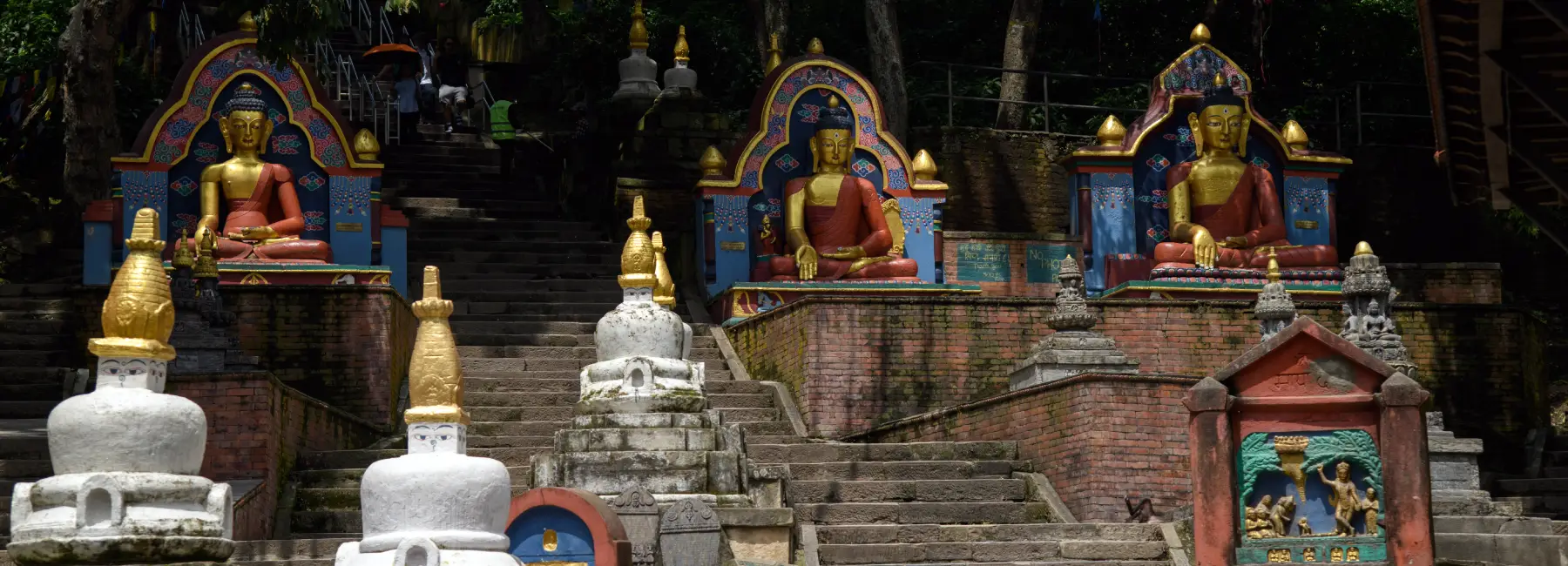
Nepal holds a profound place in the Buddhist world as the birthplace of Gautama Buddha, the Shakyamuni Buddha. From the sacred garden of Lumbini to ancient stupas, monasteries, meditation caves and Himalayan Buddhist communities, the country preserves a remarkable heritage shaped by centuries of devotion, practice and wisdom.
Buddhism in Nepal is not only a story of the past. Mahayana, Vajrayana and Himalayan Buddhist traditions continue to live through meditation, prayer, rituals, festivals, sacred art and everyday community life. This diversity has made Nepal a unique meeting place of Buddhist philosophy, culture and sacred geography.
This guide explores the Buddhist heritage, traditions, sacred figures, practices, festivals and important pilgrimage places of Nepal, offering a meaningful introduction for pilgrims, spiritual seekers, travelers and anyone wishing to understand Buddhism in Nepal.
What Is Buddhism in Nepal?
Buddhism in Nepal is a living heritage of wisdom, compassion and spiritual practice with more than two thousand years of history. As the birthplace of Prince Siddhartha, the Shakyamuni Buddha, Nepal holds a special place in the Buddhist world. From Lumbini to the ancient stupas of the Kathmandu Valley and the Buddhist communities of the Himalaya, this heritage continues to shape Nepal’s spiritual and cultural life.
Over the centuries, Mahayana, Vajrayana and Himalayan Buddhist traditions developed across the country, expressed through monasteries, stupas, meditation, rituals, festivals, sacred art and pilgrimage. Each region has contributed its own traditions while remaining connected to the wider Buddhist teachings.
Understanding Buddhism in Nepal therefore means exploring both its ancient roots and living traditions—a heritage where Buddhist philosophy, sacred places and community practice continue to come together.
A Brief History of Buddhism in Nepal
Lumbini and the Birth of the Buddha
The most fundamental connection between Nepal and Buddhism is Lumbini. According to Buddhist tradition, Shakyamuni Buddha was born at Lumbini to Queen Maya Devi. He later left his royal life, followed a spiritual path, attained awakening, and became known as the Buddha.
Lumbini developed into a pilgrimage centre in ancient times. The Ashoka Pillar, erected around 249 BCE, is among the most important historical pieces of evidence connecting the site with the Buddha’s birthplace. Archaeological excavations have also revealed successive layers of structures, including Buddhist monasteries and stupas dating from ancient periods.
The sacred area today includes the Maya Devi Temple, the Ashoka Pillar, the Sacred Garden, the ancient monastic zone, and other archaeological remains. Lumbini is therefore important both as a living pilgrimage destination and as an archaeological site.
Early Development of Buddhism
Buddhism developed across the Indian subcontinent during the centuries following the Buddha’s life. The Kathmandu Valley, positioned between the Indian plains and the Himalayan passes leading toward Tibet, became an important cultural crossroads.
Buddhist ideas, manuscripts, artists, merchants, monks, and ritual traditions moved through the region. Over time, Buddhism became deeply established within the Newar communities of the valley.
The Kathmandu Valley and Newar Buddhism
The history of Buddhism in the Kathmandu Valley is particularly complex. Buddhist and Hindu traditions developed alongside one another and influenced architecture, art, festivals, sacred geography, and community life. UNESCO describes the valley’s cultural heritage as an exceptional example of the coexistence and amalgamation of Hinduism and Buddhism with local ritual traditions and Tantric practices.
This historical interaction gave rise to distinctive Newar Buddhist traditions. Patan, Kathmandu, Bhaktapur, Sankhu, Bungamati, and other settlements preserve monasteries, bahas, bahis, chaityas, stupas, sculptures, festivals, and ritual traditions associated with this heritage.
Buddhism in the Himalayan Regions
Northern Nepal developed strong religious and cultural connections with Tibet. Trade routes crossing the Himalaya carried not only goods but also Buddhist texts, artistic traditions, religious teachers, and pilgrimage practices.
Over time, Tibetan Buddhist traditions became established in areas such as Mustang, Dolpo, Manang, Humla, and other Himalayan regions.
Today, Nepal therefore contains several distinct Buddhist cultural zones, from the ancient pilgrimage landscape of Lumbini to the Newar Buddhist cities of the Kathmandu Valley and the Tibetan Buddhist communities of the Himalaya.
Major Buddhist Traditions in Nepal
Theravada Buddhism
Theravada preserves traditions based particularly on the Pali Canon and emphasizes ethical conduct, meditation, mindfulness, wisdom, and liberation. Modern Theravada Buddhism became increasingly established in Nepal during the twentieth century through monasteries, meditation centres, Buddhist education, and lay communities.
Mahayana Buddhism,
Mahayana places strong emphasis on the Bodhisattva ideal: the aspiration to attain awakening for the benefit of all sentient beings.The Mahayana tradition developed extensive teachings and devotional traditions around Bodhisattvas such as Avalokiteshvara, Manjushri, Vajrapani, and Maitreya. Many important Buddhist images and traditions found in Nepal belong to a Mahayana environment.
Vajrayana Buddhism
Vajrayana developed specialized methods involving mantra, meditation, visualization, mandala, ritual, symbolic imagery, and tantric teachings. It became particularly influential in Nepal, especially among Newar Buddhist communities and Himalayan Buddhist traditions. The vajra symbolizes indestructibility and awakened wisdom, while mandalas, deities, mantras, bells, ritual implements, and meditation practices form part of an integrated system of Buddhist practice.
Newar Buddhism
Newar Buddhism is one of Nepal’s most distinctive Buddhist traditions. It developed within the Newar society of the Kathmandu Valley and preserves an extraordinary heritage of Buddhist ritual, Sanskrit texts, Vajrayana practice, paubha painting, metal sculpture, festivals, bahas, bahis, and hereditary Buddhist priestly traditions.
Tibetan and Himalayan Buddhism
Tibetan Buddhist traditions are especially prominent in the Himalayan regions and in the Buddhist communities surrounding Boudhanath and other parts of Kathmandu. Different schools and lineages, including Nyingma, Kagyu, Sakya, and Gelug traditions, are represented in Nepal.
Buddhas in Buddhist Tradition: Their Meaning and Significance
In Buddhism, the word Buddha means “awakened one” or “enlightened one.” It is not simply a personal name. It refers to a being who has fully awakened to the nature of reality and attained liberation through profound wisdom and understanding.
Although Shakyamuni Gautama Buddha is the Buddha most closely associated with Buddhism today, Buddhist scriptures describe other Buddhas who appeared in different ages and world cycles. The way these Buddhas are understood differs among Buddhist traditions, and many belong primarily to religious and scriptural traditions rather than to independently established historical records.
The Buddhas Who Preceded Shakyamuni
One of the earliest and most important traditional lists is the Seven Buddhas of the Past found in the Pali tradition. They are:
- Vipassī Buddha
- Sikhī Buddha
- Vessabhū Buddha
- Kakusandha Buddha
- Koṇāgamana Buddha
- Kassapa Buddha
- Shakyamuni Gautama Buddha
The first six are described as Buddhas who appeared before Gautama Buddha. The Mahāpadāna Sutta presents accounts of these seven Buddhas, while other Buddhist scriptures preserve additional lists and traditions concerning Buddhas of different ages. The Buddhavaṃsa, for example, contains a much longer account of Buddhas, traditionally listing 28 Buddhas before Gautama and Gautama himself as the 29th in that particular enumeration.
These Buddhas should be understood within their respective Buddhist textual and religious traditions. They should not automatically be treated as historical figures documented in the same way as Shakyamuni Buddha.
Shakyamuni Gautama Buddha: The Buddha of Our Age
Shakyamuni Buddha, also known as Gautama Buddha, is the central historical figure of Buddhism. According to Buddhist tradition, he was born as prince Siddhartha among the Shakya people and later renounced his royal life in search of a way beyond suffering.
After years of spiritual practice, he attained awakening and became a Buddha. He then spent the remainder of his life teaching the path to liberation, including the Four Noble Truths and the Noble Eightfold Path.
For Nepal, his significance is especially profound. Lumbini, in present-day Nepal, is traditionally identified as the birthplace of Gautama Buddha and is one of the most important Buddhist pilgrimage destinations in the world.
Dipankara Buddha and Nepalese Buddhist Tradition
Dipankara Buddha is another highly important Buddha in Buddhist tradition, particularly within Newar Buddhism of the Kathmandu Valley.
Dipankara is traditionally understood as a Buddha of a previous age. Buddhist narratives also connect Dipankara with the prediction of the future Buddhahood of Shakyamuni Buddha. This connection makes Dipankara an important figure in the larger Buddhist understanding of successive Buddhas. In the Kathmandu Valley, Dipankara Buddha has a particularly strong presence in Newar Buddhist religious life. His images are found in traditional Buddhist communities, and representations of Dipankara are carried in religious processions and festivals. His presence therefore connects ancient Buddhist narratives with the living cultural and artistic traditions of Nepal.
The Five Wisdom Buddhas in Vajrayana Buddhism
As Buddhism developed into Mahayana and Vajrayana traditions, the understanding and representation of Buddhahood expanded into sophisticated systems of wisdom, meditation, mandala, and sacred symbolism.
One of the most important Vajrayana systems is the Five Wisdom Buddhas, also known as the Five Tathagatas:
- Vairocana
- Akshobhya
- Ratnasambhava
- Amitabha
- Amoghasiddhi
These Buddhas are central to many Vajrayana mandalas and systems of Buddhist meditation and visualization. They are traditionally associated with different directions, colours, elements, wisdoms, and aspects of transformed consciousness.
Their images and symbols can be found throughout Nepal in Vajrayana temples, monasteries, stupas, mandalas, ritual objects, paintings, sculptures, and manuscripts. Understanding the Five Wisdom Buddhas is therefore particularly useful for appreciating Nepal’s Vajrayana Buddhist art and spiritual traditions.
Other Important Buddhas in Buddhist Tradition
Beyond the Seven Buddhas of the Past, Dipankara, and the Five Wisdom Buddhas, Nepalese Buddhist art and religious practice also includes several other important Buddha figures. Their significance varies according to the particular Buddhist tradition, scripture, lineage, and ritual practice. Among them are:
- Bhaiṣajyaguru, commonly known as the Medicine Buddha, associated with healing and the alleviation of suffering.
- Amitāyus, associated with longevity and the continuation of life.
- Vajradhara, regarded in many Vajrayana traditions as the primordial or ultimate Buddha who represents the essence of tantric Buddhahood.
- Ratnaketu, another Buddha appearing in Mahayana Buddhist traditions and sacred literature.
- Maitreya, the future Buddha, who is traditionally understood as the Buddha who will appear in the future when the teachings of Gautama Buddha have disappeared from the world.
It is important to remember that these figures do not all occupy the same position within every Buddhist tradition. Some are understood as Buddhas of other ages, some are central to particular Mahayana or Vajrayana systems, and Maitreya is traditionally understood as a future Buddha rather than a Buddha of the present age.
Understanding the Many Buddhas
The idea of multiple Buddhas is an important part of the broader Buddhist understanding of awakening. Gautama Buddha is the Buddha of our present age, but Buddhist traditions envision Buddhahood as something that can arise across different ages and world systems.
In Nepal, this understanding can be encountered not only through Buddhist scriptures but also through stupas, monasteries, temples, paubha paintings, sculptures, mandalas, festivals, rituals, and pilgrimage traditions. The many representations of Buddhas therefore form an important part of Nepal’s living Buddhist heritage.
Bodhisattvas in Nepalese Buddhism
The Bodhisattva ideal is one of the defining ideas of Mahayana Buddhism. A Bodhisattva is a practitioner who aspires to attain complete Buddhahood while cultivating wisdom and compassion for the benefit of all sentient beings. The path is therefore not understood simply as a personal search for liberation, but as a commitment to awakening in a way that embraces the welfare of others.
At the heart of the Bodhisattva path is the bodhicitta, the aspiration to attain enlightenment for the benefit of all beings. This aspiration is developed through generosity, ethical conduct, patience, perseverance, meditation, and wisdom. In Mahayana thought, wisdom and compassion are inseparable: wisdom understands the nature of reality, while compassion responds to suffering without discrimination.
The Bodhisattva is therefore more than a religious figure represented in a temple. Bodhisattvas embody qualities that practitioners seek to develop within their own lives. Compassion, wisdom, courage, patience, generosity, and the determination to help others are all understood as aspects of the path toward awakening.
The Eight Great Bodhisattvas (Ashtamahabodhisattva )
Mahayana Buddhism developed traditions surrounding numerous Bodhisattvas, with different scriptures and Buddhist cultures emphasizing different groups. Nepalese Buddhist traditions preserve a distinctive tradition of the Eight Great Bodhisattvas, including Gaganaganja, Maitreya, Samantabhadra, Vajrapani, Sarvanivarana-Vishkambhin, Manjushri, Kshitigarbha, and Akashagarbha.
For the broader understanding of Buddhism in Nepal, however, several Bodhisattva traditions deserve particular attention because of their influence on Buddhist philosophy, art, worship, and religious culture.
Avalokiteshvara: The Bodhisattva of Compassion
Avalokiteshvara is one of the most widely revered Bodhisattvas in Mahayana Buddhism and represents compassion. His tradition expresses the ideal that awakened wisdom should respond to the suffering of living beings. Avalokiteshvara became particularly important in Nepal. In the Kathmandu Valley, the Bodhisattva developed into the rich Lokeshvara tradition, with numerous forms and local manifestations. Among the best-known are Padmapani Lokeshvara, Aryavalokiteshvara, Anandadi Lokeshvara, Srishtikanta Lokeshvara, Jatadhari Lokeshvara, Amoghapasha Lokeshvara, and Shadakshari Lokeshvara.
These are different forms and manifestations of Avalokiteshvara rather than separate Bodhisattvas. The tradition remains a living part of Nepalese Buddhism through temples, sacred images, festivals, processions, and devotional practices. The traditions of Karunamaya, particularly in Patan and Bungamati, are among the most important expressions of Avalokiteshvara’s compassionate ideal in the Kathmandu Valley.
Manjushri: The Bodhisattva of Wisdom
Manjushri represents transcendent wisdom, particularly the wisdom that removes ignorance and sees reality clearly. His familiar image holding a sword symbolizes the cutting through of delusion rather than physical force.
Manjushri has a particularly important place in Nepalese Buddhist tradition. His presence is deeply connected with the religious history and sacred geography of the Kathmandu Valley, where he is remembered not only through Buddhist art and worship but also through longstanding legends and pilgrimage traditions.
His significance complements that of Avalokiteshvara: where Avalokiteshvara expresses compassion, Manjushri represents the wisdom necessary for that compassion to become truly liberating.
Vajrapani: The Power of the Dharma
Vajrapani embodies the strength and dynamic energy of awakened practice. His name is associated with the vajra, the symbolic thunderbolt or diamond of Buddhist tradition.
In Mahayana and Vajrayana Buddhism, Vajrapani represents the power required to overcome fear, obstacles, and the forces that obstruct the path to awakening. His fierce appearance in Buddhist art should therefore be understood symbolically: it expresses determined protection of the Dharma and the energetic force of wisdom and compassion.
Maitreya: The Future Buddha
Maitreya occupies a distinctive place among Bodhisattvas because he is traditionally regarded as the future Buddha of this world. He is presently understood to reside in a heavenly realm awaiting the appropriate time to appear in the human world and teach the Dharma.
The tradition of Maitreya expresses an important Buddhist idea: the Dharma continues beyond the lifetime of any single Buddha. His presence represents hope for the future appearance of awakened wisdom and the continuation of the Buddha’s teaching.
Bodhisattva Ideals in Nepalese Buddhist Culture
The importance of Bodhisattvas in Nepal extends beyond individual figures. Their qualities have become woven into the religious culture of the Kathmandu Valley and other Buddhist communities. Images of wisdom and compassion appear in temples, courtyards, monasteries, paubha paintings, manuscripts, festivals, and ritual traditions.
This is particularly characteristic of Nepalese Buddhism, where Buddhist philosophy and everyday religious culture have developed alongside one another. The Bodhisattva ideal is expressed not only through teachings but also through acts of devotion, artistic traditions, festivals, sacred journeys, and community life.
Through these traditions, the Bodhisattva represents a fundamental Mahayana Buddhist aspiration: to cultivate wisdom without abandoning compassion, and to seek awakening while remaining committed to the welfare of all beings
Enlightened Figures and Sacred Forms in Nepalese Buddhism
Beyond the Buddha and Bodhisattva traditions, Mahayana and Vajrayana Buddhism developed a rich range of enlightened figures and sacred forms. These figures express different dimensions of awakened wisdom, compassion, transformation, and spiritual practice.
They do not all have the same status. Some are understood as manifestations of enlightened qualities, some represent particular aspects of Buddhahood, while others are revered as great masters who realized and transmitted profound Buddhist teachings. Understanding this distinction helps us appreciate the diversity of Nepalese Buddhist philosophy, art, and practice.
Tara: Compassionate Enlightened Activity
Tara is one of the most important female figures in Mahayana and Vajrayana Buddhism. She is associated with compassion, protection, liberation, and the active response of enlightened wisdom. Tara appears in many forms, each representing a particular aspect of enlightened activity. Green Tara is especially associated with swift compassionate activity, while White Tara is associated with peaceful activity, longevity, and healing. Other forms occur within different Buddhist traditions and tantric practices. These forms should be understood as different manifestations or expressions of Tara, rather than as completely separate enlightened beings. Her many forms demonstrate an important Vajrayana principle: enlightened activity can appear in different ways according to the needs and circumstances of practitioners.
Tara has a particularly strong presence in Nepalese Buddhist art and religious culture, especially within Newar Buddhism.
Guru Padma Sambhava: The Vajrayana Master
Guru Padma Sambhava, also known as Guru Rinpoche, holds a unique place in Vajrayana Buddhism. He is revered as a great tantric master and, particularly in the Nyingma tradition, as an embodiment of the profound wisdom and skillful means of the Vajrayana path. Traditional sources also honor him as the “Second Buddha” because of his extraordinary role as a teacher and guide of tantric Buddhism.
The name Padmasambhava means “Lotus-Born,” while Guru Rinpoche means “Precious Guru.” Within Vajrayana, the guru is not simply a teacher who explains Buddhist philosophy. The guru represents the living transmission of realization, connecting the practitioner with the teachings, practices, lineage, and methods through which awakening can be directly cultivated.
Padma Sambhava is therefore closely associated with the tantric path of transformation. Vajrayana teaches that ordinary experiences, emotions, perceptions, and energies need not simply be rejected; through appropriate methods and realization, they can be transformed into wisdom. Guru Padma Sambhava is revered as a master who embodies this principle of transformation.
His traditions are associated with tantric meditation, mantra, visualization, deity practice, ritual, meditation retreats, and profound methods for recognizing the nature of mind. He is also strongly connected with Vajrakilaya, a major tantric practice concerned with overcoming obstacles to spiritual realization.
Another important aspect of his tradition is terma, or “treasure.” In Vajrayana traditions, certain teachings are understood to have been concealed by realized masters and later revealed by tertöns, or treasure revealers, when the appropriate time and conditions arose. Padma Sambhava became especially central to these traditions, particularly within the Nyingma lineage.
Guru Padma Sambhava is also represented through eight principal manifestations, traditionally known as Guru Tsen Gyé. These are not eight different historical individuals. They represent different manifestations or aspects of his enlightened activity, expressed according to different circumstances and spiritual purposes. Among them are Guru Padma Gyalpo, Guru Nyima Özer, Guru Loden Choksé, Guru Padmasambhava, Guru Shakya Sengé, Guru Pema Jungné, Guru Sengé Dradrok, and Guru Dorje Drolö. Different textual and artistic traditions may vary slightly in the names or ordering of these manifestations.
For Nepalese Buddhism, Guru Padma Sambhava is especially meaningful because Nepal forms an important part of the sacred geography and traditions surrounding his life and practice. The detailed sites and pilgrimage traditions associated with him are discussed separately in Major Buddhist Sites in Nepal.
Vajradhara: Primordial Buddhahood
Vajradhara occupies an important position in Vajrayana Buddhism as the primordial Buddha and as an embodiment or source of tantric teachings. His traditional image shows him holding the vajra and bell crossed before his heart. These symbols represent the inseparability of wisdom and skillful means, one of the fundamental principles of Vajrayana.
Vajradhara should therefore be distinguished from historical Buddhist teachers. His significance belongs primarily to the Vajrayana understanding of the timeless and primordial nature of Buddhahood and the transmission of tantric teachings.
Vajrayogini: Transformative Wisdom
Vajrayogini is one of the most important female tantric figures in Vajrayana Buddhism. She represents the transformative power of wisdom and is associated with advanced tantric meditation and visualization practices.
Vajrayogini appears through several forms and traditions. Within Nepalese Vajrayana, important manifestations include Vajravarahi, Vajradevi, Khadgayogini, Akashayogini, and Nairatmya-Guhyeshwari. A recent study of Vajrayogini traditions in the Nepal Mandala specifically identifies these as distinct iconographic forms within the broader Vajrayogini tradition.
These forms should not be understood as unrelated deities. They represent different manifestations, iconographic expressions, and tantric traditions associated with Vajrayogini.
Her fierce and dynamic appearance also has a specific philosophical meaning. In Vajrayana, such imagery can represent the uncompromising energy of wisdom that cuts through ignorance, attachment, and other obstacles to awakening.
Vajrayogini practice belongs primarily to advanced Vajrayana systems and traditionally involves visualization, mantra, meditation, initiation, and lineage transmission. The important Nepalese traditions associated with her will be discussed later in the section on Major Buddhist Sites in Nepal.
Vasudhara: Generosity, Merit, and Abundance
Vasudhara is an important female figure in Nepalese and Newar Buddhism. She is associated with abundance, generosity, prosperity, and the accumulation of merit.
Her meaning extends beyond material wealth. In Buddhist thought, generosity and merit contribute to favorable conditions for spiritual practice and community wellbeing. Vasudhara therefore expresses the relationship between abundance, generosity, merit, and the responsible use of one’s resources.
Her presence in Nepalese Buddhist culture also illustrates how Buddhist practice became closely connected with household and community life.
Great Buddhist Masters and Vajrayana Lineages
Buddhist teachings have been preserved not only through Buddhas, Bodhisattvas, and sacred forms, but also through generations of realized teachers. In Vajrayana Buddhism, the relationship between teacher and disciple is especially important because many tantric teachings are transmitted through an unbroken lineage of instruction, practice, realization, and oral transmission.
Among the great Indian and Himalayan masters associated with these traditions are Tilopa, Naropa, Marpa Lotsawa, Milarepa, and Gampopa. Their lives illustrate another dimension of Buddhism: the transformation of teachings into direct spiritual experience through meditation, discipline, devotion, and guidance from a qualified master.
Tilopa is regarded as one of the great Mahasiddhas of Indian Buddhism and a foundational figure in the lineage that later became known as Kagyu. His teachings emphasize direct realization through meditation and the recognition of the nature of mind.
Naropa, one of Tilopa’s principal disciples, became one of the most influential tantric scholars and practitioners of medieval India. His teachings and practices, particularly the traditions later known as the Six Dharmas of Naropa, became fundamental to several Tibetan Vajrayana lineages.
Marpa Lotsawa, the great Tibetan translator, travelled repeatedly between Tibet, India, and the Himalayan region to receive and transmit profound Buddhist teachings. He brought important tantric instructions into Tibet, including teachings received through the lineage of Naropa. His role demonstrates the importance of translation, pilgrimage, teacher-student transmission, and personal realization in the preservation of Vajrayana.
Milarepa, the foremost disciple of Marpa, became renowned for his intensive meditation practice and songs of realization. His life is remembered as an example of how profound transformation can arise through dedicated practice and perseverance.
Gampopa later brought together important streams of Buddhist practice and became a major figure in the development of the Kagyu tradition. Through these successive generations, teachings that originated with Indian masters were transmitted, practiced, interpreted, and preserved across the Himalayan Buddhist world.
Nepal occupies an important position within this wider network of Buddhist transmission. The Himalayan landscape of Nepal contains numerous traditions associated with Indian Mahasiddhas and later Buddhist masters. These connections reveal that Nepal was not merely a destination for Buddhist pilgrimage; it was also part of the broader cultural and spiritual network through which Buddhist teachings travelled between India, Nepal, Tibet, and other Himalayan regions.
The Major Buddhist Sites in Nepal
Nepal’s Buddhist sacred landscape extends from the plains of Lumbini to the high Himalayan valleys. These places represent different stages and expressions of Buddhist history: the birthplace of the historical Buddha, ancient Newar Buddhist centres, Vajrayana meditation landscapes, sacred caves associated with great masters, and remote Himalayan communities where Tibetan Buddhist traditions continue to shape everyday life.
For Buddhist pilgrims and spiritual travellers, these places are more than historical monuments. A stupa can be a place of circumambulation and prayer, a monastery can be a centre of study and meditation, while a cave, mountain or spring may be regarded as sacred because of its connection with a particular Buddhist master or lineage. Together, these sites show that Buddhism in Nepal is not preserved only in monuments but continues through living communities, rituals, festivals, meditation, art and pilgrimage.
Lumbini: The Birthplace of the Buddha
Lumbini in the Rupandehi district is the most important Buddhist pilgrimage destination in Nepal because it is traditionally recognized as the birthplace of Siddhartha Gautama, the Buddha. It is one of the world’s major Buddhist pilgrimage centres and has been inscribed on the UNESCO World Heritage List. The sacred landscape includes the Maya Devi Temple, the Sacred Garden, the Ashoka Pillar, the Sacred Pond of Puskarini and the Marker Stone associated with the Buddha’s birthplace.
The wider Lumbini pilgrimage landscape also connects with important archaeological sites associated with the Buddha’s early life and the development of Buddhism in the region, including Tilaurakot, traditionally identified with ancient Kapilavastu, as well as Kudan, Gotihawa, Niglihawa and other sites within the Greater Lumbini area. These places help place the Buddha’s life within its historical and cultural landscape rather than viewing Lumbini only as a single temple complex.
For pilgrims, Lumbini represents the beginning of the Buddha’s human journey toward awakening. The atmosphere is therefore different from later Himalayan tantric sites: its central significance is connected with the historical Buddha, his birth, and the beginning of the life that eventually led to enlightenment and the teaching of the Dharma.
Explore more: Lumbini Buddhist Pilgrimage: Sacred Garden, Maya Devi Temple and the Greater Lumbini Sacred Landscape
Kathmandu Valley: The Living Heart of Nepalese Buddhism
The Kathmandu Valley is the heart of Nepal’s living Buddhist heritage. Encompassing Kathmandu, Lalitpur (Patan), Bhaktapur and their surrounding settlements, the Valley developed a distinctive form of Mahayana and Vajrayana Buddhism within Newar society. Buddhist practice became closely connected with monasteries, bahas and bahis, festivals, sacred art, family traditions and everyday community life. UNESCO recognizes the Valley for the long interaction and coexistence of Buddhist and Hindu traditions, including local ritual and Tantric practices.
The great stupas of Swayambhunath and Boudhanath are among the Valley’s most important Buddhist landmarks. Swayambhunath is associated with the sacred origins of the Valley and remains an important centre of pilgrimage, prayer and meditation. Boudhanath, meanwhile, is one of Nepal’s great centres of Tibetan Buddhist practice, where circumambulation, prostration, mantra recitation and other devotional practices continue around the stupa. Together, they represent two major dimensions of Nepalese Buddhism: the ancient Buddhist traditions of the Kathmandu Valley and its continuing connection with Himalayan and Tibetan Buddhism.
The Buddhist heritage of Kathmandu city extends far beyond these famous stupas. Its historic neighbourhoods contain numerous bahas, bahis, chaityas and Buddhist courtyards, including important sites such as Itumbaha, Jana Bahal, Kathesimbu and Chhusya Bahal. These traditional monastic courtyards were centres of religious practice, community life and the preservation of Buddhist lineages. Their continued use helps explain why Newar Buddhism is best understood as a living community tradition rather than simply a collection of historic monuments.
Patan (Lalitpur) is another major centre of Newar Buddhist heritage, particularly renowned for its mahavihars and artistic traditions. Important sites include Hiranya Varna Mahavihar (Golden Temple), Mahaboudha, Rudra Varna Mahavihar and the four Ashoka Stupas. These institutions preserve traditions of Buddhist ritual, sculpture, architecture and monastic culture that have made Patan one of the great centres of Buddhist art in the Himalayan region.
Bhaktapur also preserves an important Buddhist heritage within its historic Newar urban culture. Among its notable Buddhist institutions is Dipankar Mahavihar, associated with Dipankara Buddha and traditional practices of worship and generosity. Other historic Buddhist monasteries, courtyards and chaityas throughout the city demonstrate that Buddhism has long formed part of Bhaktapur’s religious and cultural life, even though the city is often better known for its Hindu and royal heritage.
The wider Valley contains many additional Buddhist sacred places, including Sankhu and Vajrayogini, Kirtipur and Chilancho, Nagarjun, Chabahil, Pharping and numerous traditional settlements with ancient chaityas, bahas and monasteries. These cannot all be covered in one article, but together they reveal the extraordinary density of Buddhist heritage across the Valley.
What makes Kathmandu Valley especially significant is the relationship between sacred places and living communities. Buddhism can be encountered not only in monumental stupas but also in traditional courtyards, small shrines, festivals, processions, ritual objects, Buddhist art and everyday religious practices. The Valley therefore provides one of the clearest examples of how Buddhism in Nepal has evolved as a living tradition while preserving centuries of Mahayana, Vajrayana and Newar Buddhist heritage.
Explore more: Buddhist Heritage of Kathmandu Valley: Swayambhunath, Boudhanath, Patan, Bhaktapur and the Newar Buddhist Tradition
Namo Buddha: The Bodhisattva Ideal of Compassion
Namo Buddha, in Kavrepalanchok, is one of the most revered Buddhist pilgrimage places near the Kathmandu Valley. Its importance comes from the Buddhist story of a bodhisattva who encountered a starving tigress and her cubs and offered his own body out of compassion. The story is traditionally understood as an expression of the Bodhisattva ideal: the willingness to place the welfare of other beings before one’s own comfort and even one’s own life. Nepal Tourism Board identifies Namo Buddha as an important Buddhist pilgrimage site associated with this tradition.
The sacred landscape is centred on the stupa and monastery complex, where pilgrims and practitioners come for prayer, meditation and reflection on compassion and generosity. For those interested in Buddhist philosophy, Namo Buddha provides a particularly clear connection between sacred place and ethical practice: the site is remembered not simply because something happened there, but because the story expresses the spiritual ideal of cultivating compassion through action.
Explore more: Namo Buddha: The Sacred Story of Compassion and Buddhist Pilgrimage in Nepal
Pharping: A Sacred Landscape of Vajrayana Buddhism
Pharping, on the southern edge of the Kathmandu Valley, is one of Nepal’s most important Vajrayana pilgrimage landscapes. The area is closely associated with Guru Padma Sambhava and with meditation traditions preserved through Tibetan and Newar Buddhist communities. Its importance comes from the combination of caves, sacred springs, temples, monasteries and Vajrayana practices concentrated within a relatively small landscape.
The most famous sacred locations include Yangleshö and Asura Caves, Pharping Vajrayogini, the Guru Rinpoche meditation traditions, and several other monasteries and tantric sacred places. Pharping therefore represents a different dimension of Nepalese Buddhism from Lumbini: instead of focusing primarily on the historical life of the Buddha, it is strongly connected with Vajrayana meditation, tantric practice, guru lineage and sacred geography.
For practitioners, Pharping is valued as a place where landscape and practice are closely connected. Caves are not simply archaeological features; they are remembered as places of meditation and realization, while temples and monasteries preserve living traditions of ritual and contemplation.
Explore more: Pharping Buddhist Sacred Sites: Yangleshö, Asura Cave, Vajrayogini and Guru Padma Sambhava
Halesi Maratika: Sacred Caves of Vajrayana Tradition
Halesi Maratika in eastern Nepal is one of the important sacred cave landscapes associated with Vajrayana Buddhism. The caves are particularly revered in traditions connected with Guru Padma Sambhava and the accomplished yogini Mandarava. The site is understood within Vajrayana tradition as a place of profound tantric practice and spiritual accomplishment.
The importance of Maratika lies in the way natural caves became part of Buddhist sacred geography. A cave can function simultaneously as a physical landscape, a place of meditation and a reminder of the transformative potential of the Vajrayana path. The site is also significant because it is respected within a broader religious environment where Buddhist and Hindu traditions coexist.
Explore more: Halesi Maratika: Guru Padma Sambhava, Mandarava and the Sacred Caves of Nepal
Daman and Chumik Changchup: Padma Sambhava in the Himalayan Landscape
Daman, south-west of Kathmandu, is associated with a sacred landscape connected with Guru Padma Sambhava. Among its important Buddhist places is Chumik Changchup, traditionally understood within Vajrayana pilgrimage traditions as a site connected with Guru Rinpoche’s spiritual activity.
The importance of such places illustrates a distinctive feature of Himalayan Buddhism: mountains, caves, springs and remote landscapes can become sacred through meditation traditions and the presence or activity attributed to realized masters. Daman therefore belongs to the broader network of Padma Sambhava sacred places in Nepal rather than being viewed simply as a mountain viewpoint or travel stop.
Explore more: Chumik Changchup and the Padmasambhava Sacred Landscape of Daman
Yarinak and Timal: A Sacred Vajrayana Landscape
The Timal and Yarinak region in Kavrepalanchok preserves another important layer of Nepal’s Vajrayana heritage. The area is associated with Buddhist traditions connected with Guru Padma Sambhava, sacred landscapes, meditation and the concept of hidden spiritual places, or beyul, found in Himalayan Buddhist traditions.
Yarinak is especially important within the sacred geography associated with Padma Sambhava. The wider Timal landscape also reflects the way Buddhist practice developed through local communities, sacred sites and oral traditions rather than only through large monasteries. For visitors interested in the Himalayan Vajrayana tradition, the region offers an opportunity to experience a quieter form of pilgrimage away from Nepal’s major urban Buddhist centres.
Explore more: Yarinak and Timal: Sacred Places, Padma Sambhava Traditions and the Himalayan Buddhist Landscape
Himalayan Buddhist Regions of Nepal
The Himalayan Buddhist landscape of Nepal is much broader than Mustang, Manang, Dolpa and Helambu. Across the northern mountain belt, different communities have preserved Tibetan Buddhist, Himalayan Vajrayana and locally developed Buddhist traditions. These regions should not be treated as one uniform tradition: each has its own ethnic communities, monasteries, lineages, sacred landscapes and historical connections with Tibet and the wider Himalayan world.
Langtang and Rasuwa
Langtang and the wider Rasuwa region are important Himalayan Buddhist areas with strong connections to Tibetan Buddhist culture and Tamang communities. Monasteries and village shrines are integrated into the landscape, while pilgrimage, local festivals and Buddhist practices remain part of community life. The region’s mountain valleys also provide an important transition between the Kathmandu Valley and the higher Himalayan Buddhist world.
Explore more: Buddhist Heritage of Langtang and Rasuwa: Monasteries, Villages and Himalayan Traditions
Helambu
Helambu is another important Buddhist cultural region north-east of Kathmandu, traditionally associated with Himalayan communities and Buddhist monasteries. The region is known for its mountain villages, monasteries, prayer flags, chortens and religious traditions connected with Tibetan Buddhism.
Helambu is particularly valuable for understanding Buddhism as a living community tradition. Rather than being defined by one monumental pilgrimage site, its Buddhist identity is spread across villages, monasteries, local rituals and the surrounding sacred landscape.
Manaslu and Tsum Valley
The Manaslu region, particularly Tsum Valley, preserves a distinctive Himalayan Buddhist culture. Tsum is known for its monasteries, sacred landscapes and communities whose religious life has developed within the remote Himalayan valleys. Important monasteries include Mu Gompa, Rachen Gompa and Dhephydonma Gompa.
The region is especially significant for travellers interested in meditation, monastic traditions and the relationship between Buddhist practice and remote Himalayan communities. Its monasteries and villages demonstrate how Buddhist culture can remain deeply connected with landscape, seasonal life and community traditions.
Manang and Nar Phu
Manang represents another important Himalayan Buddhist region along the northern side of the Annapurna range. The communities of Manang preserve Buddhist traditions expressed through monasteries, chortens, prayer walls, festivals and everyday religious practice.
The remote Nar Phu Valley adds another dimension to this heritage, with its high-altitude villages and monasteries reflecting the Tibetan cultural world of the northern Himalaya. Places such as Tashi Lhakhang and the traditional settlements of Nar and Phu are especially relevant to those interested in Himalayan Buddhist culture.
Mustang: One of Nepal’s Great Tibetan Buddhist Heritage Regions
Mustang is one of the most important regions for understanding the development and preservation of Tibetan Buddhist culture within Nepal. The landscape contains ancient monasteries, caves, chortens, traditional settlements and important pilgrimage places spread through both Lower and Upper Mustang.
Lower Mustang includes Buddhist heritage around places such as Muktinath, Kagbeni, Jharkot, Lupra and Marpha, where Himalayan Buddhist traditions developed alongside the religious diversity of the Kali Gandaki region.
Upper Mustang preserves an especially rich concentration of Tibetan Buddhist heritage. Lo Manthang and its surrounding villages contain important monasteries, including Jampa Lhakhang, Thubchen Monastery, Ghar Gompa (Lo Gekar), Luri Gompa, Samar Monastery and Chodey Monastery, while other settlements preserve ancient gompas, murals, manuscripts, chortens and sacred caves. The region’s isolation helped preserve many elements of its traditional cultural landscape.
Mustang is therefore not simply a trekking destination. It is one of the major places in Nepal where architecture, art, monastic traditions, ritual practices and the wider Tibetan Buddhist cultural heritage remain closely connected.
Dolpa: Remote Himalayan Buddhist Traditions
Dolpa contains some of the most remote and distinctive Buddhist landscapes in Nepal. Upper Dolpo in particular preserves numerous ancient monasteries, or gompas, spread across isolated Himalayan settlements. Nepal Tourism Board describes the Dolpa Heritage Circuit as passing through a predominantly Buddhist region containing more than 130 gompas, including important monasteries in places such as Shey, Saldang, Dho, Chharka and Bhijer.
Shey Gompa is among the best-known sacred centres of Upper Dolpo, while the wider region contains monasteries with long histories of Buddhist practice, meditation, art and community life. The remoteness of Dolpa has helped preserve a distinctive Himalayan religious environment in which Buddhist traditions continue to be closely connected with the mountains and villages.
Humla and the Northwestern Himalaya
Humla forms another important part of Nepal’s high Himalayan Buddhist landscape, particularly in its northern valleys bordering the Tibetan cultural world. Areas such as Limi Valley preserve Tibetan Buddhist communities, traditional villages and monasteries within a remote mountain environment.
The Buddhist heritage of Humla is important because it demonstrates how religious traditions moved across the Himalayan passes and became rooted in communities far from Nepal’s major urban centres. Here, monastery, village, landscape and trans-Himalayan cultural connections remain closely linked.
Solukhumbu and the Everest Region
The Everest region is also an important Himalayan Buddhist cultural area, particularly among Sherpa communities. Monasteries and village religious institutions form an important part of the cultural landscape, with Tengboche Monastery serving as one of the best-known Buddhist centres in the Khumbu. It is described by Nepal Tourism Board as a leading Buddhist centre of the region and is known for the annual Mani Rimdu festival.
Other villages and monasteries across Khumbu contribute to a wider religious landscape in which Buddhist practice accompanies everyday life, seasonal festivals and mountain journeys. The importance of the Everest region in Buddhism therefore extends beyond Tengboche itself and reflects the religious culture of the Sherpa communities.
Eastern Himalaya: Kanchenjunga and Makalu Regions
The eastern Himalayan regions around Kanchenjunga and Makalu also contain Buddhist communities, monasteries and sacred landscapes associated with Himalayan and Tibetan Buddhist traditions. These areas are less frequently presented as Buddhist pilgrimage destinations than Kathmandu, Lumbini or Mustang, yet their villages and monasteries form part of the wider Buddhist cultural geography of Nepal.
Their importance is particularly connected with the continuation of Buddhist practice within mountain communities and with the cultural exchange that historically took place across the Himalayan borderlands. These regions can therefore be understood as part of Nepal’s broader living Himalayan Buddhist heritage.
Other Himalayan Buddhist Landscapes
Nepal’s Buddhist geography continues into several other highland areas, including parts of Mugu, Jumla and the far-western Himalaya. Buddhist influence in these regions varies considerably, so they should not all be presented as equivalent to Mustang, Dolpa or Manang. Some contain significant Buddhist communities and monasteries, while others have mixed religious traditions and more limited Buddhist heritage.
This diversity is important because Himalayan Buddhism in Nepal was never a single uniform system. It developed through different peoples, trade routes, pilgrimage networks, monasteries, teachers and connections across the Himalaya. The result is a broad cultural landscape in which some regions are major pilgrimage destinations while others preserve quieter and more localized Buddhist traditions.
Nepal’s Buddhist Sacred Landscape as a Living Tradition
The major Buddhist sites of Nepal cannot be understood simply as a list of temples, stupas and monasteries. Each region represents a different way in which Buddhism became rooted in the country. Lumbini connects Nepal with the historical Buddha; Kathmandu Valley preserves an extraordinary living tradition of Newar Mahayana and Vajrayana Buddhism; Namo Buddha expresses the Bodhisattva ideal of compassion; Pharping, Maratika, Daman and Timal preserve sacred landscapes associated with Vajrayana masters and practices; while the Himalayan regions preserve Buddhist cultures shaped by centuries of interaction across the mountain world.
Taken together, these places reveal the remarkable diversity of Buddhism in Nepal. There are ancient stupas and medieval monasteries, urban bahals and remote gompas, sacred caves and mountain valleys, formal pilgrimage centres and places where Buddhism remains part of ordinary community life. This combination of philosophy, ritual, art, landscape and living tradition is what makes Nepal’s Buddhist heritage more than a collection of historical sites: it is a continuing spiritual and cultural landscape.
Buddhist Philosophy and Core Teachings in Nepal
Behind Nepal’s temples, stupas, rituals, and pilgrimage traditions is a philosophical system focused on understanding the nature of suffering, mind, reality, and liberation.
Four Noble Truths in Buddhism
The Buddha’s teaching begins with four fundamental truths concerning:
- Suffering and unsatisfactoriness
- The causes of suffering
- The possibility of its cessation
- The path leading toward cessation
Noble Eightfold Path in Buddhism
The Eightfold Path includes:
- Right View
- Right Intention
- Right Speech
- Right Action
- Right Livelihood
- Right Effort
- Right Mindfulness
- Right Concentration
These are interconnected aspects of Buddhist training
Karma
Karma refers primarily to intentional action and its consequences. It is not simply a system of reward and punishment. Buddhist teachings emphasize how intention, action, habit, and consciousness influence future experience.
Samsara
Samsara refers to the cycle of conditioned existence. It is associated with ignorance, craving, attachment, and repeated suffering.
Nirvana
Nirvana refers to liberation from the causes and conditions that perpetuate suffering and samsaric existence.
Bodhicitta
Bodhicitta is the aspiration to attain awakening for the benefit of all sentient beings. It is fundamental to Mahayana and Vajrayana practice.
Emptiness
Shunyata, or emptiness, is one of the central Mahayana teachings. It does not mean that nothing exists. Rather, phenomena lack independent, permanent, self-existing essence and arise through conditions and relationships.
Buddhist Rituals, Prayer and Daily Practice in Nepal
Buddhist practice in Nepal is expressed through both meditation and ritual.
Common practices include:
- Meditation
- Mantra recitation
- Prayer
- Prostration
- Circumambulation
- Offering lamps
- Offering incense
- Making food and material offerings
- Prayer wheels
- Prayer flags
- Puja
- Merit-making
- Dedication of merit
- Monastic ceremonies
The same ritual can have different meanings depending on the Buddhist tradition.
Circumambulating a stupa, for example, can express devotion, mindfulness, respect, and the accumulation of merit.
Lighting a butter lamp can symbolize the illumination of wisdom.
Mantra recitation can serve as a method of concentration, devotion, visualization, or tantric practice depending on the tradition.
Buddhist Festivals in Nepal
Buddhist festivals are an important part of Nepal’s living Buddhist heritage. They bring together pilgrimage, prayer, meditation, offerings, music, ritual, generosity and community life. Some festivals are observed throughout the wider Buddhist world, while others developed within Nepal’s distinctive Newar and Himalayan Buddhist traditions. These celebrations also show that Buddhism in Nepal is not confined to monasteries and monuments. During festival periods, stupas, bahals, monasteries, courtyards and entire neighbourhoods become active sacred spaces. The traditions differ between the Kathmandu Valley, the Himalayan regions and other parts of the country, reflecting the diversity of Nepalese Buddhism.
Buddha Jayanti
Buddha Jayanti, also known as Buddha Purnima or Vesak, is the most widely recognized Buddhist festival in Nepal. It traditionally commemorates the birth, enlightenment and parinirvana of Shakyamuni Buddha and is observed on the full moon of the month of Vesak.
Lumbini, the Buddha’s birthplace, becomes an especially important pilgrimage centre during the festival, while Swayambhunath, Boudhanath, Namo Buddha and Buddhist monasteries throughout Nepal also receive large numbers of devotees. People participate in prayer, meditation, offerings, circumambulation, recitation and other religious activities.
Beyond commemorating the Buddha’s life, Buddha Jayanti provides an opportunity to reflect on his teachings of compassion, wisdom, ethical conduct and liberation from suffering.
Gunla and the Newar Buddhist Festival Tradition
Gunla is one of the most important observances in Newar Buddhism. It is not simply a single festival but a sacred month of religious practice during which Buddhist devotees undertake pilgrimages, visit stupas and monasteries, make offerings, recite scriptures and cultivate generosity.
One of its most distinctive traditions is Gunla Bajan, devotional music performed during early-morning pilgrimages, particularly on journeys toward Swayambhunath and other sacred places. The month also includes important observances such as Mataya and Pancha Dan, which connect pilgrimage and ritual with offerings, light and generosity.
Gunla demonstrates how Newar Buddhism combines Buddhist practice with music, art, sacred geography and community participation. It is therefore an important expression of Buddhism as a living tradition in the Kathmandu Valley.
Samyak Mahadan
Samyak Mahadan, meaning the great act of giving, is one of the important generosity traditions of Newar Buddhism. It is particularly associated with Dipankara Buddha and involves large-scale offerings and acts of generosity to Buddhist religious communities.
The deeper significance of Samyak lies in dana, or generosity, which is a fundamental Buddhist virtue. Giving is understood not merely as charity but as a practice that reduces attachment, develops compassion and creates spiritual merit.
Samyak also brings together different sections of the traditional Buddhist community, demonstrating how religious practice, social responsibility and communal life have historically been interconnected in Newar Buddhism.
Machindranath and Avalokiteshvara Festivals
The traditions of Machindranath and Avalokiteshvara are expressed through a number of important festivals, chariot processions and sacred celebrations across the Kathmandu Valley. In Buddhist tradition, Machindranath is closely associated with Avalokiteshvara, particularly through the compassionate form of Karunamaya. Different communities and places have developed their own local traditions, sacred sites and forms of worship connected with these revered figures.
Among the best-known celebrations are the Rato Machindranath Jatra of Patan, the Seto Machindranath Jatra of Kathmandu, and related festivals and rituals observed in other parts of the Valley. These traditions connect temples, courtyards, ancient settlements and pilgrimage sites through processions, ceremonies and community participation.
Although the forms and local traditions vary, many of these festivals express themes of compassion, rain, agricultural prosperity, protection and the well-being of the community. They also demonstrate the distinctive character of Newar religious culture, where Buddhist and Hindu traditions have developed alongside one another and are often deeply interconnected.
Together, these festivals and their associated sacred sites form an important part of the living Buddhist and cultural heritage of the Kathmandu Valley, preserving traditions of Avalokiteshvara and Machindranath through generations.
Himalayan Buddhist Festivals
The Himalayan regions of Nepal preserve their own diverse Buddhist festival traditions. Depending on the community and monastery, celebrations may include prayers, offerings, sacred masked dances, ritual ceremonies, monastic observances and seasonal gatherings.
Among the best-known examples is the Tiji Festival of Mustang, centred in Lo Manthang. It belongs to the region’s Tibetan Buddhist heritage and is associated with Vajrayana ritual traditions, particularly the symbolic overcoming of harmful forces and obstacles. Monks perform sacred dances and ceremonies following periods of religious preparation.
In the Everest region, Mani Rimdu, particularly associated with Tengboche Monastery, is another important Buddhist festival involving prayers, ritual practices and sacred dances. Other Himalayan communities observe Losar, the Tibetan Buddhist New Year, together with their own local religious and cultural traditions.
These festivals demonstrate that Himalayan Buddhism is not a single uniform tradition. Each region has developed its own combination of Buddhist teachings, monastery traditions, local customs and sacred landscapes.
Festivals as Living Buddhist Heritage
Nepal’s Buddhist festivals reveal the diversity and continuity of Buddhism in the country. Buddha Jayanti connects Nepal with the life and teachings of Shakyamuni Buddha; Gunla, Mataya and Samyak Mahadan preserve distinctive Newar Buddhist traditions; Rato Machhindranath Jatra reflects the shared religious culture of the Kathmandu Valley; while Tiji, Mani Rimdu and Losar demonstrate the continuing vitality of Himalayan Buddhist communities.
For this reason, Buddhist festivals are more than annual celebrations. They are occasions through which religious teachings, rituals, music, stories, artistic traditions and community relationships are transmitted from one generation to the next. They transform Nepal’s Buddhist heritage from something preserved in monuments into something actively lived and practised.
Buddhist Art and Symbols in Nepal
Nepal has a remarkable Buddhist artistic heritage. Newar artists became particularly renowned for metal sculpture, paubha painting, woodcarving, manuscript illumination, architecture, and ritual objects.
Lotus
The lotus symbolizes purity and spiritual transformation. It rises from muddy water yet produces an unstained flower, making it a powerful metaphor for awakening.
Vajra
The vajra represents indestructible wisdom and awakened power.
Bell
The bell is frequently paired with the vajra in Vajrayana ritual and symbolism.
Buddha Eyes
The Buddha eyes seen on Nepalese stupas represent awareness and compassionate observation.
Mandala:
A mandala is a sacred diagram representing a structured field of awakened qualities. Mandalas are used in visualization, meditation, ritual, art, and Buddhist philosophy.
Buddha Footprints
Buddha footprints symbolize the physical and spiritual presence of the Buddha and are found in Buddhist traditions throughout South Asia, including Nepal.
Eight Auspicious Symbols
Buddhist art may also include the Eight Auspicious Symbols:
- Conch
- Lotus
- Dharma wheel
- Endless knot
- Treasure vase
- Victory banner
- Golden fish
- Parasol
Their exact interpretation can vary across traditions.
Buddhism and Nepalese Culture
Buddhism has deeply influenced Nepalese culture. Its influence can be seen in:
- Architecture
- Sculpture
- Painting
- Festivals
- Traditional music
- Monastic institutions
- Family rituals
- Community organizations
- Pilgrimage
- Traditional craftsmanship
The Kathmandu Valley is particularly important because Buddhist and Hindu traditions developed within the same cultural environment. This does not mean that Buddhism and Hinduism are the same. They have different philosophical systems, scriptures, religious practices, and concepts of liberation.
However, centuries of interaction produced a distinctive cultural landscape in which people, festivals, artistic traditions, and sacred places can sometimes cross modern religious boundaries. UNESCO identifies this coexistence and interaction as one of the defining characteristics of the Kathmandu Valley’s outstanding universal value
How to Visit Buddhist Sacred Places Respectfully
Buddhist sacred places in Nepal are generally living religious environments rather than museums.
- Visitors should therefore approach them with respect.
- Dress appropriately when entering temples and monasteries.
- Walk around stupas according to local customs, normally clockwise.
- Ask permission before photographing monks, ceremonies, private shrines, or ritual objects.
- Do not touch statues, scriptures, offerings, or sacred objects unless invited.
- Remain quiet during meditation and prayer.
- At monasteries, follow instructions from monks or local caretakers.
- Most importantly, remember that a Buddhist sacred place may have meaning that is not immediately visible to an outside visitor.
- A cave may look like a simple rock formation but represent centuries of meditation and lineage tradition.
- A stupa may look like architecture but function as the centre of daily religious practice.
Buddhism in Nepal Today
- Buddhism remains a living tradition in Nepal.
- Lumbini continues to attract pilgrims from around the world.
- Swayambhunath and Boudhanath remain active religious centres.
- Patan’s bahas and bahis preserve Newar Buddhist traditions.
- Theravada monasteries continue Buddhist education and meditation.
- Himalayan monasteries maintain Tibetan Buddhist lineages.
- Vajrayana practitioners continue pilgrimage to places such as Pharping, Sankhu, and other sacred sites.
- The modern Buddhist landscape therefore combines ancient heritage with contemporary religious life.
- Preserving Buddhism in Nepal means protecting not only monuments but also the communities, rituals, languages, artistic traditions, sacred landscapes, and knowledge systems that give those monuments meaning.
Understanding the Spiritual Landscape of Nepal
The Buddhist heritage of Nepal becomes more meaningful when the different elements are viewed as part of one interconnected tradition.
- The Buddha represents awakening.
- The Bodhisattva represents the path of wisdom and compassion.
- Avalokiteshvara represents compassion.
- Manjushri represents wisdom.
- Vajrapani represents awakened power.
- Tara represents compassionate activity.
- Vajrayogini represents transformative tantric wisdom.
- Guru Padma Sambhava represents an important dimension of Himalayan Vajrayana lineage and sacred geography.
- The stupa becomes a place of remembrance and contemplation.
- The mandala becomes a map of awakened qualities.
- Meditation becomes training of the mind.
- Prayer and mantra become methods of devotion, concentration, visualization, and practice.
- Pilgrimage connects the practitioner or visitor with sacred history and living tradition.
Seen in this way, Nepal’s Buddhist heritage is not simply a collection of monuments. It is a network of relationships between people, teachings, places, stories, art, rituals, and spiritual practice.
Conclusion: The Living Buddhist Heritage of Nepal
Buddhism in Nepal is a journey through history, philosophy, art, sacred geography, and living culture.
It begins with Lumbini and the birth of Prince Siddhartha, but the Buddhist story of Nepal extends much further.
It includes the Buddhas who preceded Shakyamuni in Buddhist tradition, the Bodhisattvas who embody wisdom and compassion, the great stupas of Swayambhunath and Boudhanath, the Newar Buddhist heritage of Patan, the sacred caves of Pharping, the Vajrayogini traditions of Sankhu, the pilgrimage centre of Namo Buddha, and the ancient monasteries of the Himalayan regions.
It includes Guru Padma Sambhava and the sacred landscape of Vajrayana Buddhism.
It includes Tara, Vajrayogini, Avalokiteshvara, Manjushri, Vajrapani, Maitreya, and countless other figures represented in Nepalese Buddhist art and practice.
It includes the quiet turning of a prayer wheel, the lighting of a butter lamp, the sound of a monastery bell, the recitation of a mantra, the slow circumambulation of a stupa, and the long journey toward a remote Himalayan monastery.
Most importantly, Nepal’s Buddhist heritage is living.
The monuments are ancient, but the practices continue.
The paintings are traditional, but artists still create them.
The monasteries have long histories, but monks and practitioners still study and meditate within them.
The pilgrimage routes are old, but people continue to walk them.
This continuity is what makes Buddhism in Nepal so significant.
For those who travel to Nepal in search of Buddhist heritage, the deepest experience may not come from seeing the largest monument or the oldest structure.
It may come from understanding the meaning behind the place—and recognizing that the Buddhist heritage of Nepal is not only something preserved from the past, but something that continues to be practiced, interpreted, and lived today.